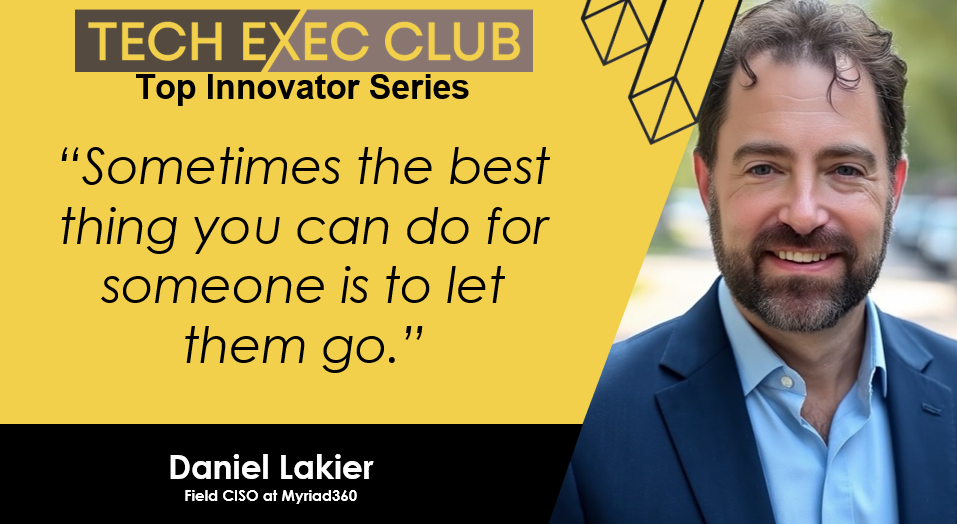
Most leadership advice flatters the ego—big wins, bold visions, unshakable confidence. Daniel Lakier offers a rarer truth: sometimes the most compassionate decision a leader makes is the one that hurts in the moment.
As Chief Evangelist at Myriad360, Daniel didn’t learn this through theory. He knew it through responsibility—moments where the job wasn’t clearly defined, the “right” answer wasn’t obvious, and someone had to step forward anyway. In his conversation with Josef Martens on the Top Innovator series, he traces much of his growth to being pushed beyond his comfort zone early in his entrepreneurial career, forced to do things he might have avoided in a typical role.
What makes Daniel’s perspective stand out is its humanity. He talks about leadership as stewardship—of people, potential, and purpose. He’s built teams through empathy and challenge, leaned on peer forums for honest perspective, and learned that people decisions carry real weight—sometimes even requiring a rigid separation that ultimately helps everyone.
In an era where technology moves faster than values, Daniel’s message is clear: leadership isn’t control. It’s perspective—and the courage to choose what’s right over what’s easy.
Growth Happens Outside the Comfort Zone
Daniel Lakier doesn’t describe leadership as a clean climb or a checklist. In his experience, the most significant growth moments arrived when life forced them—unplanned, uncomfortable, and unavoidable. Many people thrive inside clearly defined roles, but leadership rarely stays that neat. When nobody owns the problem, the leader is the person who stops asking, “Is this mine?” and starts asking, “If not me, who?”
For Daniel, that shift came early through entrepreneurship. Working with a business partner, he also knew personally, created real accountability. In a regular job, he might have declined unfamiliar responsibilities. But in that partnership, there was no easy exit. He had to show up, stretch, and learn on the fly—and that repeated discomfort became the engine of his development.
His takeaway isn’t motivational fluff. It’s practical: design your life so comfort isn’t the default. Put yourself near people and commitments that pull you forward, and pair that with critical thinking and strong ethics. That combination—character, adaptability, and courage—creates leadership that lasts.
The Leadership Sweet Spot — Push and Support
If Daniel had to summarize outstanding leadership in one line, it would be this: push people without abandoning them. He credits part of his own growth to having someone who challenged him while still supporting him. That balance matters because people grow fastest when they feel stretched and safe. Stretch creates progress; safety creates trust.
Daniel also warns that leadership isn’t universal. Not everyone thrives under the same style, so leaders should be intentional about who they hire and how they lead. The goal is fit—between expectations and personality, pressure and motivation.
At the center of that fit is empathy. Not performative empathy, but genuine investment in someone’s success as a person. When employees believe you’re truly in their corner, something shifts: effort becomes commitment. That’s how you build teams that don’t just work for you—they’ll go the distance with you.
The Peer Forum Advantage — Leaders Need a Place to Tell the Truth
Leadership can be isolating—the higher you climb, the harder it becomes to speak freely. Daniel found an antidote in peer forums: confidential groups of leaders who meet to share real challenges, real opportunities, and honest mistakes. The confidentiality isn’t a detail—it’s the foundation. It turns guarded conversation into honest reflection.
In these forums, someone has usually faced your problem before. Sometimes they’ll share what worked. Often they’ll share what didn’t—and that can be even more valuable. The power isn’t just in advice. It’s in perspective: a safe place to think out loud, pressure-test decisions, and sharpen judgment.
Daniel’s point is simple and strong: leaders shouldn’t rely only on grit and formal training. They need community—structured, peer-level, and honest—so the weight of leadership doesn’t leak into poor decisions, tone, or burnout.
The Hardest Lesson — When Helping Turns Into Harm
One of Daniel’s most powerful lessons came through a difficult employee situation. He had a salesperson who worked hard, opened doors, and consistently got close to closing deals—then sabotaged them at the last moment with aggressive, fear-based moves. Daniel tried to help: coaching, role changes, support, second chances. He genuinely wanted the employee to succeed.
But the more Daniel intervened, the more resentful the employee became. What Daniel intended as support started to feel like correction. Over time, the resentment spread—and the employee became toxic to the team. That’s when Daniel realized a painful truth: you can harm someone while believing you’re helping them.
Eventually, they separated. It made Daniel feel uncomfortable—but later, both agreed it was the best outcome. The lesson stuck: letting someone go should never be easy, but sometimes it’s the most ethical decision for the company and the person.
Mentorship, Belief, and Purpose in an AI-Shaped Future
Daniel sees the future of work as uncertain—not because opportunities will disappear, but because the traditional career ladder may be broken. AI may not replace senior leaders quickly, but it is replacing many junior roles. And if entry-level roles vanish, the pipeline to mid and senior roles collapses. That’s not just an industry issue—it’s a societal one.
That’s why Daniel keeps coming back to mentorship. People don’t only need motivation—they need practical guidance: resumes, outreach, relationship-building, and the real steps into a career. And before any of that works, they need belief. If someone grows up without role models or visible paths out, they may not believe they can become more. Without belief, advice won’t land.
Daniel also warns about something more profound than employment: purpose. A society that removes work without replacing meaning risks real damage. His hope is people-centric leadership—leaders who use technology to elevate human potential, not erase it, and who invest in mentorship to keep the next generation moving forward.
Leaders don’t need more theory—they need a few concrete moves they can execute this week. Based on Daniel Lakier’s lessons, here’s the playbook.
- Engineer discomfort on purpose: Take on one responsibility this month that is not “clearly yours,” but clearly needs ownership. Choose a task you’ve been avoiding because it feels unfamiliar—then commit to finishing it publicly and responsibly. Build a relationship or accountability structure (partner, peer, coach) that won’t let you retreat to comfort.
- Push and support at the same time: Set a higher standard for your team, then pair it with real support—coaching, context, and consistent 1:1s. Make people feel you’re invested in their success as humans, not just as employees.
- Create a confidential peer forum: Join or build a peer-level group where confidentiality is the foundation. Bring one real challenge, listen to what worked and what failed, and use the room as a sounding board to sharpen your judgment.
- Make people decisions with gravity: If someone’s behavior is harming the team, don’t “manage around it” forever. Ask whether your help is truly helping—or quietly breaking them down. When separation is necessary, act decisively and humanely to protect both the person and the company.
- Mentor the next generation step-by-step: Don’t just say, “go get a job.” Teach the practical steps—resume basics, outreach, relationship-building—and start with belief. Help people see a future, then help them walk toward it.
- Train your perspective before you react: When someone acts out of character, pause and assume the best plausible intention first. Explore their viewpoint before you escalate. You can still address the problem—but you’ll do it with more accuracy, less emotion, and more trust.
Leadership isn’t proven in the polished moments—it’s revealed in the uncomfortable ones. In the conversation, Daniel Lakier keeps returning to the same quiet standard: be people-centric even when it’s hard, and carry the weight of your decisions like they actually matter—because they do.
Whether he’s talking about being pushed beyond his comfort zone early in his career, leaning on confidential peer forums to pressure-test decisions, or learning the painful lesson that sometimes the kindest thing you can do is let someone go, Daniel doesn’t frame leadership as authority. He frames it as a responsibility. The responsibility to grow, to think critically, to lead with character, and to remember that every “business decision” lands on a human life.
Today, as Chief Evangelist at Myriad360, Daniel’s message feels especially urgent. The future of work may be shifting under our feet, but the future of leadership doesn’t have to be. If technology accelerates, then empathy must accelerate too. If the path forward becomes murky for the next generation, then mentorship can’t remain optional—it has to become a habit.
And maybe Daniel’s simplest wish is the most powerful one: the ability to change our perspective. To pause, assume the best, and try to see things from the other person’s perspective. Because in the end, that’s where better leadership begins—not in control, but in understanding.
Want to hear Daniel’s insights firsthand? Watch the full, live podcast interview [click here]