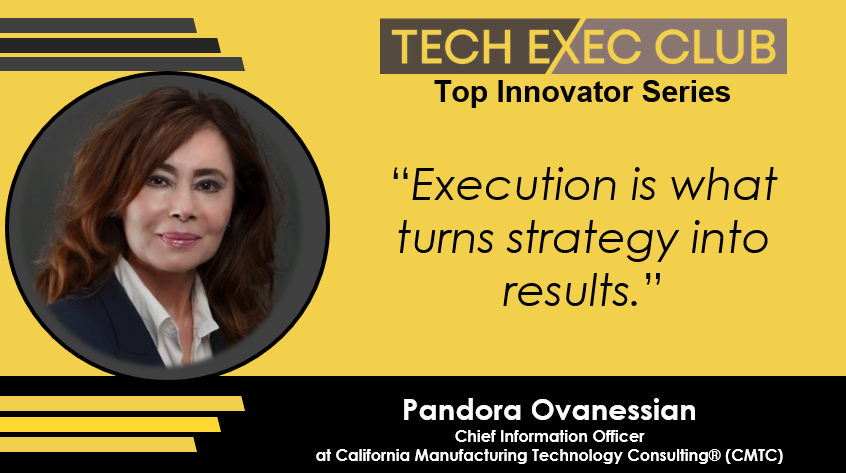
What does it take to lead through constant change in technology and business? For Pandora Ovanessian, the answer starts with one core belief: technology should always create real business value. Throughout her career as a fractional CIO, CTO, and CIO, she has helped organizations navigate digital transformation by focusing on systems and innovation, as well as growth, efficiency, and execution.
In this conversation with Josef Martens for the Top Innovator series, Pandora shares the leadership principles that shaped her journey. From building team alignment to driving complex transformation initiatives, she offers a practical view of what strong leadership looks like in a fast-moving digital world. Her insights reveal why the future belongs to leaders who can connect technology, strategy, and business results.
Technology Leadership Must Support Business Growth
A key theme in the interview is Pandora Ovanessian’s belief that technology leadership should always be tied to business growth. She does not see technology as valuable just because it is advanced or complex. For her, its real value comes from helping organizations improve revenue, increase margins, strengthen operations, and deliver better outcomes.
This perspective comes from her diverse background in science, business, and technology. Because she did not grow up in only one discipline, she developed a broader way of thinking. She learned to connect technical decisions with strategic goals, which became one of her biggest strengths as a CIO and technology leader.
Throughout the interview, Pandora makes it clear that successful technology leadership is about more than systems and software. It is about understanding the business’s needs and using innovation to meet them. That could mean improving customer experience, increasing efficiency, or supporting long-term growth.
This theme is especially relevant today as companies invest more in digital transformation and AI. Many organizations are looking for leaders who can bridge the gap between technical expertise and business strategy. Pandora’s message is clear and practical: technology leaders create the most value when they focus on business results, not just technical performance.
Team Alignment Starts With Vision and Shared Principles
Another strong theme in the interview is Pandora Ovanessian’s focus on team alignment. She explains that successful transformation does not begin with tools or systems. It begins with people sharing the same vision, mission, and guiding principles.
When Pandora enters an organization, she works with leaders and teams to define what they are trying to achieve and how they will work together. She often focuses on values such as customer service, innovation, partnership, and accountability. These ideas create a foundation for stronger communication, better teamwork, and a healthier culture.
This approach matters because the kind of work Pandora leads is often complex and demanding. In large digital transformation projects, people need more than instructions. They need clarity and purpose. When everyone understands the goals and the standards they are working toward, it becomes easier to build trust and move forward together.
Her leadership style shows that culture is not separate from performance. In fact, it supports performance. Teams are more likely to embrace change when they understand why it matters and how they fit into the bigger picture.
This theme offers an important lesson for any leader. If you want strong execution, you first need strong alignment. Shared purpose helps teams stay focused, motivated, and ready to take on difficult challenges.
Execution Is the Real Measure of Leadership
Execution is one of the most important ideas in Pandora Ovanessian’s interview. She makes it clear that leadership is not only about creating plans, strategies, or roadmaps. It is about delivering results.
Pandora shares how mentors shaped her thinking by teaching her that execution matters most in business. Technology teams can offer big ideas and ambitious timelines, but leaders are judged by whether they follow through. That lesson became a central part of her leadership approach.
She also connects execution to her personal mindset. Earlier in life, she chose difficult classes and challenging environments because she believed hard preparation would make future challenges easier. That same mindset carried into her career, where she took on demanding roles in digital transformation and enterprise leadership.
What makes this theme powerful is its practicality. In real organizations, things do not always go according to plan. Obstacles appear, complexity increases, and leaders must adapt. Pandora’s view is that strong leaders do not lose momentum when that happens. They stay focused, solve problems, and keep moving forward.
This theme is a valuable reminder for leaders in every field. Strategy is important, but execution builds trust. In the end, people remember leaders not just for what they planned, but for what they actually accomplished.
Adaptability Matters When Unexpected Problems Appear
Pandora Ovanessian also highlights an important truth about leadership: even the best plans can run into unexpected problems. In technology, transformation, and mergers, surprises are part of the job. What matters most is how leaders respond.
She shares a strong example from a merger-and-acquisition project. During the process, her team discovered that important data was mixed together with data from parts of the business that were not included in the deal. What seemed straightforward at first quickly became a major challenge with serious cost and timing implications.
Instead of panicking, Pandora and her team stayed focused and found a creative solution. She credits the team for helping solve the issue in a way that avoided major expenses and still met the required timeline. The example shows her ability to lead calmly in high-pressure situations.
This theme reflects a broader leadership lesson. Great leaders are not defined by having perfect conditions. They are defined by how they manage uncertainty, communicate clearly, and guide teams through complexity. In difficult moments, adaptability becomes one of the most valuable leadership skills.
Pandora’s story shows that resilience and creative thinking are essential in modern leadership. Challenges will come, but leaders who stay calm and solution-focused can turn setbacks into progress.
The Future of Leadership Will Be More Strategic and Innovative
A forward-looking theme in the interview is Pandora Ovanessian’s view of leadership’s future. She believes that technology leaders will become even more focused on business strategy, innovation, and customer value in the years ahead.
As technology continues to evolve through AI, analytics, automation, and no-code tools, Pandora sees leadership shifting away from deep technical focus alone. Leaders will still need technical understanding, but their biggest value will come from knowing how to use technology to improve products, services, market position, and business performance.
She also emphasizes that innovation requires a strong understanding of current processes. Leaders cannot build better roadmaps for the future unless they understand how the organization already works today. That combination of vision and process knowledge will become even more important as companies adopt new digital tools.
This theme is highly relevant for organizations preparing for the future. More work is being outsourced, automated, or accelerated by technology. As a result, leaders will stand out through strategic thinking, creativity, and the ability to drive real business impact.
Pandora’s view of the future is both realistic and inspiring. She shows that the next generation of leaders will not succeed by being technical experts alone. They will succeed by becoming business-minded innovators who know how to turn ideas into growth.
Pandora Ovanessian’s leadership insights show that real success comes from aligning technology with business goals, building strong teams, and executing with discipline. Her message is clear: leaders must think beyond tools and budgets and focus on creating value, improving performance, and driving meaningful results.
- Connect technology to business value: Every technology decision should support a clear business objective. Leaders should ask how a system, platform, or transformation effort will improve revenue, increase efficiency, strengthen margins, or enhance customer experience.
- Build alignment before execution: Before launching major initiatives, leaders should ensure their teams understand the vision, mission, and guiding principles that underpin the work. A team that shares the same direction is more likely to stay engaged and perform well under pressure.
- Make execution the standard: Strong leadership is not measured by ideas alone. It is measured by results. Leaders should focus on delivering what they promise, adapting when problems arise, and maintaining trust through consistent follow-through.
- Use challenges to strengthen the team: Difficult projects should not always be avoided. They often create the best opportunities for growth, collaboration, and innovation. Leaders should help teams approach complex work with confidence and a problem-solving mindset.
- Improve what already exists before spending more: Instead of immediately asking for more budget, leaders should first evaluate current tools, systems, and resources. Often, there are opportunities to create efficiencies and stronger performance by improving what is already in place.
- Lead with innovation and strategy: The future of leadership will favor those who can connect business strategy, innovation, and customer needs. Leaders should continue learning, remain open to change, and seek creative ways to move the organization forward.
- Create a culture of accountability and communication: Teams perform better when communication is clear, and accountability is shared. Leaders should create an environment where expectations are understood, progress is visible, and people feel responsible for collective success.
Pandora Ovanessian’s story is a powerful example of modern leadership. Her career shows that success in technology is not only about technical knowledge, but about vision, execution, adaptability, and the ability to create real business value. From leading digital transformation to building strong teams and driving innovation, she represents a leadership style that is both practical and forward-looking. What makes her perspective stand out is the way she connects strategy, people, and performance. She reminds us that strong leaders do not simply manage change. They guide others through it with clarity, confidence, and purpose. In a business world shaped by constant disruption, her insights offer a valuable roadmap for leaders who want to grow, innovate, and make a lasting impact.
Want to hear Pandora Ovanessian’s insights firsthand? Watch the full, live podcast interview [click here]