What makes a technology leader truly successful in a fast-changing business world? In this interview, Dave Fazio, CIO at Smith Douglas Homes, shares a leadership philosophy shaped by three decades in technology, business transformation, and executive decision-making. His perspective is refreshingly practical: real success in IT leadership does not come from technical skill alone. It comes from caring deeply about business outcomes, communicating with honesty, and becoming the kind of leader people trust when the stakes are high.
Throughout the conversation, Dave explains that his career growth was driven by a genuine commitment to the business’s success, not just the delivery of technical work. He reflects on the value of working with intention, standing out through reliability, and building credibility by being easy to work with and transparent when challenges arise. He also reveals a more human side of leadership, one rooted in responsibility, support for teams, and a belief that business has the power to improve lives far beyond the office.
This interview offers leadership lessons for CIOs, IT executives, and ambitious professionals who want to create impact, earn trust, and lead with both performance and purpose.
Why Great CIOs Must Focus on Business Outcomes
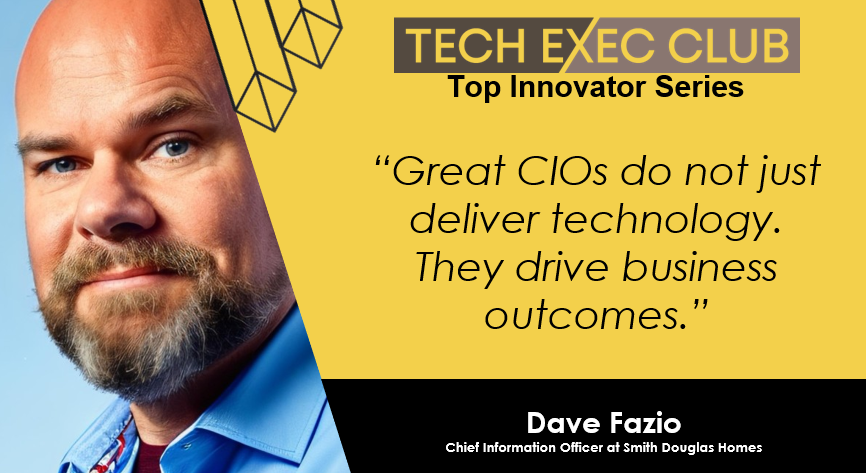
Dave Fazio makes a clear point in the interview: the best CIOs do not just manage technology. They focus on business outcomes. He explains that one of the biggest drivers of his success was learning to care deeply about where the business was going and how technology could help it get there. Instead of simply taking a request and delivering it, he focused on understanding why the business needed it in the first place. That shift helped him move from technical execution into strategic leadership.
What makes this idea powerful is that Dave connects it directly to trust and career growth. He says professionals who are genuinely interested in improving outcomes, rather than protecting the status quo, naturally stand out. Those are the people leaders rely on for bigger decisions and greater responsibility. He also notes that sometimes it only takes a little more effort, a little more curiosity, and a little more care to create a real edge over time.
For anyone interested in CIO leadership, IT strategy, or digital transformation, Dave’s message is highly practical. Technical skill still matters, but long-term leadership comes from understanding the business, improving results, and becoming known as someone who creates real value, not just completes work.
How to Build Trust Through Accountability and Clear Communication
A major leadership theme in Dave Fazio’s interview is trust. He believes strong leaders build trust through clear communication, accountability, and emotional steadiness in the face of problems. In technology, mistakes are inevitable. Systems fail, software breaks, and projects run into trouble. Dave’s view is that leaders should not hide bad news or wait for others to discover problems on their own. Instead, they should communicate early, explain what went wrong, and show how they plan to get things back on track.
What makes Dave’s leadership philosophy stand out is the way he talks about responsibility. He says he will never throw a subordinate or team member under the bus. If something goes wrong, he sees it as his job to absorb the pressure, support the team, and help people learn from the failure rather than punish them for every honest mistake. That kind of leadership creates loyalty because it shows both accountability and protection.
This approach is especially relevant for modern CIOs and technology executives. People are often more forgiving than leaders expect when communication is honest and respectful. Dave’s message is simple but powerful: trust grows when leaders tell the truth, stay calm, and help teams recover stronger than before.
Why Sees Diplomacy as a Critical Leadership Skill
Dave Fazio identifies diplomacy as one of the most important leadership skills he is still developing. That says a great deal about how he sees executive growth. For Dave, leadership is not only about making smart decisions or having technical expertise. It is also about influencing people, navigating conflicting priorities, and finding a path forward when different stakeholders want different things. He describes diplomacy as a valuable skill because every leader has goals to accomplish. Still, those goals do not always align neatly with others’.
What makes this especially interesting is that Dave treats diplomacy as an active practice. He says he experiments with different techniques, such as persuasion, bargaining, and compromise, to see what helps create progress while still making people feel good about the outcome. He also admits that understanding how he comes across is not always easy, so he pays close attention to how others respond and adjusts from there. That gives his leadership style a practical, self-aware quality rather than a rigid formula.
For professionals interested in executive leadership, this is a strong lesson. Real influence often comes from reading the room, adapting your approach, and building alignment without creating unnecessary friction. Dave presents diplomacy as a skill that turns authority into lasting leadership impact.
Why Connects Technology Leadership to Purpose and Human Impact
One of the most compelling parts of the interview is the way Dave Fazio talks about business with a sense of purpose. He does not describe a company as just a machine for profit or operations. Instead, he sees it as helping fund the lives of real people and real families. He says business helps people go to college, buy homes, pay bills, and build security for their future. That belief gives his leadership a more human and meaningful foundation.
This perspective becomes even stronger when Dave talks about working in home building. He describes the industry as especially noble because of its wide economic and social value. A home affects not only the customer who buys it, but also the tradespeople, materials, services, furnishings, and the long-term value associated with it. In his view, home building creates a positive ripple effect across the economy and enriches lives in lasting ways. That makes his work feel more personal and more significant.
For readers interested in technology leadership, this is a powerful message. Dave shows that great leadership is not only about efficiency or innovation. It is also about understanding the human impact behind the business and leading in a way that reflects that bigger purpose.
What Predicts the Future of Leadership in the AI Era
Dave Fazio offers a thoughtful and honest view of the future of leadership. He believes leadership will have to evolve as AI, automation, and generational change reshape how people work, buy, communicate, and make decisions. He points to a growing preference among younger generations for self-service, digital convenience, and less direct interaction in areas like shopping, healthcare, and even major purchases. That shift, he suggests, will affect not only business strategy but also what people expect from leaders and organizations.
What makes Dave’s perspective especially strong is his self-awareness. He openly admits that every generation develops blind spots shaped by its upbringing. Rather than pretending to fully understand every cultural shift, he recognizes that future leaders will bring new sensibilities and new expectations. He believes the next era of leadership may need to be more compassionate than the leadership styles many executives grew up with.
This makes his view both realistic and forward-looking. He does not frame the future as something to resist. He frames it as something leaders must learn to understand. In an AI-driven world, successful leadership will require adaptability, humility, and a willingness to grow alongside changing technology and changing people.
Dave Fazio’s advice offers a practical roadmap for CIOs, technology leaders, and ambitious professionals who want to lead with greater impact. His interview highlights the habits that build trust, strengthen business results, and turn good professionals into respected leaders.
- Start caring about business outcomes, not just tasks: Do not stop at completing the request. Ask why the business needs it, what success looks like, and how your work can improve the result. Dave makes it clear that leaders stand out when they care about outcomes, not just execution.
- Communicate early, especially when there is bad news: Do not wait for people to chase updates. Be proactive, honest, and transparent. Dave says people are often far more forgiving when leaders communicate clearly and do not hide problems.
- Take responsibility and protect your team: When mistakes happen, lead from the front. Dave strongly believes leaders should never throw team members under the bus. Support people, help them learn, and create a culture where mistakes become lessons, not fear triggers.
- Build influence through diplomacy: Leadership is not only about being right. It is also about aligning people. Dave emphasizes persuasion, compromise, and thoughtful influence as essential skills for creating change in complex organizations.
- Lead with purpose, not just performance: Remember that business affects real lives. Dave talks about companies as engines that help families pay bills, buy homes, and build stability. Leaders who keep that human impact in mind lead with greater meaning and credibility.
- Stay open to change and future leadership trends: Dave acknowledges that AI, generational change, and shifting customer behavior will reshape leadership. Great leaders stay adaptable, recognize their blind spots, and keep learning as the world changes.
- Share success more fairly: Dave ends with a bold leadership challenge: share the wealth. He argues that companies should distribute success more fairly across teams rather than concentrate rewards at the top. It is one of the strongest and most provocative takeaways from the interview.
Dave Fazio comes across in this interview as more than a seasoned CIO. He emerges as a thoughtful leader who understands that technology matters most when it serves people, strengthens business outcomes, and creates lasting value. His perspective is grounded in experience but also shaped by humility, accountability, and a clear sense of purpose.
What makes his voice especially compelling is that he does not separate leadership from character. He connects success with trust, communication, responsibility, and the willingness to keep learning. In a business world shaped by rapid change, Dave offers something both practical and rare: a leadership model that is strategic, human, and deeply relevant.
Want to hear Dave’s insights firsthand? Watch the full, live podcast interview [click here]