What does it really take to succeed as a modern CTO?
For Mex Emini, co-founder of DataFlair and former C-level technology executive, the answer is clear. Stop thinking like a technologist and start thinking like a business leader.
“The CTO is not a technical role. It is a business role.”
That belief defines Mex’s leadership philosophy. After rising from developer to executive, he discovered that technical expertise alone does not build successful companies. Leadership today requires resilience, curiosity, people skills, and a deep understanding of business impact.
In a world shaped by artificial intelligence, rapid innovation, and global teams, tech leaders must deliver more than clean architecture and scalable systems. They must foster ownership, understand motivation, embrace experimentation, and focus on outcomes rather than perfection.
In this Top Innovator conversation, Mex shares the principles that shaped his career. Continuous learning. Bottom-up innovation. Resilience under pressure. And the courage to release first and improve later.
For anyone leading in technology or aspiring to become a modern CTO, his insights offer a powerful roadmap.
The Relentless Student: Why Continuous Learning Drives Modern CTO Success
One of the strongest themes in Mex Emini’s leadership journey is continuous learning. For him, success did not come from talent alone. It came from staying a constant student of the industry.
From developer to C-level executive and now co-founder of DataFlair, Mex has always remained open to mentoring, feedback, and new ideas. In fast-moving industries like technology and AI, that openness becomes a strategic advantage. Markets shift. Tools evolve. Leadership expectations change. The leaders who stop learning fall behind quickly.
Mex describes curiosity as a key driver of his growth. Whenever a new initiative appeared, he leaned into it. Ambitious ideas, unknown outcomes, complex challenges. Instead of waiting for certainty, he chose experimentation. That mindset kept his motivation fresh and his leadership relevant.
For aspiring CTOs and tech executives, the message is clear. Mastery is temporary. The moment you believe you know enough is the moment growth stops. Continuous learning is not just professional development. It is a survival skill in modern tech leadership.
The most effective technology leaders are not the ones who have all the answers. They are the ones who keep asking better questions.
Leadership Is Human: From Developer to People-Centered Executive
Mex openly admits that early in his career, working with people was a challenge. As a developer, he focused on systems and logic. Leadership forced him to confront a different reality. Success depends on people.
One of his biggest realizations was understanding that not everyone is motivated by achievement in the same way he is. He initially assumed that others shared his intrinsic drive. That bias limited his effectiveness as a leader.
Once he understood that individuals are motivated by different factors, everything changed. Some are driven by growth. Others by stability, recognition, impact, or belonging. Effective leadership requires identifying those differences and adapting accordingly.
This awareness also shaped his perspective on international teams. Culture, communication style, and personal motivations vary widely. A strong CTO must learn to understand people deeply, not just manage performance metrics.
Modern tech leadership is not about pushing harder. It is about listening better. It is about adjusting your leadership style depending on context. Mexico has led in both democratic and more directive environments, proving that flexibility matters more than rigid ideology.
Technology may power products, but people power companies. Leaders who ignore that reality rarely build long-term success.
Bottom-Up Innovation: Creating Ownership Through Safe Failure
Innovation does not thrive in fear. According to Mex, one of the most powerful leadership tools is creating a safe space for failure.
When people feel safe to experiment, ideas begin to breathe. Instead of forcing initiatives from the top down, Mex prefers a bottom-up implementation approach. Even when an idea originates from leadership, he ensures the team feels ownership in shaping it.
Why? Because ownership changes behavior.
When individuals believe they contributed to an idea, they invest more energy into making it succeed. Engagement rises. Accountability increases. Momentum builds organically.
This philosophy aligns with modern innovation culture. Companies that punish failure often suppress creativity. Companies that encourage responsible experimentation accelerate learning.
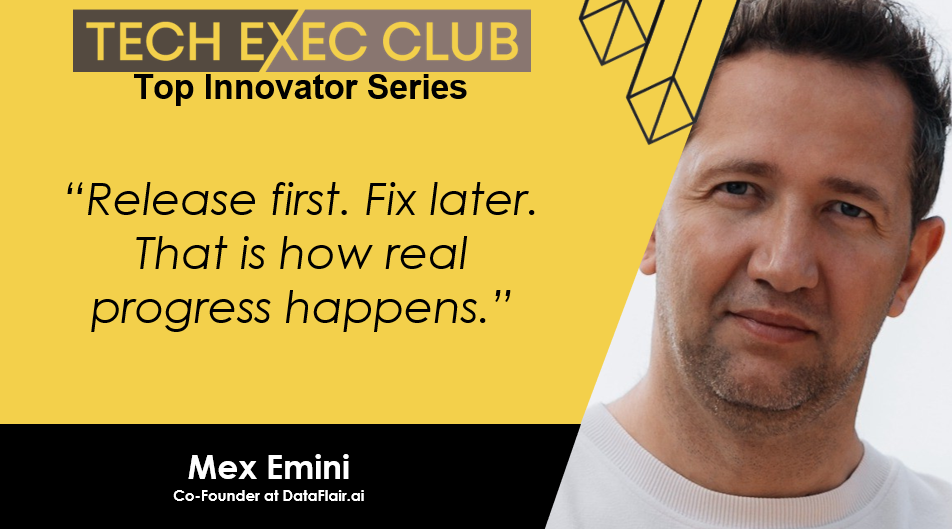
Mex also embraces a practical execution mindset. His team once gave him a shirt that said “release first, fix later.” That phrase captures his belief in iteration. Waiting for perfection delays progress. Testing ideas in the real world generates real data. From there, improvement becomes focused and strategic.
For tech leaders building high-performing teams, the lesson is powerful. Create safety. Encourage experimentation. Turn ideas into shared missions. Ownership fuels innovation more effectively than authority ever could.
Resilience and Bias Awareness: The Hidden Edge of Great Leaders
When reflecting on his mentors, Mex highlights resilience as the defining trait that separates strong leaders from average ones.
He observed role models who faced major setbacks and bounced back stronger. Their ability to recover from adversity left a lasting impression on him. Failure was not the end. It was feedback.
Equally important was their awareness of bias. Leaders often assume their perspective is objective. In reality, subconscious assumptions shape decisions more than we realize. Mex learned that recognizing personal bias is essential for growth.
As leaders rise higher in organizations, pressure increases. The stakes are larger. Visibility is greater. Resilience becomes non-negotiable. Without it, stress erodes clarity, and decision-making suffers.
Mex believes that bouncing back from failure is a skill that must be developed intentionally. Reflection, mentorship, and honest self-assessment all contribute to stronger leadership under pressure.
In today’s volatile business environment, resilience is not just a personal trait. It is a competitive advantage. Leaders who can withstand uncertainty, correct course quickly, and remain grounded during setbacks inspire confidence in their teams.
True leadership strength is revealed not in moments of comfort but in moments of adversity.
The Business-Driven CTO: Why Technology Leadership Is About Outcomes
One of Mex Emini’s most striking statements is that the CTO role is fundamentally a business role.
Technology leaders are responsible for building the backbone of products and services. If they do not understand business constraints, customer impact, and strategic objectives, success becomes accidental rather than intentional.
Mex argues that thinking purely through a technical lens limits long-term results. A modern CTO must speak the language of business. Revenue. Impact. Outcomes. Market positioning. Technology is the vehicle, not the destination.
His leadership style reflects this belief. Ship early. Test in the real world. Improve based on feedback. Instead of chasing perfection internally, he focuses on delivering value externally.
He also emphasizes adaptability in leadership style. In some environments, democratic leadership drives collaboration. In crisis situations, decisive direction may be necessary. Effective tech leadership requires adjusting to context, not clinging to a single identity.
For aspiring CTOs, the message is clear. Expand beyond code. Develop commercial awareness. Align technical execution with business strategy.
The future belongs to technology leaders who think like builders and business architects simultaneously.
If Mex Emini’s leadership journey resonates with you, here are practical and actionable steps you can implement immediately to elevate your leadership impact.
- Commit to Continuous Learning: Block dedicated time each week to study industry trends, AI advancements, and emerging technologies. Seek mentors. Ask uncomfortable questions. The most successful tech leaders remain students throughout their careers.
- Audit Your Leadership Bias: Reflect on how you assume others are motivated. Do you project your own drive onto your team? Schedule one-on-one conversations to understand what truly motivates each individual. Leadership starts with awareness.
- Create Psychological Safety for Innovation: Encourage experimentation inside your organization. Make it clear that smart failure is part of progress. Publicly recognize initiative, even when results are imperfect. Innovation thrives where fear is removed.
- Shift From Perfection to Execution: Adopt the mindset of releasing early and improving through iteration. Test ideas in real market conditions. Use data and feedback to refine rather than waiting for internal perfection.
- Think Like a Business Architect: As a CTO or technology leader, deepen your understanding of revenue models, customer journeys, and strategic outcomes. Align every technical decision with measurable business impact.
- Build Resilience Intentionally: Expect setbacks. Develop routines that strengthen mental clarity under pressure. Surround yourself with advisors who challenge your thinking and help you grow.
Technology leadership is evolving. The question is not whether change is coming. The question is whether you are ready to lead it.
Mex Emini’s leadership journey reflects the transformation of the modern CTO role itself.
Rising from developer to executive and now co-founder of DataFlair, he learned that technical skill alone does not create lasting success. Curiosity does. Resilience does. Business awareness does. And above all, understanding people does.
His philosophy challenges traditional tech leadership. The CTO is not just responsible for architecture or systems. The CTO builds the backbone of business success. That means thinking in terms of outcomes, market impact, and long-term value rather than perfection or technical elegance alone.
Mex also demonstrates that growth never stops. Whether navigating corporate pressure, launching new initiatives, or building something from scratch, he continues to evolve. He embraces experimentation, encourages ownership within teams, and adapts his leadership style to the situation.
In an era defined by rapid innovation and AI-driven change, leaders who remain rigid will struggle. Leaders who remain curious will thrive.
Mex Emini’s story is not just about career success. It is a blueprint for modern CTO leadership built on learning, resilience, business thinking, and the courage to lead differently.
Want to hear Mex Emini’s insights firsthand? Watch the full, live podcast interview [click here]