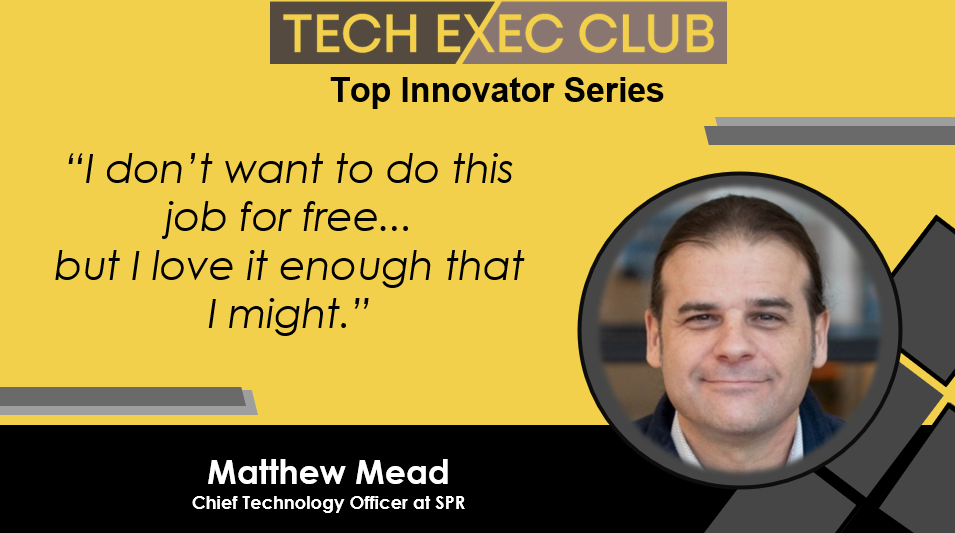
In a world where AI threatens to outpace human potential, Matthew Mead stands firmly on the side of what makes us irreplaceable: passion, empathy, and emotional intelligence.
As the Chief Technology Officer at SPR, a tech consultancy known for crafting AI-powered solutions, Matt has carved out a leadership style that blends deep technical expertise with a fierce commitment to people. Over the course of his 30-year career — spanning giants like BP and Redpoint Technologies — Matt has seen firsthand how the right mix of grit, humility, and heart can transform teams, companies, and careers.
In this candid conversation on the Top Innovator series with Josef Martens, Matt opens up about what really fuels long-term success, the surprising value of tough love, and why he believes empathy is the most underutilized leadership skill in tech today. He shares how personal struggles with organization, a relentless drive to grow others, and an unwavering focus on re-skilling for the AI era have shaped not just his career — but his character.
If you’ve ever wondered what sets the great leaders apart from the good ones, this interview delivers the answer with clarity, humor, and a lot of heart.
Passion as a Core Driver of Success
For Matt Mead, success in tech leadership isn’t about climbing ladders — it’s about doing what you love so much, you’d almost do it for free. “It’s a part of my identity,” he admits, describing how deeply intertwined his work is with who he is. That kind of internal drive — not just ambition, but alignment — has fueled his three-decade career.
Interestingly, it wasn’t always this way. Mead candidly recalls his poor grades in high school and admits he didn’t always have this fire. It wasn’t until the early 90s that he discovered a love for technology, then leadership, and he never looked back.
His story is a reminder that passion often beats pedigree. It’s not about being perfect early — it’s about finding something meaningful and giving it your all. For Mead, passion isn’t soft. It’s the engine behind resilience, growth, and leadership that people want to follow.
The Power of Tailored Leadership and Empathy
Matt Mead believes leadership isn’t about authority — it’s about understanding people. His mentors spanned a spectrum, from tough-love disciplinarians to gentle encouragers. The common thread? They adapted their style to match the person they were helping.
This lesson stayed with him. Now, as CTO at SPR, Matt uses the DiSC personality framework to better connect with his team. Some people need explicit, direct instruction. Others just need a light nudge. Recognizing that difference, he says, is essential to leading effectively.
Empathy, for Matt, is a leadership strategy — not just a nice-to-have. “If I can speak to someone in the way they naturally understand,” he says, “why wouldn’t I do that?” In his view, empathy isn’t weakness. It’s what allows teams to truly thrive.
Learning from Tough Love and Emotional Maturity
Early in his career, Matt received what felt like harsh criticism from a manager. It stung. But years later, he recognizes it as one of the most valuable experiences of his professional life.
At the time, Matt wasn’t emotionally prepared for direct feedback — and took it personally. With distance and maturity, he now sees that the leader was holding him accountable, not tearing him down. “They saw what I was capable of and wouldn’t let me coast,” he reflects.
This reframing — from criticism to care — transformed his perspective. It taught him that personal growth often comes from discomfort, and that emotional maturity means separating the message from the sting. His advice? “Work another 20 years” — and let time do its work on you.
Developing Others and the Challenge of Personal Organization
Despite his senior role, Matt Mead is still actively working on himself. His two significant areas of focus? Growing others more deliberately — and organizing his own chaotic workload.
He’s passionate about mentoring, but now wants to bring more structure to how he supports career development. At the same time, he’s tackling a less glamorous challenge: personal organization. “It sounds lame,” he says, “but I’m really working on getting better at it.”
Using the GTD (Getting Things Done) system by David Allen, Matt tries to capture and sort every task — but admits the hard part is deciding what matters most. It’s a refreshingly human side of leadership: still learning, still optimizing, and still honest about the messiness of growth.
The Urgency of Re-skilling in an AI-Driven Future
For Matt Mead, AI is the defining force of the next era — and leaders need to prepare now. “AI isn’t taking your job,” he says. “But someone who knows how to use AI might.”
Rather than fear automation, Matt urges leaders to focus on re-skilling. Critical thinking, adaptability, and judgment will be the most valuable assets in an AI-accelerated world. He points to resources like the World Economic Forum’s Jobs Report to guide teams toward the right capabilities.
The key is urgency. “Start training people today,” he emphasizes. Companies can’t wait for disruption to happen — they need to build readiness now. For Matt, the future belongs to those who are curious, proactive, and open to change.
Based on insights from Matt Mead’s interview, here is a detailed, actionable list that readers — especially leaders and aspiring professionals — can implement to elevate their leadership, adapt to AI-driven change, and grow personally and professionally.
- Lead with Passion — and Let It Show: Reflect on what energizes you at work and align your role around it. Don’t be afraid to show enthusiasm — it builds trust and inspires others. Reconnect with why you chose your profession in the first place.
- Adapt Your Leadership Style to Individuals: Use frameworks like the DiSC personality profile to better understand your team’s communication and learning styles. Ask yourself: What’s the best way for this person to receive feedback, motivation, or direction? Practice empathetic leadership by meeting others where they are — not where you wish they were.
- Reframe Tough Feedback as a Growth Opportunity: When receiving criticism, pause before reacting emotionally — ask yourself if there’s value behind the discomfort. Build emotional maturity by reflecting on difficult past experiences and what they taught you. If you’re leading others, be honest but also kind and intentional with your feedback.
- Be Intentional About Growing Your People: Don’t wait for performance reviews — build regular development check-ins with your team. Ask: “Where do you want to be in 1 year?” and “How can I help you get there?” If you don’t have a framework yet, start simple — offer opportunities, give stretch assignments, and follow up often.
- Upgrade Your Own Systems for Personal Organization: Explore productivity systems like GTD (Getting Things Done) by David Allen. Write everything down — then prioritize ruthlessly. Accept that not everything will get done — focus on what matters most.
- Embrace and Prepare for the AI-Powered Future: Read the World Economic Forum’s Future of Jobs Report to understand upcoming skill demands. Promote critical thinking, adaptability, and judgment within your teams. Encourage or sponsor AI training and experimentation for yourself and your staff — don’t wait until it’s urgent.
- Make Empathy a Daily Leadership Practice: Ask your team how they’re doing — and actually listen. Create a culture where “work doesn’t have to suck” — bring a little fun, humanity, and warmth to the workplace. Remember: The best leaders care deeply. Empathy isn’t soft. It drives performance.
Matthew Mead is not your typical CTO.
He’s a technologist who still believes in the human side of software. A leader who openly admits he’s still working on personal organization. A mentor who’s more focused on building others up than climbing further himself. And in an era where artificial intelligence is accelerating change at breakneck speed, Matt is reminding us that the most essential leadership traits — passion, empathy, and adaptability — are more relevant than ever.
Throughout this conversation, Matt shared stories not just of success, but of struggle, growth, and hard-earned wisdom. He invites us to lead with heart, to meet people where they are, and to embrace the discomfort that often comes with becoming better.
Whether you’re an executive leading teams, a technologist navigating AI disruption, or simply someone trying to grow, Matthew Mead’s leadership philosophy is both grounding and galvanizing.
In a world that often prizes speed and scale, Matt reminds us of a more profound truth: people still matter most.
Want to hear Matthew Mead’s insights firsthand? Watch the full, live podcast interview [click here]