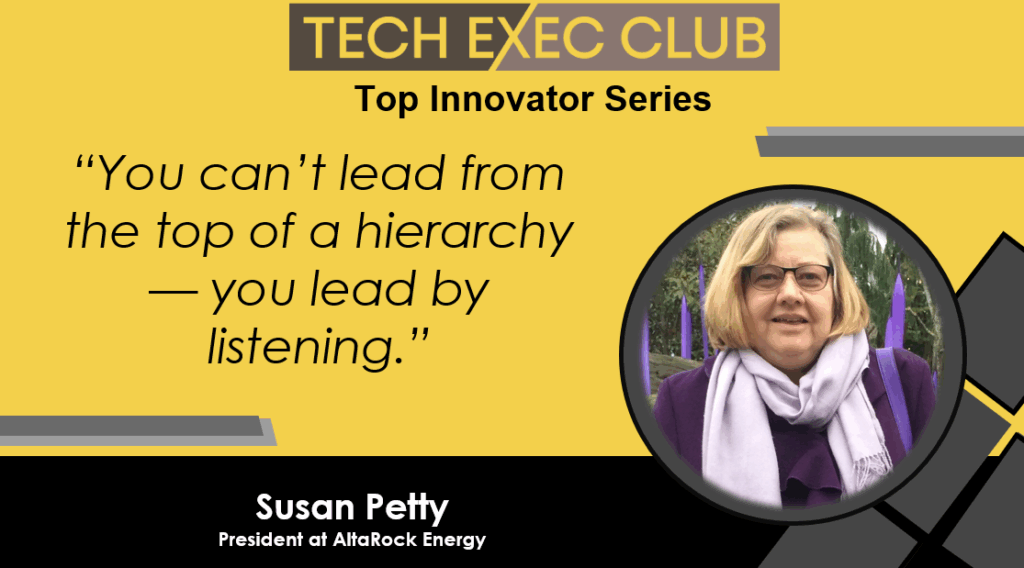
When Susan Petty walked into a pitch meeting with a laptop balanced on her knees and a geothermal dream in her head, she had no idea she’d just stepped into a historic moment. Within months, she had term sheets from both Kleiner Perkins and Khosla Ventures—an unprecedented move in a sector no one thought was “VC-worthy.”
Petty is not just a pioneer in geothermal energy—she redefined who gets funded, what innovation looks like, and how deep you have to dig (both literally and metaphorically) to create real change. As the Founder and President of AltaRock Energy and the visionary behind the Hot Rock Energy Research Organization (HERO), she’s spent decades developing breakthrough technologies that slash risk and cost in one of the most overlooked corners of renewable energy.
In this episode of the Top Innovator Series, Susan sits down with host Josef Martens for an unscripted, inspiring conversation about risk, reinvention, and why she’s still not ready to retire. From startup gambles to structural gender bias, Petty doesn’t just talk about change—she builds it.
Relentless Drive: The Role of Energy, Enthusiasm & Risk-Taking in Leadership
Susan Petty doesn’t just talk about energy—she lives it. From her earliest steps into the male-dominated world of geothermal drilling to founding multiple companies, Susan’s journey is driven less by raw risk than by relentless enthusiasm. “Everyone starting a company is a risk taker,” she says. “What matters is the energy to follow through.”
That drive has been her compass. She’s the person raising her hand in the back of the room, saying, “I’ll do that,” long before the plan is fully formed. Her ethos: jump in, give it everything, and if it’s not working, move on quickly. This “fail fast” mindset has allowed her to pivot, evolve, and remain a force in the geothermal industry for decades. While others get stuck in analysis paralysis, Petty chooses motion—action over perfection.
It’s not about fearless confidence. It’s about informed boldness—backed by experience and a deep understanding of the geothermal space. Her advice? “Take every opportunity. If it doesn’t work, that’s okay. Just don’t stop.” In an industry where failure can be expensive and slow, Susan’s speed and stamina have been her most significant assets.
Breaking Barriers: Launching the First VC-Backed Geothermal Company
In 2007, Susan Petty pulled off something no one else had done: she secured venture capital funding for a geothermal startup. AltaRock Energy wasn’t just another development company—it was a technology-focused bet on making geothermal scalable and less risky.
At the time, geothermal was considered more akin to oil and gas: high exploration costs, slow timelines, and massive capital needs. Venture capitalists weren’t interested. But Susan saw a path forward using enhanced geothermal systems (EGS)—a backup plan for when heat was present but natural circulation wasn’t. It was a technical solution to a financial barrier: reduce the risk, and you make the entire model investable.
That vision collided with opportunity in a hallway at a Goldman Sachs energy tech conference. After a string of serendipitous introductions, Petty found herself showing her pitch deck to Vinod Khosla in a coffee shop. “He looked at the last slide and said, ‘I’ll finance that.’” Weeks later, she received a joint termsheet from Kleiner Perkins and Khosla Ventures. AltaRock was born.
What followed was more than a company launch—it was the beginning of geothermal’s seat at the innovation table. Petty’s story proves that if you know your science, seize your moment, and carry conviction, you can make history—even on a laptop in your lap.
Leadership Lessons: Why Technology Founders Struggle with the Business Side
Despite founding AltaRock, Susan was told by investors she couldn’t be its CEO. The reason? She didn’t fit their mold. That was her first encounter with the vast disconnect between venture capital expectations and what a tech-driven geothermal startup actually needed in leadership.
“I knew how to run companies, but not this kind,” she admitted. Her strength was in subsurface technology—geology, engineering, systems thinking. Yet the CEO candidates proposed by investors had backgrounds in wind energy project development or conventional geothermal—people with little experience in bringing new technologies to market.
This gap highlighted a deeper issue in clean tech investing: a lack of understanding about how innovation actually matures. Susan believes she would have benefited more from someone with experience in medical device or advanced manufacturing innovation—someone who understood the lifecycle of tech development, not just project management.
The lesson stuck with her. While she’s a science expert, she now seeks to grow her fluency in business cycles and market structures. How do you take a good idea from VC funding to revenue sustainability—especially when there is no quick IPO or license deal? That’s her next frontier. And it’s a question that matters not just to her—but to the future of climate tech as a whole.
Reinvention at 70+: Why Susan Petty Isn’t Done Yet
At a stage in life when most leaders are planning their exit, Susan Petty is sketching out her next company. “Retirement? I’m not good at that,” she says, almost dismissively. What excites her instead are new, high-temperature geothermal technologies—some developed by her, others from national labs—that she believes can radically reduce energy costs.
Her current nonprofit, HERO (HotRock Energy Research Organization), was born from this continued desire to push the envelope in geothermal R&D. AltaRock had shifted to technology implementation, and Susan needed a new vehicle for invention.
Now, she’s thinking even bigger: bundling promising new technologies into a startup that can take geothermal to the next level—hotter, deeper, and more efficient. But she knows innovation isn’t enough. This time, she’s focusing on how to scale these technologies sustainably, without falling into the traps that plagued traditional VC-backed models.
Her vision is crystal clear: to not just invent the future of geothermal—but to design the ecosystem that allows it to thrive. In a world urgently needing clean, affordable energy, Susan Petty isn’t stepping away. She’s stepping up—again.
Gender & Leadership: Challenging Hierarchy and Building Collaborative Cultures
Susan Petty’s experience as a woman in energy is more than a footnote—it’s a foundational lens through which she views leadership. One of the first female graduates from Princeton, she’s spent her career pushing into spaces that weren’t built for her. From drill rigs to boardrooms, she’s seen how leadership defaults to hierarchy—and how much potential gets lost in that top-down approach.
“Men like hierarchy,” she says bluntly. “They want the org chart. They want to stay on top.” But Petty believes innovation thrives in collaboration, not command. Her leadership style emphasizes listening, cross-pollination, and the dismantling of rigid roles. “You can’t just say, ‘You’re VP of X, stay in your lane.’ You have to let ideas flow.”
And while she acknowledges that not all male leaders fall into this trap, she’s convinced that women—given the opportunity—can model a more inclusive, adaptable leadership style. One that makes space for insight from any corner of the organization. One that actually hears the engineers, the developers, the people in the field.
In her next company, this will be non-negotiable. Petty isn’t just building technology. She’s building a culture—one where brilliance doesn’t need a title to be valued.
Susan Petty’s journey isn’t just inspiring—it’s a roadmap for anyone serious about making an impact in innovation, clean energy, and leadership. Whether you’re an entrepreneur, an investor, a technologist, or someone passionate about solving real-world problems, her story calls us to act.
1. For Entrepreneurs & Founders: Take risks—but follow through. Susan reminds us that success doesn’t come from taking a single bold leap, but from persistence and energy to stay the course. Don’t wait to be chosen. Be the one raising your hand for opportunities—even if you’re not “ready” yet. That’s how progress happens. Challenge the mold. If someone says you’re not “CEO material,” redefine what that role means—just like Susan did.
2. For Venture Capitalists & Investors: Look beyond the typical playbook. Geothermal, fusion, and other deep tech ventures don’t follow app startup timelines. Be prepared to fund infrastructure, not just exits. Invest in visionary operators. Founders like Susan, with deep technical roots, often have the clearest insights into solving complex industry problems. Support founder education. Pair technologists with business minds who understand how innovation reaches the market.
3. For Scientists & Innovators: Bundle technologies for greater impact. Susan sees the next leap in geothermal coming from the integration of multiple innovations. Don’t stop at the lab. It’s not enough to invent something—learn how to get it into the world. Stay curious about business. Like Susan, commit to understanding how markets, funding, and sustainability intersect with your vision.
4. For Women in STEM & Leadership: Build the culture you wish existed. Flat, collaborative structures allow ideas—not titles—to lead. Step into spaces not built for you. Susan went from Princeton to drill rigs to boardrooms without waiting for permission. Lead differently. Embrace a leadership style rooted in inclusion, flexibility, and active listening.
5. For Everyone Who Cares About the Future of Energy: Advocate for geothermal innovation. It’s reliable, scalable, and massively underfunded. Support research and development. Organizations like HERO are advancing critical technologies. Think long-term. Real climate solutions require investing in technologies that take time to mature—just like geothermal.
Susan Petty is more than a geothermal pioneer—she’s a blueprint for what visionary leadership looks like when it’s fueled by passion, curiosity, and unapologetic courage. She didn’t wait for the perfect moment, the perfect title, or the perfect conditions. She built her path in an industry few believed in, secured venture capital in a field no one thought fundable, and continues to shape the future of clean energy well into her 70s.
But her story isn’t just about breaking ground beneath the Earth’s surface—it’s about breaking ceilings above it. Susan shows us that leadership isn’t about hierarchy; it’s about listening. It’s not about being the loudest voice in the room; it’s about having the vision to ask better questions, take smarter risks, and empower those around you.
As the world scrambles for climate solutions, we need more leaders like Susan—leaders who don’t just imagine the future, but roll up their sleeves and build it. She’s not slowing down. And maybe, neither should we.
Want to hear Susan Petty’s insights firsthand? Watch the full, live podcast interview [click here]