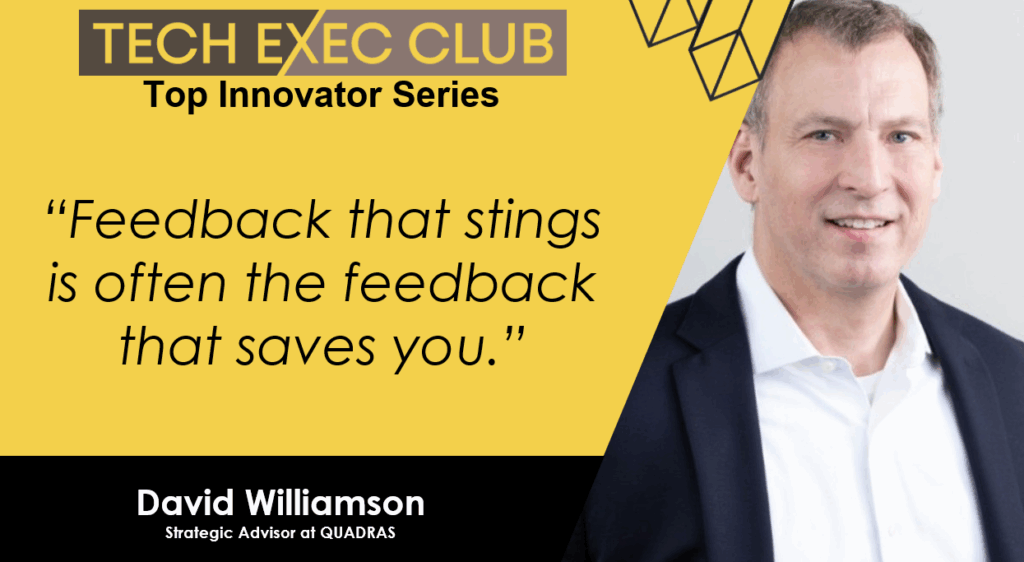
When David Williamson graduated from university and joined the U.S. Army as a communications officer, he had no idea those early leadership lessons would become the foundation of an extraordinary career in the life sciences and technology sector. Today, as a strategic advisor at Quadras and a former CIO, Senior Director of Analytics, and IT leader across global organizations, David’s influence stretches far beyond technology.
But his leadership journey wasn’t shaped by authority alone—it was forged through adaptability, resilience, and a relentless pursuit of learning. From hierarchical command structures to collaborative corporate environments, David discovered that authentic leadership is less about giving orders and more about inspiring others.
David shares career-defining lessons, ranging from engaging the right people to embracing cultural diversity as a catalyst for innovation. He reveals why failure is one of leadership’s most outstanding teachers, why listening to the youngest voices in the room can spark transformation, and how to communicate effectively with audiences who care more about outcomes than technology.
Leadership Beyond Authority
When David Williamson left the structured environment of the U.S. Army and entered the corporate world, he encountered a leadership paradox. In the military, authority was clear-cut. Orders were given, and they were followed. In business, that model quickly fell apart. “You can’t just tell someone what to do and expect them to do it,” David reflects. “Influence becomes the real currency of leadership.”
His early days in life sciences technology demanded a fundamental shift—from commanding compliance to inspiring collaboration. It wasn’t about power over people; it was about enrolling them in a vision. He learned that teams no longer respond to directives—they respond to purpose, trust, and clarity of outcome.
One of David’s guiding principles became understanding the different stages of team development: forming, norming, and storming. Within that dynamic, he emphasizes the importance of recognizing who your allies are and who needs more support. Leadership in this sense isn’t linear; it’s nuanced. “Your success is measured by how you make others successful,” he says. That includes peers, stakeholders, and the broader business ecosystem.
This realization shaped David’s leadership DNA: to engage, listen, and create alignment without relying on authority. Today, he sees influence not as a soft skill, but as a strategic advantage. “If you want sustainable results,” he notes, “you have to get people interested in what you’re trying to do for them.” This mindset turns a simple directive into a shared mission—a transformation that separates transactional managers from transformational leaders.
Focus on Allies, Not Naysayers
One of David Williamson’s most profound leadership lessons came the hard way—through failure. Early in his career, he led a project implementing a Laboratory Information Management System (LIMS). Excited to deliver change, David devoted an extraordinary amount of time and energy to convincing one resistant group that the new system would work for them. They insisted their processes were different, that the solution wasn’t viable, and David took it upon himself to change their minds.
The result? Frustration, wasted energy, and a loss of momentum. But the real cost was hidden: the enthusiastic team members—those eager to embrace the change—felt neglected. “They weren’t getting my attention,” David admits. “They weren’t recognized for the work they were doing.” Their engagement dipped. Productivity waned. All because the spotlight stayed on the critics instead of the champions.
That experience was a turning point. “Your energy is better spent on the people who are aligned and those on the fence,” David says. Research supports this: the most effective leaders double down on their supporters and the persuadable middle, rather than the small minority of entrenched skeptics. It’s a game of leverage, not conversion.
The lesson extends beyond projects. It’s about mindset. Leaders often fall into the trap of trying to prove themselves to dissenters, but this can drain resources and dilute progress. David’s approach today is straightforward: identify your advocates, celebrate them, and amplify their influence. Then work to win over those who are cautiously optimistic. As for the naysayers? “Don’t ignore them,” he clarifies, “but don’t make them your priority.”
This principle, born from a challenging experience, became a cornerstone of David’s leadership philosophy—and a key reason his teams consistently drive meaningful change without losing momentum.
Embracing Diversity as a Catalyst for Innovation
When David Williamson first stepped into a senior leadership role in a global organization, he carried an assumption that many leaders quietly hold: people everywhere think and work the same way. He quickly discovered just how wrong that belief was. “I thought we all had the same idea of what ‘good’ looks like,” David recalls. “But a German approaches a problem differently than an American, and even within the U.S., a New Yorker thinks differently than someone from California.”
What could have been a challenge became one of the most significant revelations of his career: diversity isn’t an obstacle—it’s an innovation engine. Different cultural backgrounds, educational experiences, and professional histories shape unique perspectives. These perspectives fuel creativity, problem-solving, and resilience. “That mix drives innovation,” David emphasizes. “People look at problems differently, and that’s where new ideas come from.”
But leveraging this diversity doesn’t happen by accident. It requires deliberate leadership. For David, that meant moving beyond virtual meetings and getting on planes to experience different work cultures firsthand. “Seeing how people execute their work is far more enlightening than reading a procedure or hearing it described,” he explains. Building trust across geographies requires presence—whether physical or virtual.
He also recognized another gap: organizations often send senior leaders to other regions but rarely include the people doing the work. “The real magic happens when your project team members build those cross-cultural relationships,” David notes. “That’s when collaboration takes root.”
Diversity can slow things down initially as teams establish a common ground. However, as David argues, the payoff is enormous: more robust solutions, stronger relationships, and a culture of innovation that thrives on differences rather than fearing them.
The Power of Mentorship and Removing Blind Spots
For David Williamson, mentorship has never been a checkbox activity—it’s been a cornerstone of growth. From his earliest days in the tech industry, trusted advisors played a pivotal role in shaping his career trajectory. “One of my first mentors told me, ‘If you want to be in technology, get involved with SAP,’” David recalls. At the time, the idea seemed daunting—constant travel, high-pressure projects—but it turned out to be a career-defining move. “That one piece of advice opened doors I didn’t even know existed.”
What makes mentorship so powerful, according to David, isn’t just career guidance. It’s the willingness to offer the kind of blunt, unfiltered feedback that few others dare to give. “I’ve had mentors tell me, ‘You’re part of the problem,’” he shares with a laugh. In the moment, that feedback stings. But in hindsight, it’s priceless. “Removing blind spots is never comfortable,” David admits. “But those conversations are what accelerate growth.”
He underscores the value of seeking out voices outside your direct reporting structure. Internal hierarchies can make honest dialogue difficult; mentors, by contrast, provide perspective without agenda. They illuminate patterns you can’t see because you’re too close to the work.
For leaders, cultivating humility is essential. “You have to be open to the idea that you don’t know everything,” David says. Accepting uncomfortable truths isn’t a weakness—it’s a competitive advantage. And fostering a culture where mistakes are treated as learning opportunities only amplifies this effect. “When organizations embrace failure as part of the journey, people take smart risks,” he adds. “That’s where growth happens—for individuals and businesses.”
For David, mentorship is more than a support system; it’s a leadership imperative. “If you’re serious about developing as a leader,” he says, “you need people who will challenge your thinking, not just validate it.”
Adapting Communication for Different Audiences
As David Williamson’s career evolved, so did his audience. Moving from internal teams and technology peers to executives, boards, and investors required a dramatic shift in communication style. “Investors don’t care how the technology works,” David says matter-of-factly. “They just want to know that it works—and how it impacts the bottom line.”
This transition demanded more than a polished presentation. It required a mindset shift: understanding what matters most to each stakeholder and tailoring the message without losing the essence of the vision. For David, the challenge was clear: how to convey the same core idea in multiple ways so that each audience member walks away with what they need.
The stakes are high in these conversations. Technical jargon that excites engineers often alienates investors. Conversely, high-level strategic talk may leave operational teams craving details. Bridging that gap is where authentic leadership shines. “The technology is the same,” David explains. “But the emphasis changes. With investors, I focus on business outcomes. With teams, I drill into execution and capabilities.”
This skill—adaptive communication—has become one of David’s top leadership priorities. It’s no longer enough for tech executives to be brilliant in their domain; they must articulate value across the enterprise. “As tech leaders, we love the ‘how,’” he says with a smile. “But often, the people we’re talking to only care about the ‘why’ and the ‘what.’”
David believes this adaptability isn’t just a communication tactic—it’s a career accelerator. The ability to influence at every level separates technical managers from enterprise leaders. “If you want a seat at the table,” he advises, “learn to speak the language of your audience.”
David Williamson’s leadership journey offers timeless lessons for anyone seeking to transition from managing tasks to inspiring transformation. Here’s how you can start applying his principles today:
1. Lead Through Influence, Not Authority: Identify one area where you rely on formal authority to get results. Replace it with influence—build trust, clarify purpose, and gain buy-in, rather than issuing directives. Who in your organization could you engage more effectively by shifting from command to collaboration?
2. Invest in Your Champions First: Map your stakeholders into three categories: supporters, fence-sitters, and skeptics. Devote 80% of your energy to the first two. Are you spending too much time trying to convert naysayers? How can you redirect that effort toward amplifying your advocates?
3. Harness the Power of Diversity: Create opportunities for cross-cultural or cross-functional collaboration. Invite voices that offer a different perspective on the world. When was the last time you learned from someone outside your usual circle of influence?
4. Seek Out Brutally Honest Mentors: Identify two trusted individuals outside your reporting structure who can offer candid feedback. Schedule regular check-ins. Are you open to hearing feedback that might sting—but will help you grow?
5. Adapt Your Communication for Impact: Take one key message you need to share this week. Reframe it for three different audiences: your team, your peers, and your executives. Do you know what each of these audiences truly cares about—and are you speaking their language?
David Williamson’s story is a powerful reminder that leadership is not about titles or authority—it’s about adaptability, influence, and continuous growth. From the structured hierarchy of the U.S. Army to the dynamic boardrooms of global life sciences, David has mastered the art of guiding teams through complexity with clarity and purpose. His commitment to mentorship, cultural awareness, and effective communication sets a benchmark for what modern leadership should look like. As he continues to shape organizations and advise innovators, David’s insights remain invaluable for anyone aspiring to lead with impact. His journey proves a simple truth: the best leaders are lifelong learners who see every challenge as an opportunity to inspire others.
Want to hear David Williamson’s insights firsthand? Watch the full, live podcast interview [click here]