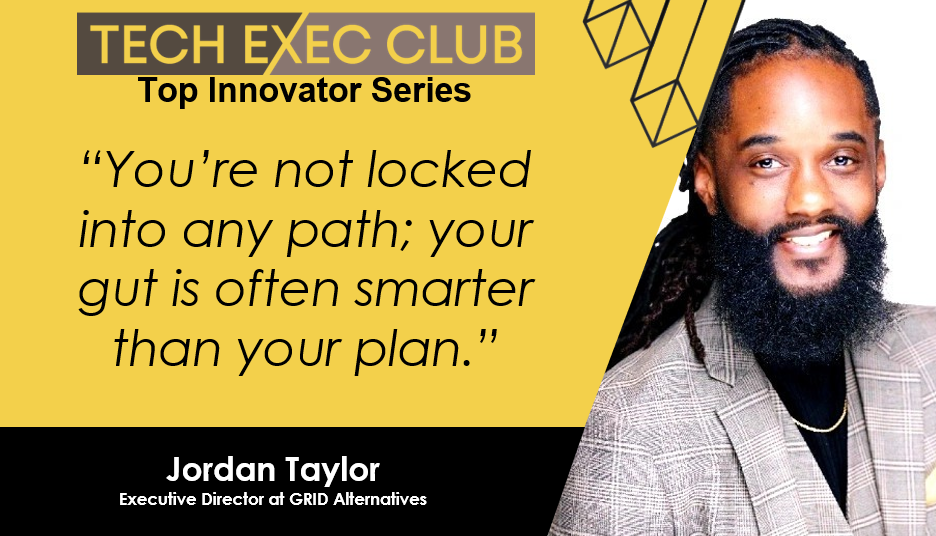
When you think of a CTO, you might imagine a hyper-technical mastermind buried in code, disconnected from the human side of innovation. But Jordan Taylor is breaking that mold—and building something far more potent in its place.
As the CTO of UnityCloud, Executive Director of GRID Alternatives, and Chair of the Board of SynergyGrid, Jordan stands at the intersection of technology, sustainability, and leadership. But beyond the impressive titles, what defines him is his relentless focus on people—mentorship, empathy, and building purpose-driven teams. In a world obsessed with speed and scale, Jordan offers a refreshing, deeply human take on leadership in the tech world.
In this exclusive interview on the Top Innovator series, Jordan dives into how he navigated from engineering to solar sales, how mentors shaped his trajectory, why he believes intuition should guide your path, and what leadership really demands in the age of artificial intelligence.
Let’s dive into the lessons, stories, and strategies from a leader who’s turning technology into transformation.
Mentorship and the Power of Paying It Forward
For Jordan Taylor, leadership begins with people—and specifically, investing in their growth. He credits much of his own success to the mentors who believed in him, redirected his path, and challenged him to grow. One mentor, whom he met in seventh grade, remained a guiding presence through high school, college, and beyond. That relationship wasn’t just formative; it became a model for how Jordan now leads others.
As a mentor, Jordan flips the script: rather than starting with what someone lacks, he begins with who they are. “I stay a student,” he says. “I learn the person first.” By learning what excites and drives people, he helps them discover their own unique “superpowers.” These aren’t skills you give someone—they’re already there, waiting to be unlocked.
His approach is intensely hands-on. Whether it’s helping mentees overcome fear in sales or identifying environments where they thrive, Jordan makes a point of investing real time in their potential. It’s not about top-down guidance; it’s about reflection, encouragement, and creating conditions for others to succeed.
In Jordan’s world, leadership isn’t about being in charge. It’s about serving others by helping them realize their fullest potential—and then paying that gift forward.
Bridging Engineering with People Skills
Jordan Taylor is a rare breed: part systems thinker, part empath. Trained as an engineer, he found himself unexpectedly drawn into the world of sales—something he initially resisted. “People are squishy,” he jokes. “They don’t follow fixed rule sets as machines do.” But rather than retreating back into the safety of formulas and frameworks, he did what engineers do best: he deconstructed the challenge.
Jordan approached human behavior with the same rigor he once applied to engineering problems. He analyzed patterns and developed systems for social interaction. He even began to predict responses the way he once predicted code or current. The result was a surprising realization—he could be great at this.
In solar sales, his technical knowledge became an asset. He could translate complex concepts into plain English and explain the environmental impact and financial benefits of solar with clarity and confidence. More importantly, he learned how to transfer energy—to engage and inspire people with a sense of purpose.
This fusion of analytical and interpersonal skills is what sets Jordan apart. He isn’t just building tech. He’s building trust. His journey is proof that emotional intelligence can be learned. When paired with technical expertise, it becomes a decisive leadership advantage.
Purpose-Driven Work: Finding Passion in Clean Energy
For Jordan, solar energy is more than a job—it’s a mission. Long before he stepped into executive roles, he felt a deep, personal connection to nature. Raised partly in rural Virginia, he recalls barefoot summers, open fields, and the grounding power of the outdoors. As he grew older and witnessed the environmental consequences of industrial growth, that connection turned into a calling.
Solar gave him an outlet for both his analytical mind and his environmental heart. “It was my cheat code,” he says. “I loved helping people. I loved the planet. And it made financial sense.” That rare alignment—between values, skills, and income—made the work not just fulfilling, but sustainable.
But Jordan’s story isn’t just about finding passion—it’s about building it. He encourages others to pay attention to what they’re naturally drawn to. What do you do without being told? What lights you up when you talk about it? Sometimes, your purpose doesn’t appear in a lightning strike—it emerges from the small clues you follow over time.
For him, clean energy isn’t just about climate. It’s about equity, health, and economic freedom. It’s about building a world where future generations don’t need gas masks—just clean air and possibility.
Lessons from Mentors: Trust Your Gut
Some of the most profound leadership advice Jordan ever received wasn’t technical, strategic, or based on performance metrics. It was much simpler than that: “Listen to your gut.”
It came from a mentor who had known him since he was building wind turbines in middle school—a mentor who had shown up for him repeatedly, even driving across states to support him during college. When Jordan hit a moment of doubt in his early career, he turned to this trusted advisor, expecting a detailed plan or step-by-step guidance. Instead, the advice was this: “If it doesn’t feel right, don’t do it. Try something else.”
That moment marked a turning point. Jordan realized that too often, people get stuck in careers or roles that drain them because they feel obligated or afraid to start over. But as he learned, it’s not failure to pivot—it’s wisdom.
Now, as a leader, Jordan urges others to do the same: tap into intuition, prioritize well-being, and let go of paths that no longer fit. As he puts it, “You can’t pour from an empty cup.” Leadership doesn’t mean sacrificing yourself. It means leading from a place of alignment and authenticity.
Thoughtful Leadership in a High-Stakes World
In an era defined by exponential technology and environmental urgency, Jordan believes leaders must evolve. It’s no longer enough to move fast and break things. Today’s decisions shape not just companies, but communities, ecosystems, and generations.
That’s why Jordan’s leadership framework blends decisiveness with deep reflection. When making tough calls, he assesses whether a decision is irreversible. If it’s not, he pulls the trigger and iterates. But when the stakes are high—especially in fields like artificial intelligence—he slows down. “We don’t always get to walk things back,” he says.
He also advocates for real-time feedback loops in leadership. Too often, leaders make decisions in isolation, without seeing their immediate impact. Jordan believes instant feedback could help leaders course-correct before damage is done. It’s a kind of ethical GPS—helping those in power navigate with accountability and care.
As a former “gunslinger” who once thrived on fast execution, Jordan is now learning the value of patience, presence, and foresight. In his view, authentic leadership is less about speed and more about sustainability. It’s about asking: What are the long-term consequences of today’s choices?
Jordan Taylor’s journey offers not just inspiration but also a roadmap for leading with empathy, clarity, and purpose. Here’s how you can start applying his principles right now:
- Invest in Mentorship—Be a Student First: Start with the person. Before offering advice or direction, take time to understand their story, what drives them, and what makes them unique. Help others find their “superpower.” Your role as a leader or mentor isn’t to give people strengths—they already have them. Your job is to help them see it. Mentor with presence, not just advice. Spend real time with your mentees. Ask questions, observe their growth, and provide consistent feedback.
- Blend Logic and Emotion—Master the Human Side of Leadership: Use your technical or analytical skills to decode people. Don’t shy away from “soft skills”—systematize them like you would any engineering or business problem. Practice transferring energy, not just knowledge. Leadership is emotional—if you’re excited, people will follow. Bridge the gap between tech and communication. Learn how to simplify complex ideas and speak in human terms.
- Align Your Work with Your Purpose: Audit your daily activities. What do you do without being asked? What energizes you? Look for intersections. Where do your skills, passions, and income opportunities overlap? That’s your sweet spot. Choose mission-driven projects. If your work supports people or the planet (or both), you’ll feel more driven and connected.
- Trust Your Gut—And Give Yourself Permission to Pivot: If something doesn’t feel right, stop. Jordan’s mentor taught him to trust his intuition—and that it’s okay to change paths. Don’t stay stuck out of obligation. You’re not locked in. Life is long. Start over if needed. You can’t lead others if your cup is empty. Prioritize your energy, alignment, and well-being.
- Make Decisions with the Future in Mind: Use Jordan’s decision framework: Is it irreversible? If not—act. If yes—pause and plan. Design feedback loops. Seek input from team members and those affected by your decisions. Adjust in real time. Slow down when the stakes are high. In areas like AI, sustainability, or culture, take the time to reflect. Long-term thinking is modern leadership.
Jordan Taylor isn’t just a CTO, executive director, or board chair—he’s a new kind of leader. One who merges engineering precision with emotional intelligence, and technical knowledge with human-centered impact. Through every phase of his journey—from building wind turbines in middle school to guiding organizations at the cutting edge of energy and innovation—Jordan has never lost sight of what matters most: people.
Whether he’s mentoring young professionals, guiding teams through complex decisions, or advocating for clean energy and equity, Jordan leads with purpose and intentionality. He doesn’t just talk about change—he builds the systems, relationships, and cultures that make it possible.
In a world facing unprecedented challenges and opportunities—from climate change to artificial intelligence—Jordan’s thoughtful, mission-driven leadership stands out. It reminds us that true innovation isn’t just about the next big thing. It’s about who we become along the way and how we bring others with us.
As the world looks to the future, it could use more leaders like Jordan Taylor.
Want to hear Jordan Taylor’s insights firsthand? Watch the full, live podcast interview [click here]