What does it take to lead in a world where cyber threats evolve faster than firewalls can adapt—and where leadership is no longer about knowing the tech, but about managing risk?
In this riveting conversation for the Top Innovator Series, cybersecurity veteran Stephen Fridakis pulls back the curtain on his journey from a motorcycle courier in Athens to executive roles at companies like HBO, Google, Oracle Health, and now as CISO-in-Residence at Cyderes. With candor and insight, Stephen unpacks how his rise wasn’t powered by a conventional path or even domain-specific expertise—but rather by a blend of calculated risk-taking, mentorship, and a relentless drive to evolve.
“When I joined HBO, I told them I knew nothing about broadcasting,” he laughs. “They said, ‘That’s why we want you.’”
In a field often dominated by rigid frameworks and technical dogma, Stephen offers a refreshingly human take on what authentic leadership looks like in cybersecurity—and where it must go next. From transforming compliance into actual protection, to mentoring the next generation of innovators, to navigating the ethical dilemmas of AI, Stephen’s story is as timely as it is timeless.
Let’s dive into the key themes that shaped Stephen’s remarkable career—and explore what every current and aspiring leader can learn from his approach.
The Power of Risk-Taking in Career Advancement
Stephen Fridakis’s career is a masterclass in bold moves. While many professionals wait for perfect alignment before stepping into new roles, Stephen’s strategy was different: see the opportunity, assess the risk, then leap—even if you’re not the “perfect fit.”
One of the most illustrative moments came when he was hired as HBO’s CISO. At the time, he was working for Amazon and openly admitted during the interview that he knew “nothing about broadcasting.” But rather than disqualify him, his honesty was exactly what sealed the deal. “We actually want a CISO who is not from broadcasting,” they told him.
This willingness to embrace the unknown—when it aligned with his values and offered space for growth—became a guiding principle in Stephen’s leadership journey. It wasn’t just about blind risk-taking. It was calculated, intuitive, and informed by a belief in long-term value over short-term comfort.
That mindset helped him transition from software development to cybersecurity, from projects to executive leadership, and across multiple industries. For Stephen, risk isn’t a red flag—it’s a signpost pointing to growth.
In today’s increasingly volatile business environment, his lesson is loud and clear: Don’t wait until you’re ready. If you see potential, trust your instincts and build the readiness along the way.
From Tech Expert to Risk-Centric Leader
In the early days of his cybersecurity journey, Stephen wore his technical chops as a badge of honor. A developer turned project manager, he had a deep understanding of systems, code, and networks. But over time, he realized something critical: deep technical knowledge can actually limit your leadership reach if not reframed in business terms.
“The security leader who talks about patching or VLANs is someone who’s already lost their audience,” Stephen explains. Today, the real conversation is about risk—not routers.
This shift from tech-centric to risk-centric leadership is the defining transformation in cybersecurity over the last decade, and Stephen has been at the forefront. He’s helped executive teams and boards translate complex technical risks into clear business priorities, asking questions like, “What do you have to lose?” What’s the essential thing (VIT)?
Stephen’s approach isn’t about abandoning technology—far from it. It’s about elevating the dialogue. Authentic cyber leadership, he argues, is about connecting operational threats to strategic outcomes, helping organizations prioritize efforts around what truly matters.
The lesson? Tech leadership is no longer about how much you know—it’s about how well you can translate, prioritize, and influence. And in doing so, Stephen has moved from the server room to the boardroom.
Mentorship as a Catalyst for Growth
For Stephen, mentorship didn’t just influence his career—it changed the trajectory of his life. One pivotal moment came when he was working in accounting and met a Greek-American professional who encouraged him to switch tracks and explore quality assurance. He didn’t even know what that meant at the time—but he said yes.
That leap led to his first real exposure to software development environments, and to the mentor’s most lasting advice: “Don’t take what you see at face value. Be curious. Think like Sherlock Holmes.” It was a mindset that would come to define Stephen’s approach to both security and leadership.
As his career advanced, so did his commitment to pay it forward. Today, Stephen actively mentors aspiring entrepreneurs and cybersecurity professionals. He regularly receives messages on LinkedIn, many of them from early-stage founders or career switchers. “Half of them are sales,” he jokes, “but the other half have genuine ideas.”
Rather than sugarcoat his advice, Stephen is refreshingly honest. If an idea won’t work, he says so—and explains why. If it’s already been done, he’ll point them to competitors. And if there’s promise, he’ll roll up his sleeves and help them build it.
The impact of mentorship, both received and given, is central to Stephen’s leadership ethos. It’s not about just climbing the ladder—it’s about extending your hand back down.
Bridging Compliance and Real Security
“Compliance is not security,” Stephen says bluntly. “But oh my God, it’s taking so much of our time.”
That sharp insight cuts to the heart of a growing problem in modern cybersecurity: organizations pour resources into checking compliance boxes, yet still remain vulnerable. Stephen is on a mission to change that by integrating compliance frameworks with real-world risk management.
From his work with Cyderes to his previous leadership roles, he has seen how frameworks often overlook major operational areas—such as software development processes. Meanwhile, businesses are lulled into a false sense of security simply because they’ve passed an audit or hung a certificate on the wall.
For Stephen, the solution isn’t to abandon compliance—it’s to reshape it. He’s working to ensure that organizations can be both compliant and secure by aligning frameworks with how systems, data, and threats actually function today.
It’s a nuanced battle. Compliance satisfies regulators and stakeholders. Security protects the business. The real challenge? Making them one and the same.
As Stephen sees it, authentic leadership in cyber means challenging the comfortable, slow-moving processes that create risk through complacency. And it starts with asking the right questions—not just to pass audits, but to stay safe.
The Future of Identity-Driven Security and AI Trust
Looking forward, Stephen isn’t just focused on next-gen firewalls or encryption tools. He’s focused on identity—especially non-human identity.
In a world where software agents, automated processes, and AI systems act on behalf of humans, traditional network-based security models are quickly becoming obsolete. “With firewalls, people know how to build rules,” he says. “With identity, especially non-human identities, the thought process is still primitive.”
Stephen’s vision is clear: security must evolve into an identity-first approach. That means developing better templates, rules, and verification models for both humans and machines. It also means zero trust isn’t just a philosophy—it needs to become operationalized across every layer of access.
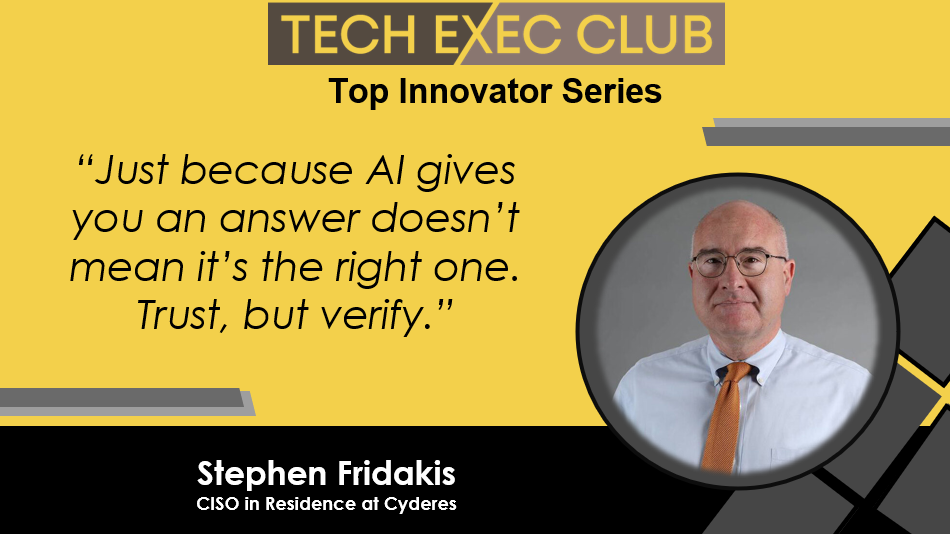
But that’s not all. Stephen also worries about bias, misinformation, and overconfidence in AI-driven decisions. As machine-generated data starts to influence everything from M&A evaluations to security threat detection, leaders must develop a skeptical, informed lens.
“Just because it’s on a screen doesn’t mean it’s right,” he warns.
The future of leadership, according to Stephen, is about more than tech stacks and KPIs. It’s about building trust in systems, discernment in decision-making, and accountability in how we use powerful tools.
Inspired by Stephen Fridakis’s journey and insights, here’s how you can take action—whether you’re an aspiring leader, cybersecurity professional, or business executive:
- Say Yes Before You’re Ready: Stop waiting to feel “fully qualified.” If an opportunity excites you, take a calculated risk as Stephen did. Growth often begins when you’re slightly outside your comfort zone.
- Shift from Tech-Speak to Business Impact: If you’re in cybersecurity or any technical leadership role, challenge yourself to frame your work in business terms. Don’t talk about patching—talk about what’s at risk. Learn to prioritize and communicate based on what matters to the business.
- Seek Mentors—and Be One: Whether you’re early in your career or in the C-suite, mentorship is a multiplier. Find people who will challenge your assumptions and expand your thinking. And when you can, pay it forward—like Stephen does—by mentoring others honestly and generously.
- Align Compliance with Real Security: Audit checklists won’t protect your organization. Make sure your security efforts go beyond compliance and address real operational risks. Start asking: Are we compliant? And are we actually safe?
- Prioritize Identity-Based Security: Start assessing your organization’s readiness to move from network-centric to identity-first security models. Pay special attention to non-human identities, and prepare for the complexity of securing automated agents and AI systems.
- Stay Critical of AI-Driven Decisions: AI will shape the future—but don’t outsource your thinking. Learn to interrogate the data and tools you rely on. Build confidence not just in the systems, but in your ability to question them.
Stephen Fridakis is more than a cybersecurity expert—he’s a visionary leader who challenges the industry to grow up, get smarter, and stay human. From his humble beginnings as a courier in Athens to leading security efforts at HBO, Oracle, and now Cyderes, his story is one of reinvention, integrity, and purpose.
He doesn’t just lead with strategy—he leads with clarity, curiosity, and courage. He’s not afraid to take risks, to say “I don’t know,” or to mentor someone who’s just getting started.
In a world where complexity often clouds leadership, Stephen is a rare voice of clarity and conviction.
His message? Don’t just do the job. Redefine the role. Question the obvious. And always leave it better than you found it.
Want to hear Stephen’s insights firsthand? Watch the full, live podcast interview [click here]