What if the key to outstanding Leadership isn’t striving to become one, but realizing you already are?
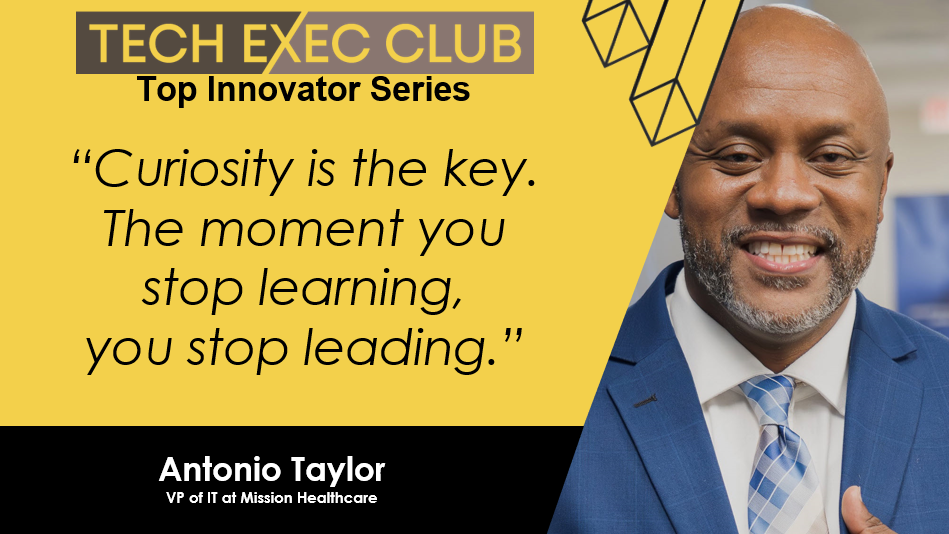
In this candid and insightful interview, Antonio Taylor, Vice President of IT at Mission Healthcare and author of Stop Trying to Be a Leader, opens up about his unconventional path from hands-on engineer to executive leader. Along the way, he shares powerful lessons on mentorship, personal authenticity, and building people—not just systems.
A rising voice in both healthcare IT and leadership development, Antonio reveals how he overcame self-doubt, shed the performance mask, and embraced his calling: empowering others to lead. Whether you’re a first-time manager, a seasoned executive, or somewhere in between, Antonio’s journey delivers practical wisdom for the modern workforce—from navigating career pivots to managing imposter syndrome to learning how to lead with purpose in an AI-driven world.
This isn’t just another story about climbing the corporate ladder. It’s a wake-up call to lead with intention, humility, and heart.
From Reluctant Engineer to Empowering Leader
Antonio Taylor never set out to be a leader. In fact, he actively resisted it.
Deeply immersed in his work as a tech specialist—writing code, creating packages, solving technical puzzles—Antonio had a clear trajectory in mind: become a top-tier engineer. Leadership wasn’t part of the plan. That changed when a senior leader saw something in him he hadn’t yet recognized in himself.
“I think you’re great at being a tech,” his leader told him. “But I think you’re even better with people.”
That simple statement sparked a turning point. An opportunity emerged to lead a small IT team after an acquisition. Initially, Antonio pushed back, unsure if he was ready—or even interested. But as he reflected on the idea, something deeper stirred. He remembered the values instilled in him by his grandparents: build people, build community, pave the way for others.
That realization reframed everything. Leadership, he discovered, wasn’t about abandoning tech—it was about elevating people. He saw that his natural strengths—his curiosity, strategic thinking, and empathy—were not only compatible with Leadership but also essential to it.
“I’m no longer using just my hands. I’m using my mind. My intuition. My soft skills. And I’m still reaching the goal—I’m just doing it through others,” he shared.
Antonio’s journey into Leadership wasn’t a linear climb. It was a leap of trust—first from someone else, then from himself. And that leap has shaped his leadership philosophy ever since: Leadership is not about the spotlight; it’s about making others shine.
Mentorship and the Power of Asking the Right Questions
One question changed everything for Antonio Taylor.
Early in his career at an extensive hospital system, Antonio found himself in a room full of IT staff meeting the CIO—a rare opportunity. The culture at the time was clear: when senior Leadership speaks, you stay quiet. But Antonio’s curiosity wouldn’t let him sit still. So when the CIO opened the floor for questions and was met with silence, Antonio raised his hand and asked, “How do I get your job?”
The room froze. Asking a question that bold, that direct, as a newcomer? Unheard of.
But instead of reprimanding him, the CIO smiled. “Nobody’s ever asked me that before,” he said. And in that moment, something clicked. Antonio didn’t just ask a question—he demonstrated drive, vision, and the courage to disrupt norms. The CIO took him under his wing on the spot, offering mentorship that would shape Antonio’s entire trajectory.
That mentorship wasn’t casual. The CIO gave him case studies to analyze, invited him to high-level meetings, and coached him on executive thinking. Antonio learned to see the bigger picture—not just how technology worked, but why it mattered.
Another mentor, a hospital CEO, gave him three lasting pieces of advice:
- Always look the part. Dress for the job you want.
- Set yourself apart. Discover and own your unique strengths.
- Don’t be afraid to lead. Even if it means leaving comfort zones behind.
For Antonio, these weren’t just career tips—they were confidence-building truths. They reinforced what he came to believe about Leadership: you rise by staying curious, asking bold questions, and having the humility to learn from those who’ve gone before you.
The Shift from Tech for Tech’s Sake to Business Value Thinking
Antonio Taylor thought he had nailed it.
Tasked with presenting a proposal to transition his organization to Microsoft Office 365, he built what he believed was a flawless presentation—sleek slides, cutting-edge features, and a strong technical rationale. But when he pitched it to the CFO, the reaction stunned him.
The CFO looked up and asked one question: “What’s broken?”
Antonio paused. He had explained the benefits. He had shown the future. But he hadn’t answered the most critical question in the room: Why does this matter to the business—right now?
In that moment, something fundamental shifted. “I was never going to do tech for tech’s sake again,” Antonio said. It wasn’t about the tool. It was about solving real problems.
Challenged to return in 30 days with a business-oriented proposal, Antonio went back to the drawing board. He reframed the pitch around ROI, cost of ownership, and operational resilience. He connected the dots between the platform and what mattered most to decision-makers: flexibility, scalability, and long-term savings.
The CFO approved the project—and a month later, the pandemic hit. Suddenly, remote access became critical, and Office 365 made the transition seamless. The problem Antonio had forecasted—mobility and business continuity—had arrived.
That experience reframed how Antonio leads IT teams. He now champions a business-first mindset: listen before proposing, understand the “why” before the “what,” and build tech strategies that solve real problems, not just implement trendy solutions.
For Antonio, Leadership isn’t about deploying systems—it’s about enabling progress.
The Message Behind the Book: “Stop Trying to Be a Leader”
The title of Antonio Taylor’s book, Stop Trying to Be a Leader, is deliberately provocative—and that’s the point.
In a world obsessed with leadership hacks, motivational quotes, and constant performance, Antonio flips the script: What if you stopped performing and started owning who you already are?
“You don’t have to try to be what you already are,” Antonio says. “We’ve all been given unique gifts—we’re already leading, whether we realize it or not.”
The book isn’t about climbing the ladder. It’s about taking off the mask—the one so many professionals wear to fit in, play safe, or earn approval. Antonio shares how he once found himself leading rather than embodying Leadership. He silenced his voice in meetings, avoided conflict, and conformed to expectations. Over time, he lost touch with his own leadership identity.
But reclaiming it required radical self-reflection. One of the most powerful tools in the book is the idea of the “life resume”—a document of personal milestones, struggles, wins, and defining moments that reveal the actual shape of your character and experience.
Forget titles. Were you raised in a military family? You know change management. Did you navigate life as a single parent? You understand resilience and strategic planning. These are the hidden qualifications we overlook—but they shape the leader within.
The book challenges readers to stop outsourcing their worth and start leading from authenticity. Because, as Antonio puts it, “Leadership isn’t about seeking affirmation. It’s about showing up as your whole self—and empowering others to do the same.”
Remaining Curious: Leadership Growth Never Stops
For all of Antonio Taylor’s achievements—executive roles, board positions, authoring a book—he’s the first to admit: he’s still learning.
“I used to think, ‘I’ve made it. I don’t need to learn anything else.’ And that was the biggest mistake,” he reflects.
The world of work has changed. Today’s workforce is faster, more tech-savvy, and more fluid than ever before. Remote work is reshaping expectations. AI is challenging how we define productivity. And for someone like Antonio—an extrovert who thrives on in-person connection—adapting hasn’t always been easy.
But instead of resisting, he’s choosing to lean in.
He’s diving into AI, new business models, and unfamiliar healthcare regulations—not because he has to, but because he wants to remain relevant and impactful. He’s reading a book a month, expanding beyond Leadership into other fields, seeking out insights that challenge his thinking.
The same curiosity that got him noticed early in his career—the courage to ask bold questions—is now the fuel that’s keeping him ahead of the curve.
Remaining curious, Antonio says, is about humility. It’s admitting you don’t know it all. It’s having the hunger to grow even when you’re already “at the top.” And it’s recognizing that Leadership isn’t a destination—it’s a constant evolution.
“I’m learning again,” he says. “Not just about tech, but about people. About myself. And that’s how I keep growing.”
Antonio Taylor’s leadership path offers more than inspiration—it delivers a playbook for action. Whether you’re a rising professional, a team leader, or a seasoned executive, here are the practical takeaways you can implement today:
1. Identify and Embrace Your Hidden Leadership Qualities: Reflect on the moments where you’ve naturally led—without needing a title. Ask yourself: Where have I helped others grow? When have I stepped up, even informally? Realize you may already be leading—stop waiting for permission.
2. Find or Become a Mentor: Seek out leaders who’ve walked the path you want to take. Don’t be afraid to ask bold questions as Antonio did: “How do I get your job?” If you’re already in a leadership role, look for rising talent and offer guidance, encouragement, and support.
3. Stay Curious and Keep Learning: Commit to lifelong learning. Read a book a month, explore emerging tools like AI, and stay open to new perspectives. Don’t let your current success stop your personal growth—evolve with the world around you.
4. Build Your Life Resume: Create a personal resume of life experiences, not just job titles. Include challenges you’ve overcome, cultural transitions, or roles where you’ve built resilience. This life resume is proof of your strength—and a roadmap for your Leadership.
5. Shift from Tasks to People: Prioritize people over projects. Ask: Who am I developing? Who am I lifting up? Remember, Leadership isn’t about how much you get done—it’s about how many others you empower along the way.
6. Stop Performing—Start Being: Drop the mask. Stop waiting for affirmation. Step into your whole, authentic self. You were born with a unique leadership voice—use it.
Antonio Taylor doesn’t fit the traditional mold of a leader—and that’s precisely why he’s so impactful.
As Vice President of IT at Mission Healthcare, a board member for nonprofits, and the author of Stop Trying to Be a Leader, Antonio is redefining what Leadership looks like in today’s world. He leads not from ego or hierarchy, but from purpose, humility, and a deep belief in people.
His journey from a reluctant engineer to a transformational executive is proof that Leadership isn’t about titles—it’s about impact. It’s about mentoring others, staying curious, leading with empathy, and stepping fully into your story.
Antonio challenges us all to stop performing and start being. To drop the mask, own our unique strengths, and lead in a way that’s true to who we are.
Because in the end, the most potent kind of Leadership doesn’t come from trying harder—it comes from showing up, fully and fearlessly, as yourself.
Want to hear Antonio’s insights firsthand? Watch the full, live podcast interview [click here]