When Dave Alton discusses leadership, he doesn’t begin with metrics, organizational charts, or innovation roadmaps. He starts with people — and more specifically, with liking them. It’s an unexpected declaration from a tech executive, especially one as accomplished as Dave, who serves as CTO of Strategic Information Resources and chairs the Global Cybersecurity Task Force at the Global Technology Industry Association. But that’s precisely what makes his leadership approach so disruptive — and so necessary.
In a field that often prides itself on intellectual horsepower and technical exactitude, Dave has carved out a unique identity as a leader who equates emotional intelligence with engineering brilliance. Buzzwords or leadership hacks don’t drive his leadership philosophy. It’s built on small, human actions: listening for intent, modeling humility, asking others to “show me” rather than “convince me,” and creating space for people to fail safely. This isn’t softness — it’s strategy. And it’s working.
Throughout his career, Dave has coached what he lovingly calls his “cadre of tech degenerates” — highly skilled, hyper-technical minds — to evolve into people-centric leaders. He’s made it his mission to unlock leadership potential by first unlocking human potential. With AI now part of the leadership toolkit, Dave is once again ahead of the curve, using it not just for efficiency but for empathy, role-playing, and real-time growth.
This is Dave Alton: part engineer, part mentor, part cultural change agent. And this is the leadership playbook he’s quietly rewriting — one conversation, one relationship, one legacy at a time.
Leading by Liking People — Not Just Managing Them
For most tech leaders, interpersonal skills are considered a nice-to-have — a soft layer on top of the hard core of technical mastery. But for Dave Alton, CTO of Strategic Information Resources, liking people isn’t an accessory to leadership — it’s the foundation. “I like people,” he says unapologetically as if this simple sentiment explains everything. And in a way, it does.
In the world of cybersecurity leadership, where decisions are driven by risk assessments, compliance protocols, and rapidly evolving threats, Dave’s people-first mindset is not only rare — it’s radical. He openly challenges the archetype of the introverted, aloof tech executive who hides behind monitors and metrics. Instead, he leads with empathy, curiosity, and emotional intelligence — and it’s this approach that has fueled his rise in one of the most high-stakes sectors of technology.
Dave doesn’t just tolerate people; he seeks to understand them. He listens not only to what his team members say but to why they say it. “Most people aren’t trying to be difficult,” he explains. “They just want to be heard, even if they don’t know how to express it clearly.” This approach has helped him transform conflict into collaboration, disengagement into motivation, and technical teams into human-centric cultures.
At a time when the cybersecurity field needs new leadership models, Dave’s story serves as a powerful counter-narrative. His success doesn’t come from coding brilliance or strategic posturing but from one bold, transformative decision: to lead with heart. And in doing so, he’s proving that the most significant innovations in tech leadership may not be digital — they may be human.
Listening for Intent, Not Just Content
One of the most profound — and practical — leadership insights Dave Alton shares is his approach to communication: listening for intent rather than just content. In high-pressure environments like cybersecurity and enterprise IT, conversations can quickly become transactional or even confrontational. But Dave has learned that what someone says is often less important than why they’re saying it.
“When you’re listening only to the words, it’s easy to get triggered, to react emotionally, or to misunderstand someone’s motive,” Dave explains. “But when you listen for intent, you create space — for grace, for understanding, and deeper trust.” This ability to decode the human subtext behind a statement is one of Dave’s most valuable leadership tools. It helps him navigate difficult conversations, de-escalate conflict, and uncover hidden opportunities for alignment.
In a sector that’s often focused on precision and performance, Dave brings nuance and patience. His approach isn’t passive — it’s active listening at its highest level. He engages by asking questions like “What do you need right now?” or “What’s driving this concern?” These inquiries don’t just solve problems; they build loyalty and psychological safety within his teams.
This principle has direct implications for cybersecurity leadership, where miscommunication can lead to missed threats or failed deployments. Dave’s method is a reminder that clarity doesn’t always come from talking more — it comes from listening better. And in a world of noise, distraction, and defensiveness, listening for intent becomes a superpower.
For aspiring leaders — especially those in tech — this mindset shift may be uncomfortable at first. But as Dave demonstrates, it’s also a path to influence, credibility, and sustainable impact.
Modeling Leadership Over Mandating It
In today’s fast-moving tech culture, where agility and authority often collide, Dave Alton’s leadership philosophy cuts through the noise with rare simplicity: if you want people to lead, show them how — don’t just tell them what. As CTO of Strategic Information Resources, Dave has seen firsthand that authentic leadership isn’t about having the loudest voice in the room or the longest list of credentials. It’s about being willing to model the behaviors you expect from others, no matter how big or small the task.
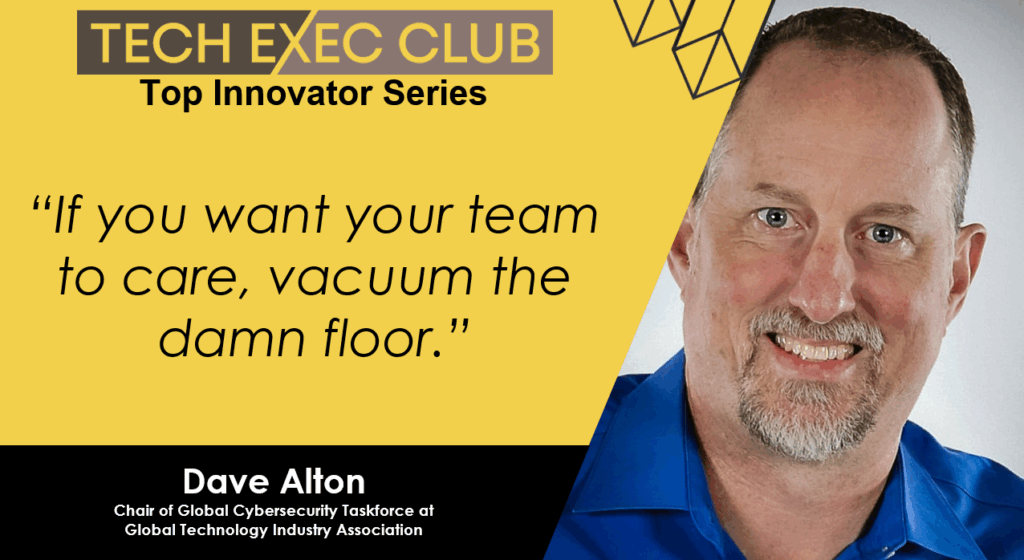
This is not symbolic leadership. Dave vacuums the floor if it needs to be done. He shares workloads. He listens actively. And he never places himself above the team, even when his title or experience might justify it. “Leadership,” he says, “isn’t what you say from the top. It’s what you do shoulder to shoulder.” This ethos has created a ripple effect across his organization, inspiring others not through obligation but through observation and replication.
Modeling leadership is especially crucial in industries such as managed IT services and cybersecurity, where teamwork, precision, and resilience are essential. By visibly embracing the mindset and behaviors he wants to instill — from integrity and humility to openness and follow-through — Dave creates a culture where values aren’t just preached; they’re practiced.
The result? A team that mirrors its leader. Employees who take the initiative. Colleagues who respect each other. A bench of emerging leaders who are quietly absorbing more than any corporate training program could ever teach them.
In a field that’s often obsessed with performance metrics, Dave is investing in something far more lasting: leadership culture by example. And that, perhaps more than any directive, is how fundamental transformation begins.
Growing Through Mentorship and Vulnerability
Ask Dave Alton about the most pivotal moments in his leadership journey, and he won’t talk about promotions, big wins, or conference keynotes. Instead, he’ll take you back to two defining experiences: a piece of confusing career advice from an early manager — “Sometimes you have to move out to move up” — and a gutsy moment when he told a CIO, straight-faced, “I want your chair.”
These weren’t just bold statements or career moves. They were invitations — for guidance, for correction, for growth. And Dave seized them. That ability to step into the unknown to admit he didn’t have all the answers is what continues to define his trajectory as a tech leader and mentor. Vulnerability, he says, isn’t weakness. It’s strategy. “When you share what’s going on with you,” he notes, “it opens the door for deeper relationships — and more meaningful leadership.”
Mentorship plays a recurring role in Dave’s development — not just as a recipient but increasingly as a giver. He recalls being groomed by a CIO who challenged him to start being the role he wanted, not just aiming for it. That mindset has stuck with him, and now he brings that same clarity and challenge to the next generation of leaders under his wing.
In the cybersecurity and IT world, where many professionals climb the ladder through technical mastery alone, Dave is showing that emotional maturity, self-awareness, and mentorship are equally vital assets. He coaches his so-called “cadre of tech degenerates” with empathy and candor, helping them evolve into leaders who not only solve technical problems but also elevate the people around them.
By normalizing vulnerability and elevating mentorship, Dave is building something most leadership frameworks overlook: a human legacy in a technical world.
Using AI for Empathy and Strategic Insight
For many executives, artificial intelligence is simply a tool — a means to automate tasks, analyze trends, or expedite decision-making. But for Dave Alton, AI is something more personal, more human, and perhaps even more profound. He sees it as a mirror for leadership development, a platform to rehearse empathy, and a companion for self-discovery.
Dave’s use of AI goes far beyond chatbots and dashboards. He leverages it to model difficult conversations, role-play challenging scenarios, and explore leadership dynamics in a risk-free environment. “It’s awkward sometimes to role-play with people, even though it shouldn’t be,” he admits. “But with AI, I can rehearse those situations, get feedback, and sharpen my instincts — all without judgment.” In essence, AI becomes a leadership gym where he can strengthen soft skills as rigorously as he once honed his technical ones.
This perspective is particularly significant in cybersecurity leadership, where the pace of change and the weight of responsibility often leave little room for reflection. AI gives Dave the edge — not because it provides answers, but because it prompts him to ask better questions. It helps him explore complex team dynamics, anticipate reactions, and prepare for the unexpected. And it serves as a bridge between logic and empathy — two pillars of his leadership philosophy.
Dave also sees AI’s strategic advantage: its ability to process vast amounts of data and surface patterns a human leader might miss. However, he tempers this power with caution and care, constantly verifying and thinking critically. “AI can help you lead better,” he says, “but only if you use it to understand people, not replace them.”
In Dave’s world, technology doesn’t override humanity — it enhances it. And as AI becomes an ever-larger part of the modern workplace, leaders like him are quietly showing the world how to integrate it with empathy, intelligence, and heart.
Dave Alton’s leadership isn’t theoretical — it’s convenient, repeatable, and rooted in real-life experience. Here’s how you can begin to apply his insights in your leadership journey today:
1. Choose to Like People — Actively: Don’t just tolerate your team — get curious about them. Find the intent behind challenging behavior, not just the content. Recognize that liking people is a leadership skill that can be developed, not just an innate trait.
2. Listen With Empathy and Intent: When engaging with someone, shift from “What are they saying?” to “Why are they saying it?” Pause your judgment and reframe emotionally charged statements by seeking the underlying need. Practice active listening: reflect, ask clarifying questions, and be open to changing your perspective.
3. Lead by Example — Not by Title: Be the leader who vacuums the floor. Small acts of humility ripple loudly. Model the mindset and behaviors you want your team to adopt — your actions are always teaching. Share your struggles, not just your victories. Let people see how leadership looks in action.
4. Embrace Vulnerability and Mentor Boldly: Share your ambitions and fears with trusted mentors or mentees — it builds connection and growth. Be the person who says, “I want your chair,” and be willing to grow into it. Offer others what you’ve learned — your mentorship could be the turning point in someone’s career.
5. Use AI to Enhance Empathy, Not Just Efficiency: Leverage AI to simulate difficult conversations, explore leadership scenarios, and build emotional range. Don’t just ask AI for answers — use it to develop better questions and deeper insights. Approach AI as a learning partner, not a shortcut. Use it to model complexity, not eliminate it.
Dave Alton doesn’t fit the mold of a traditional tech leader — and that’s precisely why he matters. In a field driven by systems, security, and speed, he’s redefining success by prioritizing humanity over hierarchy and connection over control. From his earliest days selling boxed software to guiding global cybersecurity strategy, Dave has remained grounded in one truth: leadership is not a solo achievement — it’s a shared experience built on trust, example, and genuine care for others.
As organizations scramble to adapt to the rise of AI and the pressures of digital transformation, Dave offers a blueprint for what leadership can look like when it’s powered by emotional intelligence. He reminds us that progress isn’t just measured by innovation — it’s also measured by the people we grow, the cultures we shape, and the legacies we leave behind.
Suppose the future of cybersecurity depends on anything. In that case, it may not be the following breakthrough algorithm — but rather leaders like Dave, who still believe that everything begins with listening, empathy, and the radical act of liking people.
Want to hear Dave Alton’s insights firsthand? Watch the full, live podcast interview [click here]