Rob Cabacungan didn’t set out to become a leader—he stepped into it the way many great engineers do: reluctantly, analytically, and with a healthy dose of skepticism. Promoted from within his team, he found himself navigating the complexities of leadership while still figuring out what the job meant. The praise he was used to as a top-tier individual contributor suddenly gave way to tough feedback and a sharp learning curve.
Instead of retreating, Rob responded the only way he knew how—by treating leadership as an engineering challenge. He immersed himself in books, dissected various management philosophies, and developed his authentic framework for technical leadership. What emerged wasn’t a textbook strategy but a deeply personal philosophy that values individual differences, embraces honest communication, and refuses to see people as fixed in their capabilities.
In this conversation, Rob shares what it took to earn trust, build tight-knit teams, and adapt his style to different environments—from the playful innovation lab at AOL to the high-speed demands of a lean startup. Through candid reflection, he reminds us that growth—both our own and that of those we lead—begins with setting aside our ego and believing in what people can become.
Leadership as an Engineering Challenge
When Rob Cabacungan stepped into his first formal leadership role, it wasn’t met with applause or a grand welcome. Instead, it began with uncertainty, self-doubt, and eventually, the sting of tough feedback—not from the manager who had promoted him, but several years later, when his team was folded into a much larger organization. The shift revealed new challenges in managing outward and navigating a more complex environment. For someone who had spent years thriving as a Senior Principal Software Engineer, consistently being at the top of his game, the shift was jarring. Suddenly, Rob found himself in charge of former peers, navigating team dynamics with no prior roadmap and facing difficult feedback that questioned his approach.
Rather than retreat into resentment or defend his past successes, Rob did what any seasoned engineer would do: he broke the problem down into manageable components. He viewed leadership not as a nebulous art but as a system that could be understood, dissected, and refined. He immersed himself in books—devouring theories, strategies, and case studies on leadership. But he didn’t unquestioningly accept what he read. Instead, he critically evaluated each idea, aligning them with his values and his lived experience. What he was doing was writing his operating manual for leadership—one based on honesty, clarity, and a deep commitment to authenticity.
Rob’s engineering mindset allowed him to strip leadership down to first principles. He rejected cookie-cutter frameworks in favor of a philosophy that made sense to him personally. He recognized that to be effective, he had to be himself—not someone mimicking the styles of charismatic executives or authoritative managers. His conclusion was simple yet profound: good leadership, like sound engineering, begins with understanding the problem, assembling the right tools, testing the solution, and continually improving. And just as in engineering, the solution had to be elegant, robust, and authentic to stand the test of time.
Building Authentic and Camaraderie-Driven Teams
Rob Cabacungan’s leadership philosophy is built on the firm belief that culture is not a side effect of good work—it is the foundation. During his time at AOL, he led what he considers one of the most cohesive and high-performing teams in the company, not because of any grand initiative or top-down directive, but because he understood that authentic connection drives meaningful collaboration. Rob recognized that engineering excellence alone does not make the team successful; it’s the human glue—the laughter, the shared stories, the small rituals—that turns a team into a tribe.
He fostered this ethos through deliberate practices. DIY Fridays gave engineers a break from their daily grind to explore personal projects, tinkering with ideas that didn’t have to align with immediate business goals. These moments weren’t frivolous distractions; they were incubators for innovation and passion. They also sent a clear message: your curiosity matters. In addition, Rob scheduled regular team lunches, not as a formality but as a space where genuine relationships could blossom. Once a year, they’d step out of the office entirely, hiking through the cherry blossoms or venturing to Harper’s Ferry. These weren’t just outings—they were trust-building exercises disguised as fun.
The result was palpable. Morale soared, ideas flowed freely, and team members felt seen—not as code-producing machines but as people with quirks, goals, and dreams. Rob’s team didn’t just function—they thrived, bonded by an environment where everyone was encouraged to bring their whole selves to work. Underneath the laughter and shared meals was a profound truth: psychological safety powers performance. Rob built a place where engineers didn’t just survive corporate life—they enjoyed it. And in doing so, he set a standard for what team culture in tech could—and should—look like.
Managing Upwards and Outwards: The Missed Skill
Rob Cabacungan is candid about the early blind spots in his leadership development, and one of the most significant was his initial neglect of managing outside the team. After putting in considerable effort to create a high-performing, close-knit engineering unit at AOL, he found it perplexing that the team’s broader reputation across the company didn’t match their internal performance. Internally, his squad was humming—delivering, innovating, collaborating. Externally, however, there were whispers of missed deadlines, unclear priorities, and disconnection. The dissonance forced Rob to take a hard look at a skill set he had undervalued: external communication and alignment.
For a leader accustomed to solving problems within the boundaries of code and collaboration, this was a paradigm shift. Rob realized that leadership extends beyond the people who report to you. It includes the stakeholders, partners, and other teams that rely on your work. Without clear communication and alignment, even the most productive teams can seem chaotic or mismanaged. He began to understand that a significant part of his role was not just execution but also perception—ensuring that others understood what his team was working on, how it aligned with organizational goals, and why specific priorities had been chosen.
He responded with the same analytical mindset that had served him in the past. He worked to enhance transparency, streamline communications, and establish clearer expectations with other teams. Rob learned to anticipate the questions others might have and to provide proactive updates before misunderstandings could arise. More importantly, he encouraged his team to do the same—shifting from a mindset of internal performance to one of organizational visibility. What he took away from the experience was powerful: technical excellence isn’t enough. Without trust and clarity beyond your borders, a leader’s influence is limited. Authentic leadership is multidirectional—it moves inward, outward, and upward simultaneously.
Leading at a Startup: Autonomy Over Control
After leaving AOL, Rob spent about two and a half years as an individual contributor at the startup Confirm, further sharpening his engineering instincts in a fast-paced environment. When he later transitioned to the scrappy reality of a startup at AMP Health, he faced a new and entirely different leadership challenge. The structure, the pace, the team composition—everything was different. Gone were the layers of senior engineers and the predictable rhythms of an established company. In their place was a small, fast-moving team, many of whom were offshore and relatively junior in their roles. Resources were limited, time was tight, and experimentation was constant. For many, this would be a recipe for chaos. But for Rob, it was an opportunity to reimagine leadership entirely.
Rather than centralizing decisions or tightening control, Rob doubled down on autonomy. He knew that micromanagement wasn’t just impractical—it would be counterproductive. Instead, he began empowering his engineers to operate independently, trusting them to make decisions, take initiative, and learn from their own experiences. He likens this approach to maneuvering motorcycles instead of steering a battleship. It’s nimble, responsive, and adaptive. And most importantly, it allows each team member to move forward without being anchored by the slowest link.
But Rob’s version of autonomy isn’t abandonment. He stays deeply involved—not as a commander issuing orders, but as a guide offering support, context, and coaching. He understands that autonomy without mentorship can lead to missteps, especially in teams with less experience. So he adapts. He meets people where they are, providing the scaffolding they need to grow without stifling their independence. In doing so, Rob fosters a culture of ownership and agility where engineers feel both trusted and supported. It’s a delicate balance and one that requires continual adjustment. But for Rob, the payoff is clear: teams that think, act, and evolve on their own—because they’ve been trusted to do so.
Seeing and Supporting Growth in Others
For Rob Cabacungan, leadership is as much about potential as it is about performance. One of the most deeply held beliefs in his leadership philosophy is that people are not static—they evolve, learn, and transform. Yet, he’s observed a recurring mistake among leaders: treating their team members as fixed quantities. The result? A tendency to over-rely on high performers and underutilize those still developing. Rob challenges that mindset. He believes that every team member, regardless of current skill level, holds untapped potential—and it’s a leader’s responsibility to help uncover and nurture it.
This belief has profound implications for how Rob structures his teams and distributes work. At AMP Health, where many of his engineers are junior, Rob has had to shift from managing outcomes to cultivating growth. Rather than always assigning critical tasks to the most experienced person, he deliberately creates stretch opportunities for those who haven’t yet had a chance to lead or innovate. It’s not about lowering the bar—it’s about building capability through real responsibility. He understands that confidence is earned through action, and growth is catalyzed by challenge.
Rob’s role in this process is multifaceted: mentor, coach, and sometimes even co-conspirator in exploration. He doesn’t just assign tasks—he checks in, offers feedback, and encourages reflection. He balances accountability with support, ensuring that when people stumble, they learn rather than languish. And crucially, he resists the urge to swoop in and fix things. Instead, he lets his team wrestle with complexity, knowing that the process itself is the point. By creating a culture where growth is expected and supported, Rob ensures that his teams not only get the job done—they continually improve every time they do it.
Rob Cabacungan’s leadership journey is more than a personal story—it’s a masterclass in transformation, authenticity, and growth. For leaders navigating their path—whether you’re just starting or evolving your approach—his insights offer a blueprint rooted in real experience. The following takeaways distill Rob’s hard-won lessons into practical, actionable guidance:
1. Approach leadership as an engineering problem: Just as debugging code or building a scalable system can be deconstructed, analyzed, and improved, leadership can be viewed similarly. Apply your technical mindset—diagnose, prototype, iterate—and engineer a leadership model that is both structured and deeply human.
2. Develop your leadership philosophy: Leadership isn’t one-size-fits-all. Dive into different schools of thought, filter out what doesn’t resonate, and construct a set of principles that reflect your personality and values. Authenticity will drive connection and trust.
3. Take feedback seriously, not personally: Negative feedback isn’t a verdict—it’s a mirror. Use it to reveal blind spots and opportunities for growth. Learn to separate your identity from your current performance.
4. Foster psychological safety through culture: Build environments where your team feels safe to speak up, experiment, and be themselves. Host regular team-building activities, encourage curiosity, and reward vulnerability alongside achievement.
5. Treat team members as individuals: Everyone has different strengths, learning styles, and career goals. Personalize your support to bring out the best in each person. Recognize uniqueness as an asset, not a complication.
6. Communicate beyond your team: Leadership includes managing outward. Ensure your team’s efforts are visible, aligned with organizational goals, and understood by other departments. Don’t let great work be lost to silence.
7. Promote autonomy in high-speed environments: Especially in lean or startup contexts, empower your team to take ownership and drive results. Autonomy fosters agility, motivation, and innovation. Balance freedom with guardrails to guide without stifling.
8. Invest in the growth of junior talent: Don’t default to your top performers for every task. Give emerging talent meaningful opportunities to stretch, struggle, and succeed. Nurturing them today builds your leadership bench for tomorrow.
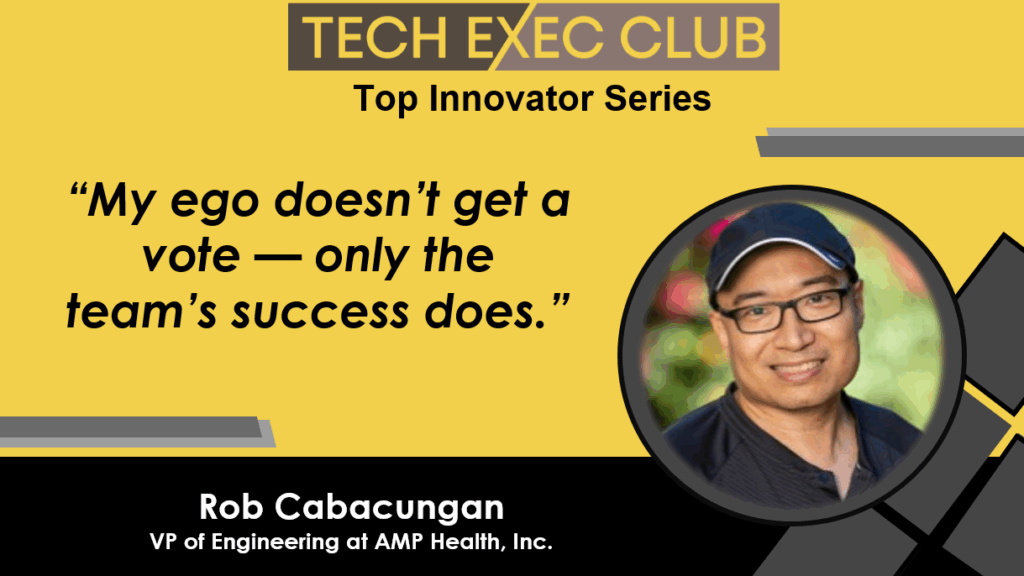
9. Let go of ego-driven decisions: Leadership isn’t about always being right or preserving pride. Make decisions that benefit the team, even when they challenge your preferences or instincts. Ego should never outvote effectiveness.
10. Trust in growth and transformation: The people on your team today are not fixed. Believe in their potential and help unlock it. Set high expectations, provide the tools and space to grow, and watch what they become.
Rob Cabacungan’s leadership path isn’t paved with bravado or buzzwords—it’s built on introspection, honesty, and a relentless commitment to growth. What began as a rough initiation into management evolved into a deliberate, values-driven philosophy that places authenticity and human connection at the core of leadership.
His willingness to confront personal shortcomings, to iterate on his style the way an engineer refines a system, and to elevate others instead of centering himself is what makes his journey so compelling. Whether it’s shaping tight-knit teams through shared experiences or mentoring junior engineers from the ground up, Rob leads with clarity and care.
This isn’t just a story of how one man learned to lead—it’s a call to all leaders to build cultures that are personal, flexible, and deeply human. If leadership is the ultimate system to optimize, Rob shows us how to do it not with control but with trust.
Want to hear Rob Cabacungan’s insights firsthand? Watch the full, live podcast interview [click here]