Technology leadership isn’t just about technical expertise—it’s about influence, communication, and a deep understanding of business needs. Few embody this principle better than Robert Sheesley, CIO Advisor at ETS Solutions, Senior Consultant at Future Point of View and CIO of Bump Connect. With a wealth of experience advising enterprises on technology strategy, cybersecurity, and innovation, Robert has built a reputation as a leader who seamlessly connects technology with business outcomes.
His leadership journey began in business rather than technology, and his perspective was shaped by experiences working with top executives, mentors, and strategic thinkers. Over the years, he has developed a leadership philosophy rooted in active listening, business alignment, and the power of influence — three critical ingredients for driving real impact across today’s digital landscape.
In this exclusive conversation, Robert shares his insights on leadership, the transformation from a technology-centric mindset to a business-driven approach, and the essential skills every aspiring leader should cultivate. Whether it’s the importance of understanding before being understood, the art of rehearsing for success, or the necessity of earning trust before making decisions, his lessons provide a roadmap for anyone looking to lead in the fast-evolving world of technology.
Let’s dive into the leadership philosophy of Robert Sheesley—a leader who believes that actual influence starts with profoundly understanding others.
The Power of Listening: Understanding Before Being Understood
Many professionals in technology leadership believe that technical expertise alone is enough to drive success. But Robert Sheesley has a different perspective — one shaped by years of experience working with top executives. For him, listening before speaking is a critical leadership skill.
“I’ve worked with brilliant technologists,” he says. “But I’ve also seen them struggle because they were more focused on getting their ideas across than truly understanding what others needed.”
Robert draws inspiration from Stephen Covey’s famous principle: “Seek first to understand, then to be understood.” He emphasizes that listening isn’t just about hearing words — it’s about understanding the emotions, motivations, and challenges behind them.
One of his most impactful leadership practices has been applying the voice of the stakeholder concept. He explains that IT leaders often focus on the voice of the customer but fail to recognize that every stakeholder within an organization has unique needs. “If you don’t listen to your stakeholders, you risk solving the wrong problem,” he says.
This mindset shift from solution-first thinking to stakeholder-driven strategy transformed Robert’s approach to leadership. At CNA Insurance, he worked on building business strategy maps for all business lines, an experience that deeply shaped his understanding of enterprise priorities.
“Technology leaders often rush to solutions,” he says. “But when you take the time to listen deeply and integrate stakeholder feedback into your strategy, people don’t just see a technology roadmap — they see their own words reflected in it.”
Robert’s advice for aspiring leaders is clear: The best way to gain influence isn’t to push your ideas but to ensure others feel heard.
From Technology to Business Leadership: The Transformation Journey
Robert’s journey into leadership didn’t follow the traditional path of a lifelong technologist. He started in business and learned to code later. This unique perspective allowed him to bridge the gap between technology and business, something many IT leaders struggle with.
His turning point came when he joined the Electronic Data Systems Leadership Internship Program, an experience that exposed him to some of the world’s greatest business minds. He recalls learning from thought leaders like Peter Senge (The Fifth Discipline) and Stephen Covey (7 Habits of Highly Effective People), who helped him see leadership as more than just managing technology—it was about driving organizational change.
However, his real “aha” moment came at CNA Insurance when he was tasked with developing business strategy maps. “That project changed everything for me,” Robert says. “I realized that business architecture and IT strategy had to be intertwined for organizations to succeed.”
When he later worked with State Farm, his team focused on building a business architecture practice that shifted IT’s focus from technology outputs to business outcomes. This shift allowed them to deliver what business stakeholders needed, not just what IT thought was best.
Robert believes this is one of the most prominent mindset shifts IT leaders must make. “Many technologists think their job is to build solutions. But true leaders understand that their job is to enable business growth and scale through technology.”
The Role of Mentors: Learning from the Best
Throughout his career, Robert has been fortunate to learn from exceptional mentors—leaders who shaped his thinking and helped him navigate complex challenges. From John Golden at CNA Insurance to Stuart Gilchrist at Andersen Consulting, each mentor left an imprint on his leadership style.
“I didn’t just learn skills from them,” Robert says. “I learned how to think, stay composed, and lead with influence rather than authority.”
One of the most potent lessons came from Stuart Gilchrist, who led a major Blue Cross Blue Shield merger. “Stuart was incredibly passionate, but he never let his emotions cloud his judgment,” Robert recalls. “Watching him taught me how to stay balanced, no matter how high the stakes were.”
Another key mentor, John Golden, held both business operations and technology leadership roles — something rarely seen. “He was always thinking about the business first, not just IT,” Robert says. This experience reinforced the idea that CIOs must be business leaders first and technologists second.
Robert encourages professionals to seek out mentors actively — but to do so intentionally. “The best mentors aren’t just people in senior positions. They’re people whose thinking challenges you and expands your perspective.”
The Art of Rehearsal: Preparing for Success
According to Robert Sheesley, one of the most overlooked leadership skills is the power of rehearsal. While many professionals spend time refining their presentations, they often neglect the most critical step — practicing how they will deliver their message and engage with their audience.
Robert recalls his early career at Electronic Data Systems, where rehearsal was a non-negotiable part of leadership training. “We rarely walked into any presentation or high-stakes meeting without rehearsing first,” he says. This practice wasn’t just about memorizing slides — it was about anticipating questions, preparing responses, and ensuring confidence in delivery.
He draws inspiration from military strategy, referencing the book Defense of Duffer’s Drift, which describes how Napoleon simulated enemy behavior and rehearsed battle strategies before engaging in war. Robert believes this same approach applies to business leadership. “We should simulate meetings, prepare for objections, and refine our responses long before we step into the room.”
Yet, many professionals fail to see the value in rehearsal. Instead, they spend their final moments tweaking PowerPoint slides rather than preparing for the conversation. Robert advises leaders to shift their mindset:
- Think beyond the slides. The real impact comes from how you communicate and respond in real time, not just from what’s on the screen.
- Anticipate objections and challenges – What tough questions might I get? How will I handle them?
- Practice like it’s real – Run through the meeting as if it’s already happening. Get feedback from peers and mentors, or even record yourself to refine your approach.
Robert believes that by incorporating rehearsal into leadership habits, professionals can dramatically increase their influence and effectiveness in high-stakes situations.
Mastering Influence: Winning Buy-In Through Connection
Leadership isn’t about having the correct answers—it’s about getting people to believe in your vision. For Robert Sheesley, influence is the most critical skill a leader can master.
“As a CIO, your job is essentially sales,” Robert explains. “You’re constantly selling ideas, strategies, capabilities and solutions — whether to executives, board members, or your team.”
Many technologists struggle with influence because they assume facts and logic alone should win the argument. But Robert has learned that facts alone don’t drive decisions — emotions and relationships do.
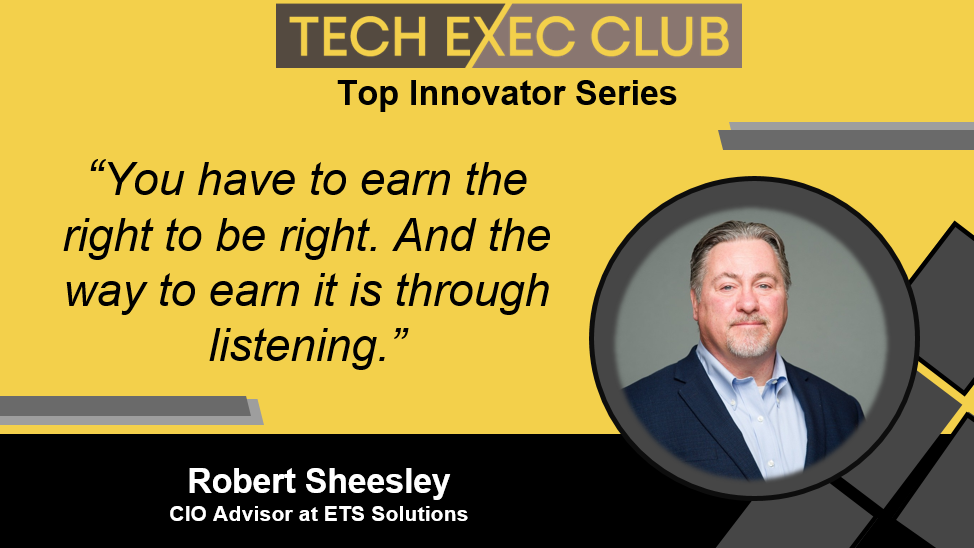
He emphasizes the importance of building trust first, referencing the book The Trusted Advisor, which states: “You have to earn the right to be right.” This means that a leader must establish credibility and connection before pushing an idea.
“The best leaders don’t force people to follow — they make people want to follow,” Robert says. By shifting from pushing ideas to earning buy-in, leaders can create a culture where decisions are made collectively, leading to tremendous success and adoption.
How to Apply Robert Sheesley’s Leadership Insights
Robert Sheesley’s leadership philosophy isn’t just about technical expertise — it’s about understanding people, influencing decisions, and preparing for success. His approach offers a practical roadmap for IT leaders, executives, and professionals looking to elevate their impact.
1. Listen First, Speak Second: Apply Stephen Covey’s principle — seek first to understand, then to be understood. Engage in deep listening — focus on what stakeholders need, not just what you want to say. Use the voice of the stakeholder approach — make sure your team and leadership feel heard before proposing solutions.
2. Shift from Tech-First to Business-First Thinking: Develop a business architecture mindset — focus on how technology enables business growth, not just how it works. Read books like Strategy Maps by Kaplan & Norton to understand business priorities. Learn to translate IT metrics into business value — answer the question: How does this technology decision drive revenue, efficiency, or customer satisfaction?
3. Rehearse for Success: Before any significant presentation or meeting, take time to rehearse — anticipate objections and refine your message. Simulate real-world scenarios where your ideas may be challenged — practice how you will respond with clarity and confidence. Stop tweaking slides at the last minute — spend more time practicing connecting and communicating effectively.
4. Build Influence & Earn Trust: Focus on relationship-building first, selling ideas second — you have to earn the right to be correct. Research the people in the room — understand their concerns, goals, and decision-making style. Use storytelling to make your message memorable and persuasive.
5. Seek Out & Learn from Mentors: Find a mentor outside your immediate organization. They offer fresh, unbiased perspectives. Approach mentors with specific goals — be clear on what you want to learn and why. Build long-term authentic relationships, not just transactional ones.
Applying these insights can enhance your leadership skills, gain influence, and drive meaningful impact in your organization.
Leadership as a Journey of Influence and Growth
Robert Sheesley’s leadership journey is a testament to the power of listening, influence, and preparation. From his early days learning business strategy to his role as a CIO and trusted advisor, he has continuously evolved by bridging technology with business needs and earning trust before making decisions.
His philosophy is simple but powerful: Leadership isn’t about having the best ideas — it’s about ensuring those ideas resonate with the right people. Whether it’s mastering the art of influence, preparing through rehearsal, or shifting from technology-first to business-first thinking, Robert’s approach offers a blueprint for success in the modern digital era.
His advice for aspiring leaders is clear: Focus on relationships, understand before being understood, and always be prepared. These are the skills that separate great technologists from truly impactful leaders.
As technology continues to reshape the business landscape, leaders like Robert remind us that the future belongs to those who can connect, communicate, and inspire change.
Ready to level up your leadership? Take Robert’s insights and apply them today — whether you’re improving your listening skills, refining your storytelling, or practicing for your next big meeting.
For more leadership insights, expert strategies, and exclusive interviews with top innovators, stay connected with the Tech Executive Club. Visit TechExecutive.Club and join the conversation on shaping the future of technology leadership.
Want to hear Robert Sheesley’s insights firsthand? Watch the full, live podcast interview [click here]