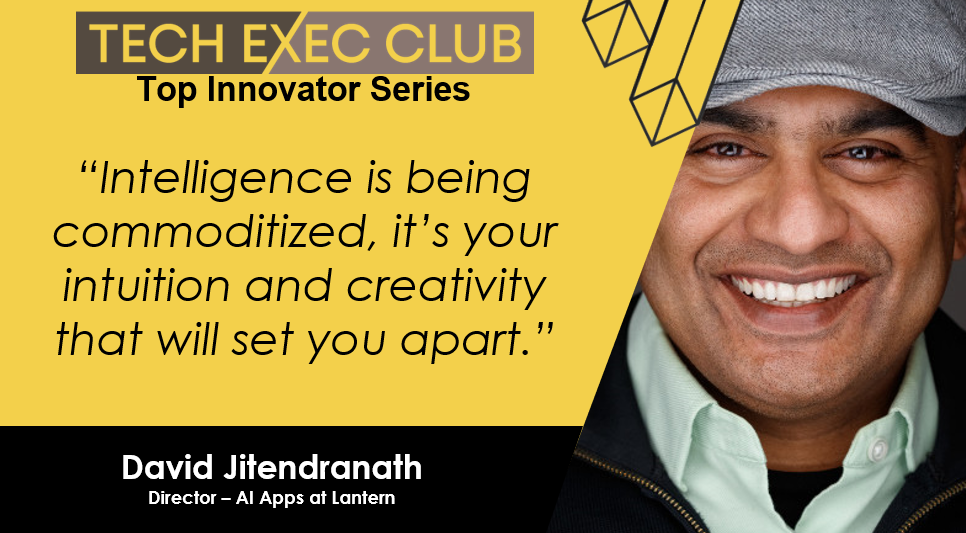
In a world increasingly run by algorithms and automated decision-making, David Jitendranath offers a refreshingly human take on the future of leadership. A self-described “Neo-Renaissance man,” David has built a successful career at the intersection of technology, innovation, and emotional intelligence — and now he’s on a mission to redefine what outstanding leadership looks like in the age of AI.
As artificial intelligence continues to commoditize raw intelligence, David believes that the leaders who will truly stand out are those who can lead with intuition, creativity, and multi-dimensional thinking. Drawing from decades of experience across generations and industries, his leadership philosophy blends emotional candor, intellectual curiosity, and a radical openness to failure.
In this article, we unpack the key lessons from David’s journey — from how he evolved through mentorship, to his bold views on vulnerability, to the surprising power of analog team activities. Whether you’re an aspiring leader or a seasoned executive, his insights will challenge your assumptions and inspire you to lead with more soul in a digital world.
Curiosity as the Cornerstone of Leadership Growth
For David Jitendranath, leadership isn’t a title or a destination — it’s a continuous evolution. At the heart of that journey is one fundamental trait: curiosity. From his early days as a young professional eager to absorb knowledge to his role as a seasoned tech leader, David has embraced a mindset of exploration over certainty. “It didn’t happen overnight,” he admits. In his 20s, he leaned heavily on mentorship, eagerly soaking up wisdom from others. In his 30s, he began to assert his own identity. And now, in his 40s, he reflects on that arc as essential to his growth.
This willingness to stay a student of life — even while leading others — is what David credits as a key contributor to his success. Rather than chase fixed answers, he continues to refine his emotional intelligence, intuition, and self-expression. He identifies as a “Neo-Renaissance man,” suggesting that leaders must cultivate a wide range of faculties, from intellectual to emotional, to stay effective in an ever-changing world.
In a culture that often prizes quick wins and hard metrics, David’s emphasis on lifelong learning feels both rebellious and refreshingly grounded. His message is clear: your curiosity is your most underrated leadership tool.
Outcome-Oriented Leadership and the Power of Radical Honesty
When asked about his go-to leadership style, David doesn’t hesitate: “Be honest about the outcome.” For him, leadership isn’t about rigid command or micromanagement — it’s about being crystal clear on where the team is headed, and then giving people the freedom to figure out how to get there.
This outcome-driven approach places trust at the center of team dynamics. Rather than focusing on task-by-task control, David encourages alignment on goals. “When you share that outcome, the team finds a way,” he says. In a diverse team, people bring different strengths and backgrounds — and that diversity becomes a superpower when everyone rallies around a shared purpose.
But honesty, in David’s world, goes beyond project scopes and timelines. It’s about transparency in communication, being honest about the challenges, and not pretending everything is fine when it’s not. This radical honesty enables teams to push through conflict and complexity, because they know they’re moving toward something meaningful.
David’s insight turns conventional leadership on its head: it’s not your job to have all the answers — it’s your job to create clarity and let people shine.
Failure as a Feature, Not a Flaw
Failure isn’t just tolerated in David’s leadership philosophy — it’s essential. Especially in innovation-driven environments, he believes leaders must actively create space for failure. “If you’re a leader trying to control everything to avoid failure,” he warns, “chances are your team isn’t learning — and worse, they might be hiding things from you.”
David knows this lesson firsthand. Early in his career, he was open with managers about setbacks—and noticed that the best leaders didn’t punish vulnerability; they rewarded it. Those were the leaders to whom he gave his best work. The others? Not so much. That realization shaped how he now leads: with empathy, trust, and room for people to stumble.
The trick, he notes, is to build guardrails that keep failure from becoming catastrophic. But outside of those boundaries, experimentation must be encouraged. This isn’t about being reckless — it’s about being real. Innovation and control rarely live in the same room.
In today’s high-stakes tech world, where agility is everything, David’s message lands with force: fail early, fail safely, and fail forward.
The Dark Side of Vulnerability in Leadership
In an era when emotional vulnerability is widely praised as a leadership virtue, David offers a contrarian view—and it forces a deeper conversation. “Vulnerability,” he says, “is sometimes being used as a form of manipulation.” That statement alone challenges the mainstream narrative, particularly in corporate settings where performative openness can mask power plays.
He references Brené Brown’s leadership school, which encourages leaders to share their personal struggles to foster connection. But David warns: if this sharing is selective and transactional, it can backfire. “It’s sharing something they’re okay sharing… and then expecting something in return,” he says. That kind of engineered intimacy doesn’t build trust — it erodes it.
Instead of leveraging emotional exposure as a tool, David advocates for authentic analog connection. Book clubs, music activities, shared experiences outside the digital grind — these are his preferred methods for building team cohesion. He wants people to connect as humans, not just as workers performing sincerity on Zoom.
David’s honesty here is brave — and a bit uncomfortable. But that’s the point. Authentic leadership starts where clichés end.
Why Multi-Dimensional Leaders Will Define the Future
When asked to speculate on the future of leadership, David doesn’t mince words: “Intelligence is being commoditized.” In the age of AI, raw cognitive horsepower will no longer be a differentiator. What will matter? Intuition, creativity, and emotional depth.
David envisions a new era where tech leaders are no longer defined solely by technical skills or engineering prowess. The stereotype of the stoic, hyper-rational tech executive will fade. In its place, we’ll see multi-dimensional leaders — people who are as comfortable with ambiguity as they are with code, as attuned to culture as they are to algorithms.
He even hints at his own neurodivergence, reflecting on how he’s “fine-tuned” his position on the autism spectrum to deepen his leadership. That kind of self-awareness — combined with artistic flair and intellectual rigor — is what he believes the future demands.
To thrive in the next chapter of innovation, leaders must stop hiding behind competence and start leading with character. David’s forecast is bold, but convincing: the leaders who will matter most in five years are already breaking the mold today.
If David Jitendranath’s perspective sparked something in you, it’s time to turn insight into action. Here’s how you can start leading with curiosity, creativity, and character — even in the most tech-heavy environments.
- Reignite Your Curiosity: What have you stopped being curious about — and why? Read outside your domain. Explore philosophy, art, and neuroscience — stretch your brain beyond technical feeds. Schedule weekly “learning time” as non-negotiable. Seek out cross-generational mentors and friends. David draws from both boomers and Gen Z for perspective.
- Lead with Outcome Clarity: Start every project with a clear, shared outcome. Focus on the “why,” not just the tasks. Give your team the freedom to figure out the “how.” Trust builds when goals are transparent and aligned.
- Allow for Failure (Safely): Don’t try to control everything to avoid failure. Create guardrails, not roadblocks. Encourage intelligent risk-taking and view failure as fuel for learning. Innovation can’t happen without missteps.
- Ditch Fake Vulnerability: Avoid performative emotional sharing. Be authentic, not strategic. Build trust through analog experiences — like book clubs, music sessions, or off-screen team rituals — not just surface-level “vulnerability moments.”
- Become Multi-Dimensional: AI is making intelligence cheap — what sets you apart is intuition, creativity, and emotional depth. Develop passions outside of tech. Embrace your full humanity. That’s the leadership edge of the future.
David highlights a decisive moment from the film BlackBerry, where the team’s creative spirit dies the moment their weekly movie club is shut down by a results-obsessed manager. That shift — from connection to control — marked the end of their innovation streak. It’s a cautionary tale for today’s leaders: protect your team’s creative rituals.
David Jitendranath isn’t your typical tech leader. He’s an AI strategist with the soul of an artist, a technologist who thrives on human connection, and a thinker who dares to challenge leadership clichés. Through decades of learning, experimenting, failing, and evolving, he has shaped a leadership philosophy that’s as multi-dimensional as the future he envisions.
Whether it’s redefining the role of vulnerability, making space for failure, or leading with intuition in an AI-powered world, David brings both depth and disruption to the leadership conversation. He doesn’t just talk about change — he lives it.
As organizations face increasing complexity, David’s voice is a reminder that the future of leadership belongs to those who stay curious, embrace their full humanity, and lead with clarity, creativity, and character.
Want to hear David’s insights firsthand? Watch the full, live podcast interview [click here]