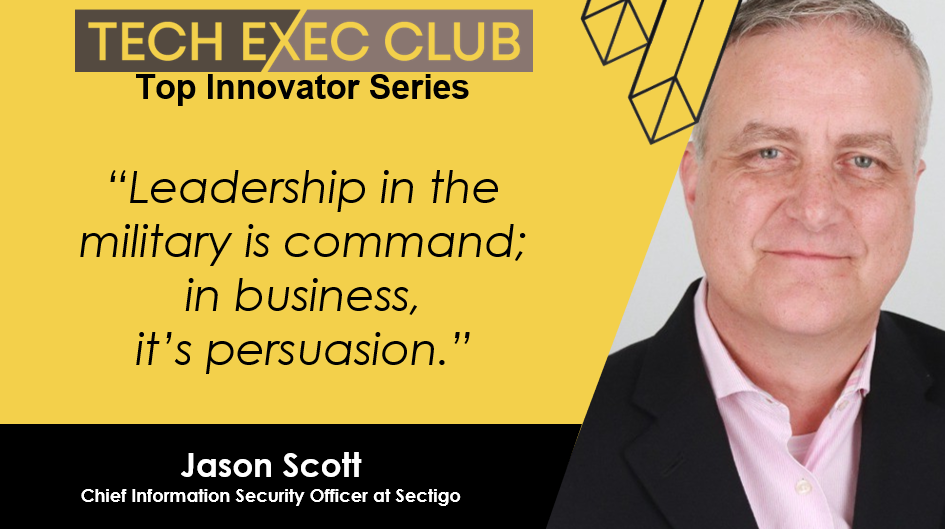
What does it take to lead with integrity in environments as intense as the U.S. Army and as dynamic as the tech sector? In this compelling episode of the Top Innovator Series, we sit down with Jason Scott, Chief Information Security Officer (CISO) at Sectigo, a leader in certificate lifecycle management. With a 25-year career in the U.S. Army Cyber Command and leadership roles at Capgemini and Chevron, Jason’s journey offers a rare look into the kind of leadership forged under pressure and honed through transition.
In a candid conversation with host Josef, Jason opens up about the unshakable role of a moral compass, why failure is essential to growth, and how leadership fundamentally remains the same—even when the battlefield changes from military operations to corporate boardrooms. From surprising realities of becoming a CISO to the hidden dangers in digital certificates, Jason’s insights are as tactical as they are human.
Whether you’re climbing the leadership ladder, leading a tech team, or wondering how to thrive in a hybrid world of people, process, and platforms—this episode is full of real-world wisdom from someone who’s lived every phase of the journey.
Leadership Grounded in Moral Compass
For Jason Scott, leadership isn’t just about strategies or KPIs—it’s about character. At the core of his leadership philosophy lies an unwavering moral compass, a principle instilled early in his decades-long career in the U.S. Army. “Is this illegal, immoral, or unethical?”—it’s a question he was taught to ask not only when receiving orders, but more critically, when giving them.
This mindset has followed him from battlefields to boardrooms, shaping every decision along the way. “You don’t just get A, B, and C done,” Jason explains. “You ask how you’re doing, A, B, and C.” That distinction between doing things right and doing the right thing is what elevates leadership beyond compliance or performance—it makes it human.
In an era when leaders are often measured by how quickly they move or how many boxes they tick, Jason’s moral clarity is both rare and refreshing. He believes that checking in with yourself—honestly and consistently—isn’t a sign of hesitation, but a strength. It prevents leaders from losing themselves in process or power, and instead, roots them in purpose.
More than a military doctrine, Jason sees this principle as universally applicable, especially in the corporate world where the lines between proper and expedient can blur. The result? Teams that trust their leader, decisions that stand the test of scrutiny, and a leadership legacy that’s more than just a list of titles—it’s about making a place better than you found it.
The Shift from Military to Corporate Leadership
For Jason Scott, retiring from the U.S. Army after 25 years meant more than trading in camouflage for a blazer. It meant entering a new leadership ecosystem where directives don’t automatically translate into execution, and authority alone isn’t enough. “In the military, people don’t talk back as much,” he says with a smile. “In the corporate world, they absolutely do.”
This culture shift required Jason to recalibrate his leadership style. While the Army operates under a transparent chain of command, corporate environments thrive—or stall—on buy-in, relationships, and persuasion. Success now depends on navigating subtle dynamics, massaging egos, and building consensus rather than issuing orders.
But Jason didn’t view this contrast as a limitation. Instead, he leaned into it. The structured world of military command had prepared him with discipline, decisiveness, and a tolerance for high pressure. Now, he was learning the importance of collaboration, influence, and stakeholder management at a whole new level.
“You have to understand how to get people to do what you want—when they don’t have to,” he explains. It’s a leadership dance between vision and empathy, between drive and diplomacy. And in many ways, Jason believes that this corporate complexity makes leadership even more nuanced and challenging.
By adapting without compromising his core values, Jason has become a rare breed—a leader fluent in both command and connection. It’s a dual perspective that helps him manage risk, lead transformation, and build resilient teams that don’t just follow orders—they follow purpose.
People Over Process: The Real Secret to Leadership
Suppose there’s one principle that echoes throughout Jason Scott’s career. In that case, it’s this: take care of your people, and they’ll take care of everything else. “You can’t undervalue the value of people,” he says, simply—but with conviction. Whether he was leading logistics teams in unfamiliar terrain or cybersecurity professionals in high-tech environments, his approach never wavered: understand, support, and empower your team.
One of the most profound pieces of advice Jason ever received was from a commander early in his military career: “Leave the place better than you found it.” For Jason, this wasn’t just about cleaning up systems or processes—it was about elevating the people in the organization, helping them grow, and ensuring they had what they needed to succeed long after he was gone.
That philosophy became a cornerstone of his leadership style. He makes it a point to know every person on his team, right down to the junior analyst—not just what they do, but who they are. “You need to know what drives them,” Jason explains. “So when something’s off, you recognize it right away.”
It’s a level of human-centric leadership that many aspire to but few practice. In Jason’s world, leadership isn’t about wielding authority or mastering tools—it’s about building trust, reading people, and helping them thrive. Because when people feel seen and supported, strategy execution becomes a byproduct of culture—not command.
The Business of Being a CISO: It’s Not Just Tech
When Jason Scott stepped into his first Chief Information Security Officer (CISO) role, he expected to spend most of his time immersed in cybersecurity tools and strategies. What didn’t he expect? Budgets. Lots of budgets.
“In reality, I spend more time on budget than anything else,” he admits, half-laughing, half-exasperated. “It’s the bane of my existence.” Far from being just the tech gatekeeper, Jason quickly discovered that being a CISO meant being a business leader—one who must translate risk into dollars, strategy into board presentations, and technical requirements into enterprise-wide buy-in.
It was a revelation that reshaped his understanding of leadership at the executive level. Yes, cybersecurity expertise matters. But what matters just as much—if not more—is understanding how the company makes money, how to protect those revenue-generating functions, and how to communicate their importance in business terms.
“You can brief the board once,” he says, “but if you don’t connect your strategy to business impact, you’ll get a call afterward telling you to refocus—or worse.”
That shift in mindset—from being a protector of systems to a driver of business value—marks a pivotal evolution in Jason’s journey. It’s not about the tech stack anymore. It’s about aligning cybersecurity initiatives with business objectives, securing executive support, and proving the ROI of protection before disaster strikes.
Tech as a Tool, Not the Answer
Jason Scott has a warning for technology leaders: don’t get lost in the tech. It’s a trap he’s seen too many fall into—especially those who’ve spent their entire careers in technical roles. “They look at everything through a glass filled with technology,” he explains. “To them, tech is the answer to everything.”
But Jason takes a different view. For him, Technology is not the destination—it’s just the vehicle. The true goal of any tech initiative should be to drive business outcomes: efficiency, growth, security, and innovation. And that requires stepping back and seeing the bigger picture.
He’s seen brilliant engineers obsess over tools—EDR, SIEM, automation platforms—without asking the more critical questions: Why are we using this? How does this help the business? In leadership, that narrow focus can become a blind spot. “Technology is just a tool to help you get where you need to go,” Jason insists. “It’s not the strategy itself.”
This perspective is what sets him apart as a modern CISO. He doesn’t just deploy systems—he aligns them with business needs. He doesn’t just talk tech—he speaks the language of value. It’s a subtle but powerful distinction that turns IT departments from cost centers into strategic enablers.
Ultimately, Jason’s philosophy is straightforward: great leaders don’t worship Technology—they wield it with purpose.
Based on Jason Scott’s hard-earned wisdom from the battlefield to the boardroom, here are practical steps you can take to elevate your leadership right now—whether you’re in cybersecurity, tech, or any field where people, process, and purpose intersect.
- Anchor Your Leadership in a Moral Compass: Before giving or following any directive, ask: Is this illegal, immoral, or unethical? Make ethical reflection a regular part of decision-making. Teach your team to value the “how” as much as the “what” when executing plans.
- Adapt Your Style to the Environment: Recognize the difference between command-based and consensus-driven cultures. In corporate environments, focus on building relationships, gaining buy-in, and influencing rather than directing. Reassess and evolve your leadership style based on your context.
- Invest in Your People: Get to know your team on a personal level—what motivates them, what they care about, and when something’s off. When you support people as individuals, not just in their roles, they become stronger contributors. Make it a goal to leave every team better than you found it.
- Learn the Business Side of Leadership: Understand how your company generates revenue and where its core risks lie. Translate cybersecurity and technical initiatives into a language the board and executive leadership understand. Budgeting and business fluency are just as essential as technical skills.
- Use Technology as a Means, Not an End: Don’t default to Technology as the solution to every problem. Step back, identify the real business goal, and use tech as a tool to get there. Encourage your teams to see beyond tools and think in terms of strategy and outcomes.
- Automate Critical Infrastructure Before It Becomes a Crisis: If your organization relies on SSL certificates or similar systems, prepare now. With certificate lifespans dropping to just 47 days by 2029, manual processes will become unsustainable. Invest in automation tools to protect uptime, reduce outages, and prevent unnecessary disruptions.
Jason Scott isn’t just a cybersecurity executive or a decorated military veteran—he’s a leadership architect who builds trust, drives purpose, and leads with integrity. From commanding troops to navigating boardrooms, his journey proves that the fundamentals of outstanding leadership—self-awareness, service to others, and moral clarity—are timeless, even as the tools and contexts evolve.
As the CISO of Sectigo, Jason is not only safeguarding digital infrastructure but also reshaping what tech leadership should look like: grounded in ethics, driven by empathy, and aligned with business realities. Whether he’s mentoring his team, navigating budget challenges, or anticipating the future of AI-driven workforces, Jason brings a rare blend of strategic vision and human insight.
In a world of accelerating change, we need leaders like Jason—people who don’t just keep pace with innovation but lead with values that never go out of style.
Want to hear Jason Scott’s insights firsthand? Watch the full, live podcast interview [click here]