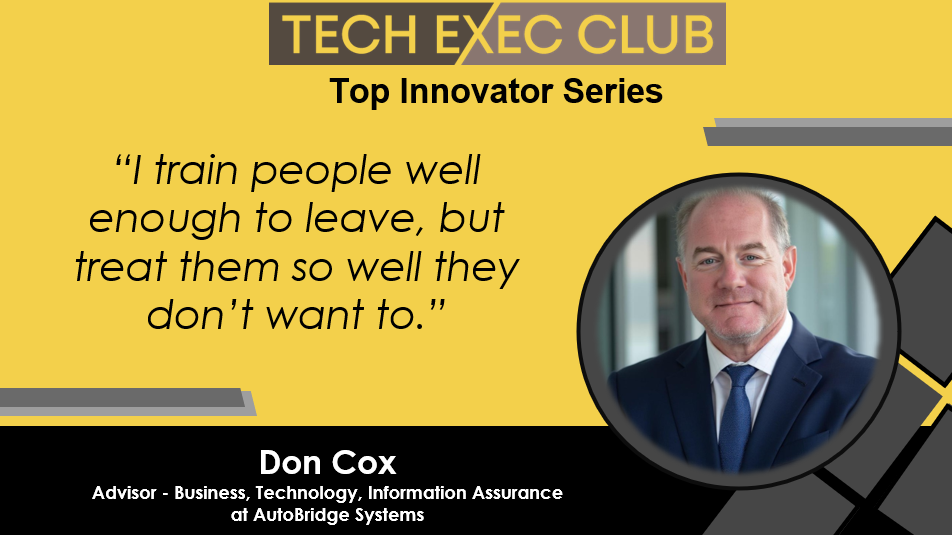
In an era where executive leadership is often measured by bravado and bold headlines, Don Cox stands out for something far rarer—humility, clarity, and profound, practiced wisdom. With decades of experience spanning military service, law enforcement, and C-suite roles in both the public and private sectors, Don brings an unshakable calm and a people-first philosophy that have made him a magnetic force in tech leadership.
Now serving as an advisor to Autobridge Systems—an AI-powered platform redefining how accounting data is managed—Don sat down with Josef Martens for the Top Innovator series to share the journey, lessons, and mindset that shaped his path. From learning discipline in the military to mentoring future CIOs, Don’s perspective on leadership challenges the norm.
In this candid conversation, Don opens up about leadership failures that taught him to “inspect what you expect,” the balancing act of trust and oversight, how to adapt in the age of AI, and why the most powerful thing a leader can do is listen, empower, and stay calm—even when everything goes sideways.
Whether you’re a rising tech leader, a seasoned executive, or someone trying to find your leadership voice in a chaotic world, Don’s insights deliver not just inspiration—but a roadmap.
The Foundation of Leadership: From the Military to the Boardroom
For Don Cox, leadership didn’t begin in a boardroom—it started in a firehouse, a football field, and ultimately, on a military base. Long before he was advising companies on AI strategies, Don was absorbing leadership lessons from his grandfather, a volunteer firefighter and fire chief, and from the discipline and expectations placed on him as a young athlete. But it was the military that crystallized it all.
“The military shows you how to be a follower first,” Don says, “and later, how to become a leader.” That duality—serving before leading—is the core of his leadership philosophy. Don calls it servant leadership: empowering others, setting them up for success, and treating people with the same respect and care you’d want yourself. It’s a simple concept, but it forms the bedrock of how he’s built high-performing teams and earned fierce loyalty throughout his career.
He’s not afraid to get his hands dirty—literally. Whether it’s raking rocks, picking up cigarette butts, or pulling cable in a data center as a C-level executive, Don believes in showing his team that no task is beneath leadership. “That kind of humility,” he notes, “leaves an impression.”
It’s no surprise that many of Don’s former team members follow him from job to job. When you lead by serving, people don’t just respect you—they want to build with you.
The Power (and Risk) of Trust: Learning to Inspect What You Expect
Trust is a hallmark of good leadership. But blind trust? That’s a trap even experienced leaders fall into. Don Cox knows this lesson firsthand.
Reflecting on a past startup experience, Don recounted how putting too much faith in a colleague—and failing to verify their follow-through—backfired. “You’re told something is getting done, but then it isn’t,” he shared. “And by the time you realize it, you’re already in a world of hurt.”
The insight that stuck with him came from a former boss: “Inspect what you expect.” In other words, trust your people—but also build checkpoints. Leadership isn’t just about delegation; it’s about responsibility. You’re accountable for the outcome, even if others are executing.
That lesson became a touchstone for how Don operates. He doesn’t micromanage—but he doesn’t abdicate, either. He checks in, asks questions, and ensures everyone has the support and structure to succeed.
Importantly, Don applies this rule not just downward to teams, but sideways to peers. Leadership, as he puts it, “isn’t just leading those under you—it’s influencing across your organization, even when you’re not the direct boss.”
By balancing trust with accountability, Don reinforces a culture where people feel empowered—but never invisible. It’s leadership with eyes open.
Always Be Learning: Adapting to AI and the Human Factor
In Don’s world, leadership isn’t static—it evolves. And to lead in today’s tech landscape, staying still is a form of failure. That’s why Don has made lifelong learning a leadership imperative, not just a personal habit.
Artificial intelligence, once a buzzword he avoided, is now a core area of study. “I used to say everything was just machine learning or RPA,” Don admits. “But now, we’re at a point where real AI is here, and I had to dig in.” He and his leadership teams didn’t just talk about it—they took immersive courses, hired experts, and made it part of their organizational DNA.
But it’s not just about tech—it’s also about people. Post-COVID, Don began studying generational differences in the workforce. “A 25-year-old is motivated very differently than a 45-year-old,” he explains. Understanding those differences—and leading accordingly—has become crucial in remote and hybrid work environments.
From watching TikTok videos made by Gen Z “leadership coaches” to reading books on communication styles, Don shows that curiosity isn’t optional—it’s essential.
And he practices what he preaches. By publicly and visibly learning, he sets the tone for his team. “Lead by example” isn’t a motto for Don—it’s a mandate.
Leading Through Calm: The Value of Composure in Crisis
In high-pressure tech environments, panic is contagious. But so is composure—and that’s Don Cox’s secret weapon.
A former colleague once told Don, “I’m jealous of how you always stay calm.” Whether it’s a server outage, a delayed delivery, or a high-stakes meeting, Don doesn’t flinch. He doesn’t yell. He doesn’t catastrophize. Instead, he listens, gathers facts, and begins solving.
This steady demeanor isn’t accidental. Don credits the military, law enforcement, and years of consulting for shaping his crisis response. “The team looks to you for guidance,” he says. “If you’re running around nervous, they’ll lose trust. But if you’re calm, they’ll stay grounded.”
His approach is methodical. He visualizes steps ahead, assigns roles for crisis response, and maintains communication without overwhelming the team. He also embraces input from all levels, recognizing that great ideas can come from unexpected places.
Don recalls advice from a CIO mentor that he still uses today: “Never say no—just tell people what percentage of yes you can give them.” That mindset turns obstacles into options and helps stakeholders feel heard, even when solutions aren’t perfect.
Calm isn’t passive. It’s active leadership, especially in chaos. And in Don’s case, it’s earned him not just results—but admiration.
The Next Generation of Leaders: Empowerment Over Ego
As Don looks to the next chapter of his leadership journey, his focus is clear: it’s not about building empires. It’s about building leaders.
In the next five to ten years, Don wants to invest in people who will lead after him. “It’s my turn to give back,” he says, with quiet conviction. “To prepare the future.”
He sees too many tech leaders caught in the ego trap—trying to be the most intelligent person in the room, refusing to delegate, micromanaging to maintain control. Don challenges that model head-on.
“The job of a leader isn’t to solve everything,” he says. “It’s to hire people smarter than you and let them do their jobs.” That requires confidence, not arrogance. It means letting others fail safely, guiding instead of dictating, and being okay with not having all the answers.
Don’s greatest leadership moments often come from those he mentored—people who doubted they could lead, but grew under his support. Now, they’re leading teams of their own, paying it forward.
Empowering others isn’t just a leadership style for Don Cox; it’s a way of life. It’s a legacy strategy.
Don Cox didn’t just share his leadership philosophy—he laid out a blueprint for growth, resilience, and people-centered progress. Here’s how you can take action based on his experience:
1. Embrace Servant Leadership: “How can I help others succeed today?” Shift your mindset from being in charge to being of service. Recognize that your role as a leader is to clear roadblocks—not to build pedestals.
2. Inspect What You Expect: Trust your team—but don’t check out. Build in checkpoints, ask for updates, and stay present. Leadership is accountability, not just delegation.
3. Keep Calm in the Chaos: Your team takes its emotional cues from you. When challenges hit, model calm, communicate clearly, and focus on structured problem-solving—not panic.
4. Learn Publicly and Continuously: Enroll in courses, explore emerging tech like AI, and let your team see your growth. Learning shouldn’t stop at the top—it should start there.
5. Understand Generational Differences: Each generation has different values, work styles, and motivations. Study them. Listen to them. Adapt your leadership accordingly—especially on remote teams.
6. Stop Micromanaging—Start Empowering: You hired smart people—let them lead. Please give them the freedom to try, fail, and succeed. Guide them, but don’t block their path with over-control.
7. Invest in the Next Generation: Mentor someone today. Identify future leaders on your team and start building their confidence, experience, and perspective. Leadership is a legacy.
8. Apply the “Percent of Yes” Rule: Instead of saying “no,” ask: “What percent of yes can I give you?” You don’t need 100% perfection—just enough to move forward.
9. Stay Humble. Stay Human.: Don’t forget where you came from. Whether it’s pulling cable or mentoring new hires, your character—not your title—is what defines outstanding leadership.
In a business world that often glorifies disruption and dominance, Don Cox offers something radically different: grounded wisdom, quiet confidence, and a deep commitment to lifting others.
He’s not chasing headlines or accolades—he’s building people. His leadership is forged through military discipline, tech innovation, and a lifetime of staying calm under pressure. From hands-on work in data centers to strategic guidance on AI, Don bridges humility with vision, action with empathy.
His legacy won’t just be in the systems he built or the titles he held—it will live on in the leaders he mentored, the teams he empowered, and the culture of service he left behind.
Don Cox reminds us: leadership isn’t about being in charge. It’s about being of use. And in today’s noisy, fast-moving tech landscape, that’s the kind of leader we need more of.
Want to hear Don’s insights firsthand? Watch the full, live podcast interview [click here]