What if leadership wasn’t about hierarchy, status, or strategy decks — but about friendships, mentorship, and honest conversations?
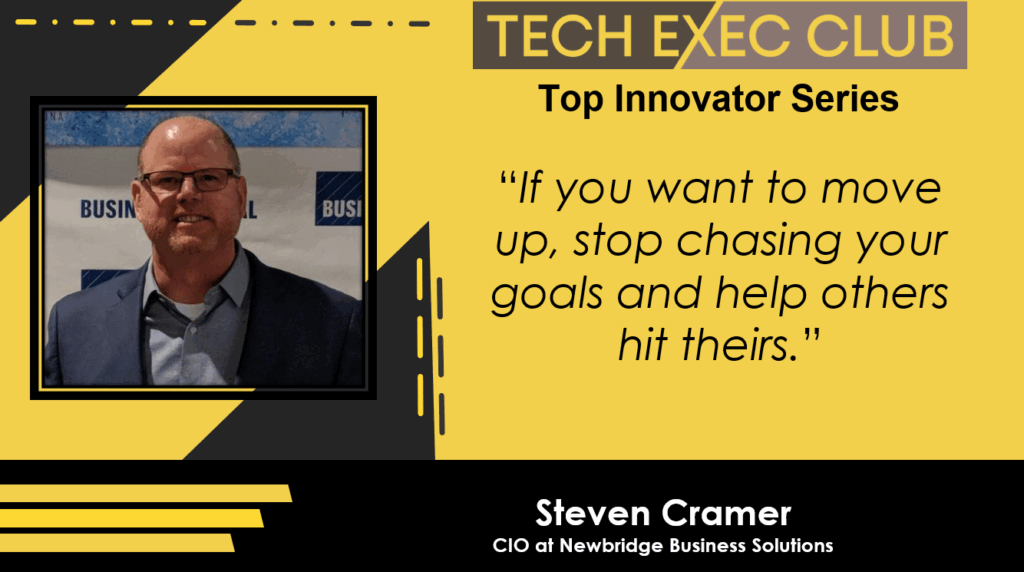
In this episode of the Top Innovator series, host Josef Martens sits down with Steven Cramer, Chief Information Officer of Newbridge Business Solutions, to explore the leadership philosophies that have shaped his decades-long career journey at UPS, Verizon, and now, an agile technology powerhouse focused on Customer Engagement Technology (CET).
From his structured beginnings at UPS to leading transformation in Puerto Rico’s telecom industry, Cramer unpacks the secret sauce behind real business impact — and it has more to do with people than platforms. He challenges today’s most common leadership assumptions, including a bold declaration: email is killing communication.
Throughout the interview, Steven paints a vivid picture of a leader who doesn’t just manage — he mentors, builds relationships, and inspires. His view of an ideal company? “A group of friends working together for the same goal.”
This isn’t your typical corporate climb story. It’s a masterclass in how genuine relationships drive real results.
From Structured Roots to Strategic Vision: Lessons from UPS, Verizon, and Newbridge
Steven Cramer didn’t stumble into leadership — he built it one pillar at a time. With nearly a decade each at UPS, Verizon, and now Newbridge Business Solutions, his journey reads like a textbook on corporate leadership in motion.
At UPS, structure and discipline reigned. There, Steven mastered people and process management, learning the foundational tools of leadership. At Verizon, the focus shifted. He immersed himself in technology and innovation, understanding how systems drive impact. Now at Newbridge, the culmination of those experiences comes alive. He brings together people, processes, and technology — what he calls the “three-legged stool” of organizational success.
But it’s not just about applying frameworks. Steven’s story shows that authentic leadership evolves. It requires not only skills across disciplines, but also the emotional intelligence to know when to lead, when to listen, and when to disrupt.
“If you understand people, process, and technology — and you’ve been trained in all three — you can lead any business to success.”
The Power of Mentorship: Why Learning Through Success Beats Failing Alone
Cramer’s leadership isn’t built on failure — it’s built on wisdom passed down from an early age. He credits much of his growth to the mentors who guided him, especially during his first role in corporate America. One name stands out: Clarence Doyle, also known as “C.D.”
C.D. didn’t teach from a textbook — he taught from experience. One early lesson? Go to lunch early. It sounds trivial, but it was strategic. By eating before the crowd, they had two uninterrupted hours in the day — an edge in a busy corporate setting. That moment unlocked a bigger idea: success comes from thinking differently and learning from those who’ve walked the path before.
Mentorship, Steven says, isn’t optional — it’s essential. And yet too many companies throw new hires into the deep end, expecting them to swim. His belief? Why not learn through success instead of failure?
“Mentorship isn’t a luxury — it’s the difference between surviving and thriving in corporate life.”
Breaking the Silo Mentality: Team Goals Over Personal Ambitions
One of the most counterintuitive ideas Steven shares is this: focusing on your own goals might be the reason you’re stuck. His breakthrough came when he stopped chasing personal wins and started aligning his objectives with the needs of other departments.
At Verizon, he made it a practice to build relationships with other teams — not just his own. Supporting their success meant his team was seen as a partner, not a silo. And the unexpected result? His own goals were achieved more quickly and effectively.
This shift — from personal ambition to team-oriented collaboration — became a cornerstone of his leadership ethos. It’s also, he believes, why so many organizations fail: they encourage departmental isolation instead of cross-functional synergy.
“You hit your goals faster when you help others hit theirs.”
Turning Assumptions Into Achievements: A Game-Changing Experience in Puerto Rico
Not every leadership moment comes from climbing the corporate ladder. Some come from unexpected detours — like a three-month assignment that changed everything.
When Steven was asked to support Verizon’s newly acquired Puerto Rican telecom unit, he expected to find inefficiencies stemming from decades of government ownership. What didn’t he expect? A highly skilled, deeply passionate team — simply waiting to be empowered.
Through collaboration and a belief in their potential, Steven and his team transformed the division, earning the President’s Award for the Caribbean and receiving heartfelt client letters that the team had never received before.
This wasn’t just about improving operations; it was about transforming them. It was about shattering assumptions, unleashing human potential, and realizing that talent often goes underutilized, not unnoticed.
“They weren’t broken — they were just waiting for someone to believe in them.”
Redefining Leadership in the AI Age: Why Conversations Still Matter More Than Email
As the business world races toward automation and AI, Steven Cramer is doubling down on something surprisingly analog: honest conversations.
His boldest leadership opinion? “Abolish email as a communication tool.” For him, email is documentation — not dialogue. It’s a poor substitute for human interaction, negotiation, and relationship-building.
In an era of Slack messages and inbox overload, Steven insists that authentic leadership occurs in genuine conversations. And that’s not the only unconventional view he holds. He refuses to hire strangers. His team at Newbridge? A carefully curated group of long-time trusted colleagues — what he calls “a group of friends working toward the same goal.”
He’s also constantly expanding his circle — intentionally meeting 10 new people a week to keep his perspective fresh and future-focused.
“Leadership in the AI era isn’t about tools — it’s about trust, conversations, and human connection.”
Steven Cramer’s leadership playbook is anything but conventional. From rejecting email as a communication channel to hiring only trusted colleagues, his approach is rooted in clarity, intentionality, and long-term thinking. Whether you’re just beginning your leadership journey or looking to redefine your current style, these eight actions—directly inspired by Steven’s career insights—can help you step up and lead with purpose.
1. Master the “Three-Legged Stool” of Success: Focus on people, processes, and technology. Authentic leadership isn’t about excelling in one — it’s about integrating all three with balance. Audit your own strengths and weaknesses in these three areas. Invest time weekly to sharpen the weakest leg.
2. Seek Mentors Early — and Often: Don’t wait to learn the hard way. As Steven’s journey demonstrates, mentorship can significantly shorten your learning curve. Identify one person in your field you admire. Ask for a 30-minute call. Prepare thoughtful questions. Repeat monthly with new leaders.
3. Turn Lunch into Leverage: Steven’s mentor taught him: eat early, work smart. It’s not about food — it’s about carving time for uninterrupted productivity. Block two daily hours on your calendar where you control the flow — no meetings, no distractions. Use this time for deep work or strategic thinking.
4. Think Team First, Self Second: Want to get promoted? Start by helping other departments win. Reach out to one cross-functional colleague this week. Ask, “What’s your team’s biggest priority right now, and how can I support it?”
5. Challenge Assumptions — Especially About People: Talent is often hidden behind circumstances, not capability. Re-evaluate someone on your team who may be underperforming. Ask yourself: have they been enabled to succeed? What’s in your power to change that?
6. Build a Trust Network Before You Need It: Steven only hires people he’s known for 3–5 years. Why? Because trust takes time — and performance grows from it. Intentionally develop your network. Aim to meet 5–10 new people each week through LinkedIn, events, or warm intros.
7. Ditch Email for Real Conversations: Email is a record. Conversations are where real decisions happen. For your next significant decision or disagreement, consider calling or meeting with the person first, then document the outcome in an email after alignment has been reached.
8. Mentor the Next Generation — Now: Don’t wait to become a “senior leader” to give back. Start now. Your experience already matters. Identify someone newer in their career. Offer a 15-minute monthly chat. Listen, guide, support.
Steven Cramer’s story isn’t just one of career progression — it’s a blueprint for intentional leadership in a chaotic, tech-saturated world. From the warehouse floors of UPS to executive strategy rooms at Newbridge, Steven has carried with him a quiet but powerful conviction: authentic leadership is about relationships, clarity, and integrity.
What sets him apart isn’t just his decades of experience or the companies on his résumé — it’s the deliberate choices he makes. To build a company of friends. To measure success by collective outcomes. To ditch email for conversations. And to only hire people he knows and trusts deeply.
Steven reminds us that leadership is not a title — it’s a mindset. One rooted in connection, mentorship, and a relentless focus on enabling others to succeed. He’s not just leading teams. He’s redefining what it means to build them.
Want to hear Steven Cramer’s insights firsthand? Watch the full, live podcast interview [click here]