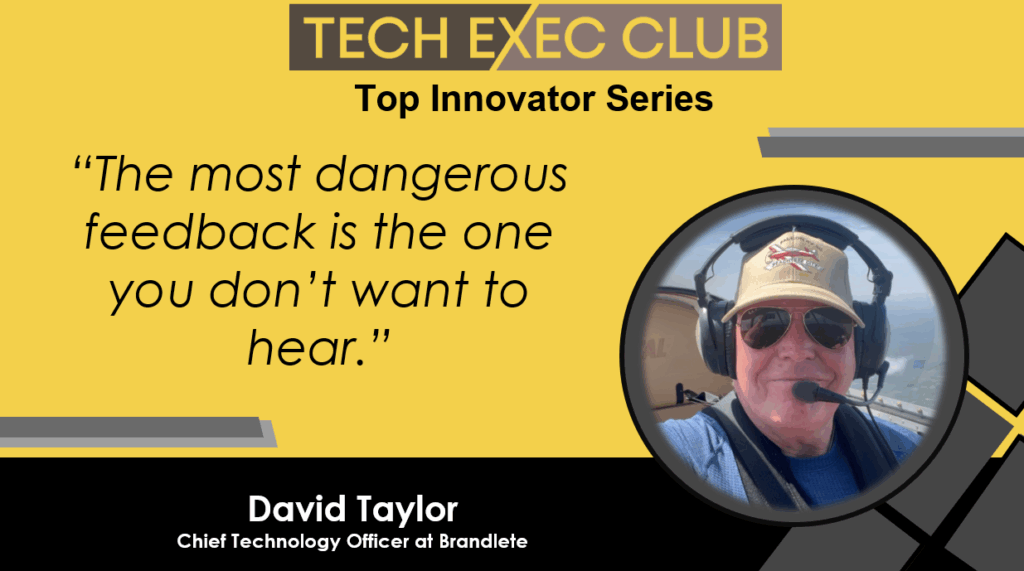
When I sat down with David Taylor, I knew the conversation would be insightful. What I didn’t expect was to walk away with a whole new lens on leadership—one that blends humility, clarity, and raw, hands-on wisdom from someone who’s lived every layer of the tech world.
David is currently the CTO at Brandlete, helping athletes reach their full potential. But his journey here is a masterclass in intentional growth. From Microsoft, where he was mentored (and sometimes challenged) by Bill Gates himself, to Intuit, where he helped scale TurboTax to billions in revenue, and Sonos, where he helped bring music to homes around the world, David has learned to lead by simplifying complexity—and turning his own weaknesses into fuel for growth.
What struck me most was David’s radical openness to feedback, to change, and to doing the hard internal work most leaders avoid. This is a conversation about building better products, yes—but it’s really about building better people. David doesn’t just talk about empowerment—he lives it.
If you’re tired of corporate jargon and looking for real-world leadership wisdom—clear, tested, and deeply human—this conversation is going to stick with you.
Turning Deficiencies Into Superpowers
Where most people hide their weaknesses, David Taylor sought them out—and built his career by fixing them. “Every decision I made had something to do with a deficiency I had,” he explains. Instead of chasing roles he was already good at, David deliberately sought positions that would stretch him, challenge him, and force him to evolve. Early in his software career, he didn’t feel like a top-tier engineer. So what did he do? He joined Microsoft, specifically to learn how world-class software was built.
At Microsoft, he wasn’t just handed lessons—he absorbed them through experience. He progressed from engineer to senior engineer, to architect, to development manager, and ultimately to director. “Microsoft was like a university,” he recalls. The environment empowered engineers to make informed decisions and provided them with the necessary tools to thrive. More importantly, David took feedback seriously, regardless of its harshness. Even when Bill Gates himself delivered harsh criticism, David didn’t flinch. “You have to be able to take feedback regardless of style,” he says. “You can’t get caught up in tone.”
By taking ownership of his flaws and fearlessly pursuing uncomfortable growth, David turned every shortcoming into a future strength. It’s a radical, ego-free approach to leadership—and it’s one of the core reasons he’s become one of tech’s most versatile and effective executives.
Clarity of Vision: Lessons from Sonos
When David joined Sonos, he thought he was walking into a comfortable, scaled tech company. Instead, he landed in a flat, scrappy, high-risk environment that would forever change his perspective on leadership. One of the most potent lessons came from Sonos founder John MacFarlane: clarity beats complexity.
“John said, ‘We’re going to fill the home with music,'” David recalls. That simple statement became a decision-making framework that ran like DNA through the organization. “If someone came in with an idea for a backyard speaker, I’d say, ‘We fill the house first.'” That clarity enabled teams to make decisions without bureaucracy—eliminating the need for extensive documentation or lengthy meetings.
Sonos’s evolution—from a tiny operation in a hotel room to a global hardware innovator—was anything but smooth. But through each stage of growth, the simplicity of its vision kept the company aligned. David emphasizes that vision, strategy, and tactics must remain clearly separated. Vision is the North Star, strategy is how you move toward it, and tactics are what you do—confusing these leads to chaos.
This experience cemented a new leadership principle for David: great leaders simplify complexity for their teams. Whether you’re in a 5-person startup or a 5,000-person enterprise, keeping the vision razor-sharp is what keeps execution on track.
Feedback Is a Gift: The Brutal Art of Personal Growth
In an era where many leaders fear feedback, David Taylor chases it down. Whether it’s being told he talks too fast or that his intense style can overwhelm people, he’s taken the hits—and grown stronger from them. At Intuit, the mantra was “Feedback is a gift.” It was embedded in the culture. “You don’t wait for the annual review,” David says. “You give it in real time. You do it so people grow.”
But not all feedback is easy to digest. Early on, David admits he was defensive. “I was trying to do too much at once. I didn’t realize how my intensity came across.” What changed? He learned to separate personal feelings from professional growth. One piece of advice from Brad Smith, former CEO of Intuit, hit home: “Decide what needs to be answered now—and what can wait. Be thoughtful.”
David also became proactive. He didn’t wait for mentors—he sought them out. He went to Microsoft specifically to learn from Brian Valentine. His advice to others? Be brave enough to ask the hard questions. And don’t go into feedback looking for compliments—go looking for where you need to grow.
This radical humility has not only helped David survive in leadership roles but also evolved in them. “It’s not about whether people like you,” he says. “It’s about whether you’re willing to grow.”
Customer First, Technology Second
A veteran CTO with a deep software background isn’t obsessed with the latest tech trends. In fact, David says his most significant transformation as a leader came when he realized customers don’t care about perfect code—they care about a seamless experience.
“At first, I’d get defensive. I thought, ‘I’m the director of software—my part works!’ But then I started looking at it from the customer’s perspective,” he says. Whether it’s TurboTax or Sonos, the real product is the experience—not just the technology. From the first click to setup and support, it all has to feel like one smooth journey.
He also learned to embrace imperfection. As an engineer, he often overcomplicated solutions in the pursuit of elegance. Now, he ruthlessly applies the “keep it simple” rule. “You don’t need perfect software. You need a product that works for people.”
Even his side projects—like building his own airplane—reinforce this philosophy. “You can’t work on everything at once. You have to pick one thing, get it done fast, and iterate.” Whether it’s code, hardware, or customer journeys, David’s leadership mantra is clear: deliver value quickly, refine relentlessly, and keep the user at the center.
Flatten the Org, Kill the Bureaucracy
If David Taylor had a magic wand, he’d use it to wipe out corporate bureaucracy in one stroke. “Executives love building Christmas tree org charts,” he says. “But flatter is better.” In his view, the layers of reporting and endless meetings don’t serve innovation—they strangle it.
At Sonos and elsewhere, David saw firsthand that smaller teams and flatter structures force clarity. “When you don’t have a lot of people, you have to prioritize. You can’t hide behind process or blame the system.” He calls this ‘learned helplessness’—where people do the same things, expecting different results. The antidote? Simplicity, ownership, and getting connected to the work.
One of his boldest stances is against annual performance reviews. “You don’t need 15 reviews a year. You need real-time feedback. Bureaucracy is death,” he says.
David’s radical call to action for other tech execs: Stop playing telephone through middle managers. Stop drowning teams in process. Empower people directly, flatten your organization, and stay close enough to the work to make real decisions.
It’s not a popular approach in some boardrooms—but for David, it’s the only way to stay fast, focused, and human in a world where complexity is the default.
David Taylor doesn’t lead with theory—he leads with action. If you want to grow faster, build smarter, and cut the noise, start here.
1. Pursue What You’re Bad At: Don’t avoid your weaknesses—chase them down and beat them. David joined Microsoft not because he was already a great engineer, but because he wasn’t. He leveraged high-stakes roles to transform his weaknesses into strengths, building a career on discomfort-driven growth.
2. Boil the Vision Down to One Sentence: If your vision doesn’t guide decisions, it’s just noise. At Sonos, the entire product strategy was anchored by one clear line: “Fill the house with music.” It empowered teams, killed distractions, and eliminated endless meetings.
3. Get Feedback Before It Hurts: Waiting for a review means you’re already behind. David actively sought feedback—especially the uncomfortable kind. He asked mentors directly, embraced critiques, and rewired his leadership style through real-time course correction.
4. Simplify or Start Over: Overcomplicating things is just procrastination in disguise. David now uses a simple test: “What if I had to deliver this in one week?” That mindset helps him strip down to what matters and ship fast—even when building his own airplane.
5. Flatten the Org. Kill the Bureaucracy: Layers Slow Things Down. Titles don’t build products—people do. David doesn’t tolerate complexity for its own sake. He strips out red tape, keeps teams small, and stays close to the work.
6. Build the Community You’re Missing: Success doesn’t happen in isolation. Despite his experience, David admits he hasn’t invested enough in peer networks and leadership circles—his reminder: reach out, connect, and give first—because leadership is a team sport.
David Taylor’s journey is not one of linear success—it’s a blueprint for intentional evolution. He didn’t build his career by doing what came easily. He built it by chasing what felt stiff, awkward, or unfamiliar—and turning those into strengths.
From being challenged by Bill Gates at Microsoft to helping scale TurboTax’s online services to billions, and reshaping Sonos with a vision so simple that it powered global execution, David has proven that leadership isn’t about status—it’s about clarity, feedback, simplicity, and courage.
He’s the kind of leader who asks “What do I need to learn next?”—even after decades at the top. And more importantly, he’s the kind of leader who acts on the answer.
Whether you’re an aspiring founder, a seasoned executive, or somewhere in between, David’s message is clear: simplify the strategy, chase the hard stuff, and get out of your team’s way.
The result? Teams that move fast, products that make sense, and leaders who actually lead.
Want to hear David Taylor’s insights firsthand? Watch the full, live podcast interview [click here]