When I sat down with Helen Sharron for our latest episode of the Top Innovator Series, I expected to talk about blockchain, leadership, and the future of work. What I didn’t expect was to have a conversation that challenged so many of my assumptions—about power, purpose, and what it really means to build something that lasts.
Helen is the CTO and co-founder of Selfient, a Web3 contract platform built on the Ethereum blockchain. Her résumé is impressive—she’s held senior technology roles at BNY Mellon, co-founded TalentFusion (later acquired by Monster), and now sits at the cutting edge of decentralized technologies. But what struck me most was not her technical expertise—it was her clarity of vision and the depth of her values.
In our conversation, Helen spoke about leadership in a way that felt radical and refreshing. She discussed joy as a leadership tool, designing systems that are inheritable, and the urgent need to shift from a shareholder obsession to something much more human and enduring.
This isn’t your typical tech executive story—and that’s precisely why it needs to be told.
Inheritable Leadership – Building Beyond the Present
Helen Sharron introduces a groundbreaking concept: “inheritable leadership.” While most tech leaders focus on metrics, investor returns, and product velocity, Helen urges a long-term view: Are we building something that future generations can carry forward?
For Helen, this isn’t just about creating wealth. It’s about building infrastructure, culture, technology, and values that benefit humanity in the long term. She emphasizes that the work leaders do today — especially in the tech industry — has cascading effects. Whether it’s governance models, systems of value exchange, or organizational design, leaders must ask: Would I want to inherit what I’m creating?
As she puts it, “Even the spirit, the values, the culture… Is what I’m working on usable for generations to come?” This vision is clearly embedded in her work on blockchain and decentralized systems, where she believes there is an opportunity to design technologies that will last for 100 years, creating more equitable and ethical outcomes.
Helen challenges all leaders to zoom out: not just to the next fiscal year, but to the next century. The decisions we make today could either entrench inequality or unlock generational progress. She’s betting on the latter — and building for it.
The River Within – Leading from Inner Light and Joy
In one of the most striking moments of the interview, Helen departs from traditional tech-speak and talks about the “river that runs within us.” It’s a poetic metaphor, but it reveals the spiritual foundation of her leadership. “That river,” she says, “is full of light and energy.” If we can connect with it, we can lead with clarity, strength, and optimism.
While the business world is filled with strategies for time management, productivity, and mental toughness, Helen offers something both simpler and deeper: energy and joy. She believes that success is not just about grit or hustle, but about keeping your heart “light” and your mindset rejuvenated.
But this isn’t about toxic positivity. Helen acknowledges the difficulty of leadership. Her secret is not to avoid hard times — but to tap into an endless inner source that grounds and recharges her. She describes this as part spiritual, part emotional, and deeply human. It’s what allows her to see the best in others, stay collaborative, and remain forward-looking.
In a field where burnout is rampant and cynicism is typical, Helen’s approach is radical: Lead with joy. Build from wholeness. Create from light.
Proving Yourself Again and Again – The Leadership Reset Button
Despite a stellar résumé, Helen reveals that every time she enters a new leadership environment, she has to prove herself all over again. She calls it the “proving ground.” Whether transitioning from entrepreneurship to a corporate role or entering a new field like blockchain, she finds that experience doesn’t automatically translate to trust.
This theme highlights the often-unspoken reality of leadership: power is not always portable. Especially for women, and particularly for those who bring a nurturing or non-traditional leadership style, credibility must be continually earned and maintained.
Helen reflects that “even with years of experience, I start a bit at ground zero.” She speaks candidly about how difficult alignment is — how every new team, every new mission requires profound recalibration, storytelling, and vision-building. There are no shortcuts.
But instead of becoming jaded, Helen leans into this reality. She sees it as part of the process — a chance to evolve, re-engage, and bring people along the journey. For emerging leaders, her story is both a warning and a beacon: don’t expect instant validation, but do trust the power of persistence.
The End of Command-and-Control – A Call for Nurturing Power
Helen sees a tectonic shift in how power operates in the workplace. “The command-and-control model is collapsing,” she says. In its place, she advocates for a leadership style rooted in emotional intelligence, ethical responsibility, and long-term vision.
The traditional model — based on control, efficiency, and dominance — is no longer fit for the uncertainty and interconnectedness of our age. Helen believes that intuition, empathy, and collective wisdom must guide tomorrow’s leaders. The old fuel (profit-maximization, shareholder lollipops, short-term wins) is becoming toxic.
“We need to stop giving shareholders sugar highs,” she says. Instead, leaders should build systems that nourish people and elevate humanity. Her vision is not anti-business — it’s post-extractive. She sees the rising generation of leaders as “builders of community,” not just controllers of capital.
Her own pivot into blockchain reflects this ideology. To Helen, this decentralized space represents an ethically cleaner slate — one where democratization can flourish, and where technology can truly serve people, not just institutions.
Self-Reflection as a Strategic Advantage
In a world obsessed with speed, Helen offers a contrarian insight: slowing down might be the most strategic move a leader can make. For her, self-reflection is not indulgent — it’s essential. She believes that leaders must deeply examine their own behavior, motivations, and impact to remain aligned with the world they’re shaping.
Helen urges tech executives to ask: Is my leadership still good for the people around me? Is it still relevant for the world we’re moving into? She warns that technological progress without inner evolution is a dangerous mismatch.
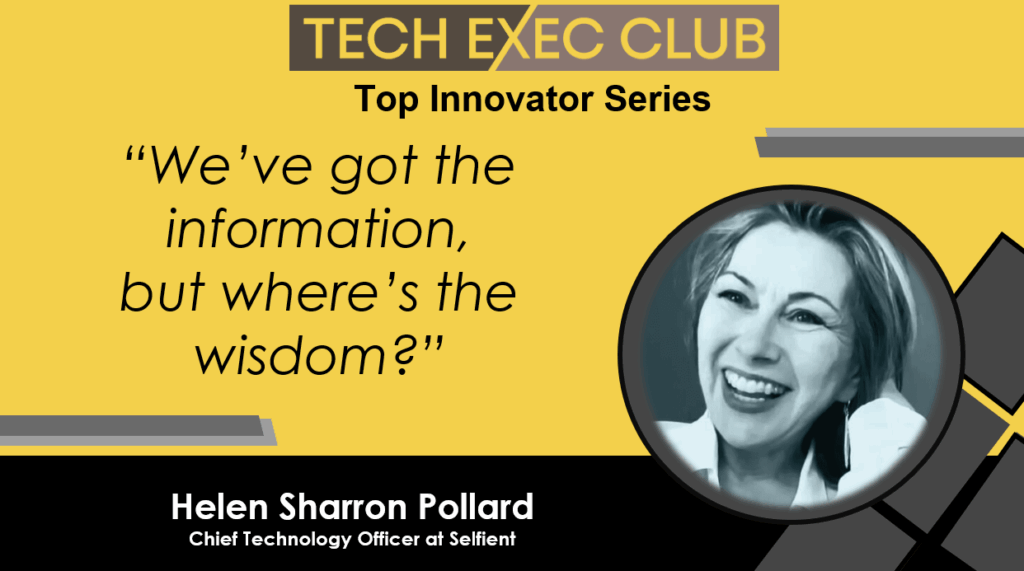
She speaks of using leadership “tools to challenge your own style” — not just to improve results, but to ensure integrity. “We have so much information,” she says, “but sometimes the wisdom is lacking.”
In an era of AI, automation, and rapid transformation, Helen reminds us that the most powerful breakthroughs may still come from within — those led by leaders who dare to evolve.
Inspired by Helen Sharron’s insights, here are concrete actions that leaders can take to shift from outdated paradigms to future-ready, human-centered leadership:
1. Redefine Success Through the Lens of Inheritance: Ask yourself regularly: Is what I’m building — company, culture, systems — inheritable? Don’t measure only profit and performance; evaluate how your work impacts future generations. Shift your decision-making from quarterly returns to century-scale consequences. Apply this lens across product design, hiring, technology architecture, and social impact.
2. Tap Into Your Inner River of Light: Make time for self-rejuvenation. Recognize that leadership energy comes from within. Protect your joy. Cultivate an internal state of optimism — even when external conditions are harsh. Utilize practices such as mindfulness, nature connection, or reflection to stay grounded in clarity and compassion. Inspire others not through force, but through an authentic and energized presence.
3. Challenge the “Proving Ground” Culture: Acknowledge that many brilliant people are constantly re-proving themselves in each new context — especially women and non-traditional leaders. As a decision-maker, help break that cycle. Validate competence early. Build trust faster. As a leader, accept the reality of realignment — but don’t let it steal your confidence. Share your vision, tell your story, and build alignment intentionally.
4. Move from Control to Community: Dismantle command-and-control structures that rely on fear, hierarchy, or rigid systems. Prioritize emotional intelligence and ethical foresight over strategic dominance. Foster shared ownership, transparent processes, and meaningful participation across teams. Stop managing people like resources — start building communities that thrive together.
5. Use Self-Reflection as a Leadership Superpower: Create regular rituals of reflection — alone or with your leadership team. Ask: What kind of world am I shaping with my decisions? Evaluate your leadership through the lens of emotional impact, cultural alignment, and ethical direction. Be courageous enough to evolve. Growth is not a weakness — it’s a leadership requirement.
6. Shift from Shareholder Sugar Highs to Human Impact: Question the systems you’re a part of. Are they built to enrich humanity — or extract from it? Replace the “profit at all costs” mindset with models that serve people and planet. Embrace new technologies — such as blockchain or decentralized finance — not just for innovation, but also for equity and inclusion. See capital as fuel, not the finish line.
This isn’t just leadership advice — it’s a call to consciousness. Helen Sharron’s message is clear: Leadership must evolve. The world needs leaders who are architects of the future, not just executors of the past.
Helen Sharron is not simply building smart contracts — she’s building ethical contracts with the future.
As the CTO and co-founder of Selfient, her work in blockchain is only one layer of a much deeper mission: to bring wisdom, soul, and strategy back into leadership. She’s part visionary, part technologist, and part philosopher — someone who can speak about Ethereum architecture and the river of inner light in the same breath, without contradiction.
What makes Helen truly extraordinary is her refusal to lead the way it’s always been done. She doesn’t chase power — she nurtures legacy. She doesn’t command — she cultivates alignment. Her compass is set not by stock price, but by what’s good, what’s enduring, and what’s worth passing on.
She is a quiet revolution in a loud world — a leader who reminds us that the best future is the one we’re proud to leave behind. In Helen Sharron’s world, success isn’t just what you build. It’s what others can inherit.
Want to hear Helen’s insights firsthand? Watch the full, live podcast interview [click here]