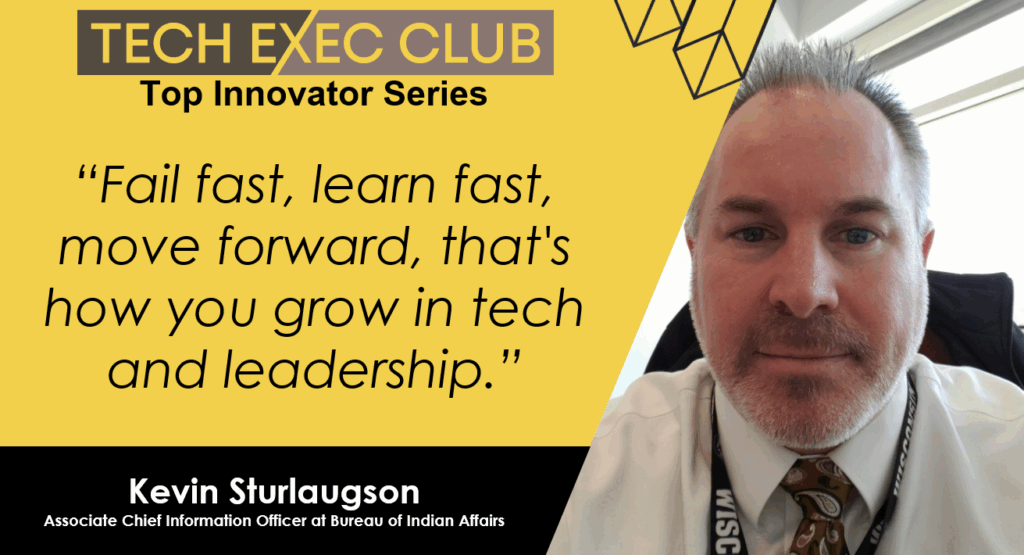
Technology has become the backbone of organizational success, but as innovation accelerates, one thing remains constant: the need for strong, visionary leadership. Few leaders embody this balance better than Kevin Sturlaugson, Associate CIO at the Bureau of Indian Affairs. With over 20 years of experience in federal leadership, including roles at the IRS and the U.S. Navy, Kevin’s journey is as inspiring as it is instructive.
From his Navy days, where discipline and swift decisions were vital, to his current role shaping IT strategies, Kevin’s career reflects a dramatic shift in leadership philosophy. Once focused on results and proving himself, he discovered a profound truth: leadership isn’t about outshining others—it’s about elevating them.
This shift—from competition to collaboration—became the foundation of his approach. Today, Kevin champions servant leadership, creating environments where people feel empowered to grow, take calculated risks, and achieve success. In this conversation, he shares the pivotal moments, the lessons from mentors, and why trust and authenticity matter more than ever.
Looking forward, Kevin discusses the future of tech leadership, from the promise of generative AI to the growing importance of user experience, and why IT must become a true business partner.
Meet a leader who believes that empowering people isn’t just good for the team—it’s the key to organizational greatness.
From Competition to Collaboration: A Leadership Mindset Shift
At the start of his career, Kevin Sturlaugson followed a leadership path that seemed obvious: deliver results, outperform others, and move up the ladder. It worked—at first. However, as his responsibilities increased, he began to realize that this approach had a limit. It wasn’t sustainable, and it wasn’t unlocking the potential of his team.
“I realized that as long as I focused on trying to outdo everyone else, I was holding myself back—and holding my team back too,” Kevin recalls. The breakthrough came when he recognized that his role wasn’t just about personal success. It was about creating an environment where others could thrive. “Until I make them ready to take my role, I can’t move up,” he explains. That single insight became a catalyst for change.
Kevin started shifting his focus from being a top performer to being a top enabler. Instead of competing with his peers or subordinates, he leaned into collaboration. This meant mentoring, coaching, and giving others opportunities to step into leadership roles—even when it meant sharing the spotlight with them.
The result? A transformation not only in Kevin’s career trajectory but in his entire team’s performance. With more people capable of operating at a high level, the organization gained resilience and scalability. “When you empower others,” Kevin says, “you don’t just multiply capacity—you multiply opportunity.”
This mindset shift is a powerful lesson for leaders in every field. Leadership isn’t about climbing the ladder faster than everyone else. It’s about building a sturdy ladder that everyone can use to rise together. And when you do, you discover that success is no longer a zero-sum game—it’s a shared victory.
Servant Leadership: Building Engagement and Trust
Kevin’s evolution into a servant leader didn’t happen by chance. It was the result of mentorship, self-reflection, and a deep desire to build teams that thrive. Early in his journey, Kevin encountered mentors and books that challenged his assumptions about leadership. One concept stood out: leadership is not about control—it’s about service.
“When I converted myself into understanding and wanting to be a servant leader, all of a sudden my staff became engaged,” Kevin shares. The change was profound. Teams that had previously been cautious and reserved began to step forward, bringing energy and innovation to the table. Why? Because they felt supported. They felt heard. And most importantly, they trusted their leader.
Trust, Kevin emphasizes, is the foundation of engagement. But trust isn’t built through words—it’s built through action. That means creating a safe space for growth. “Not everyone is ready for accountability right away,” Kevin explains. “Some fear the responsibility of making decisions. That’s why it’s important to tell them: you may not get it right the first time, but as long as you learn from it, we’ll move forward together.”
By normalizing failure as part of the learning process, Kevin fosters psychological safety—a critical element in high-performing teams. His approach aligns perfectly with modern leadership research, which shows that employees who feel safe to take risks without fear of punishment are more innovative, more committed, and ultimately more successful.
Servant leadership, as Kevin practices it, isn’t soft. It’s strategic. By empowering others and prioritizing their growth, leaders unlock levels of engagement and performance that command-and-control styles could never achieve. In a world where adaptability and collaboration are essential, Kevin’s leadership philosophy offers a blueprint for the future.
Balancing Empowerment with Accountability
Empowering employees to make decisions sounds like a leadership dream—but in reality, it’s a balancing act. Give too little authority, and you stifle innovation. Give too much, and you risk chaos. Kevin understands this tension well.
One of his guiding influences is Turn the Ship Around! by David Marquet—a book that redefines leadership as enabling decision-making at every level. Kevin took this principle to heart, adapting it to the realities of technology leadership. “In the Navy, you made decisions fast because lives were on the line,” Kevin explains. “In tech, the stakes are different—but the need for accountability is still real.”
His approach is both empowering and protective. He gives his team decision-making authority where the risk is manageable—projects where mistakes won’t jeopardize careers or the organization’s core stability. But for high-impact decisions, Kevin keeps the responsibility at his level. “I don’t want someone to feel burdened or guilty if something goes wrong,” he says.
What sets Kevin apart is his ability to mentor his team through this process. Rather than issuing directives, he coaches them on how to think strategically, evaluate data, and seek multiple perspectives before making a choice. “Never go by one voice,” he cautions. “One person can mislead you—intentionally or unintentionally. Multiple voices give clarity.”
Over time, this method does more than distribute decision-making. It builds capability. Team members don’t just learn what decision to make—they know how to think like leaders. The result? A culture of empowerment rooted in responsibility, where calculated risks fuel growth without sacrificing stability.
Lessons from Mentors: Authenticity and the Courage to Fail
Every great leader stands on the shoulders of those who came before them—and Kevin is no exception. The wisdom of mentors, both exemplary and flawed, has shaped his career. From the best, he learned the power of caring for people and the necessity of lifelong learning. From the worst, he learned a lesson that has stayed with him: never fake leadership.
“Don’t try to be a type of leader you don’t naturally align with,” Kevin advises. “Employees see through it—and when they do, you lose their trust.” Authenticity, for Kevin, is non-negotiable. Leadership styles aren’t one-size-fits-all. What matters is being true to who you are while continuously striving to improve.
Another pivotal lesson came wrapped in a surprising piece of advice: be willing to fail. Coming from a military background, failure felt unacceptable to Kevin. It meant letting people down. But over time, and through candid conversations with trusted advisors, he realized that failure is not the enemy—it’s the teacher.
In the fast-paced, ever-changing tech landscape, perfection is a myth. “Fail fast, learn, and move forward,” Kevin says. “Don’t spin your wheels. Adjust quickly and move on.” This mindset has made Kevin more resilient and innovative, and it’s one he instills in his teams.
The courage to fail—and the humility to learn—are hallmarks of outstanding leadership. Kevin’s journey illustrates that failure isn’t weakness; it’s a stepping stone to strength. And authenticity? It’s the bridge that keeps teams connected, engaged, and willing to follow their leader through uncharted territory.
Leading for the Future: AI, User Experience, and Business Partnership
Leadership doesn’t exist in a vacuum—it evolves with the world around it. For Kevin, the future of leadership is inextricably linked to the future of technology. Two areas dominate his attention today: generative AI and user experience.
AI, Kevin says, is “a monster” everyone wants to understand—and for good reason. Its potential to analyze data, improve processes, and uncover financial opportunities is unprecedented. But technology alone won’t drive success. “We can’t just deliver widgets anymore,” Kevin notes. “Technology has to be embedded in the business. We need to understand their goals, their constraints, and design solutions that truly enable them.”
This philosophy has sparked a cultural shift within his teams. Instead of operating as order-takers, Kevin pushes IT professionals to become strategic partners. That means asking different questions: not “What tool do you need?” but “What problem are you trying to solve—and how can we help?”
Kevin’s second focus—user experience—underscores this point. Outstanding technology is invisible. It makes people’s lives easier without drawing attention to itself. For Kevin, improving UX is about empathy: seeing the system through the user’s eyes and creating solutions that feel seamless, intuitive, and empowering.
This dual commitment—to cutting-edge innovation and human-centered design—positions Kevin as a leader for the next decade, not just today. By blending technical expertise with servant leadership principles, he’s building a future where IT is not a support function but a strategic force. And that, Kevin believes, is how organizations will thrive in the digital age.
Kevin’s insights are more than leadership philosophies—they’re actionable steps for any leader who wants to empower teams, embrace innovation, and prepare for the future. Here’s how you can start applying these principles today:
1. Shift from Competition to Collaboration: Stop playing the solo game. Success isn’t about outshining others; it’s about elevating them. Ask yourself, “Am I preparing others to take my role?” If not, start delegating to build future leaders—not just to lighten your load.
2. Embrace Servant Leadership: Lead with service, not control. Create psychological safety so mistakes become learning moments. Support your team through regular check-ins and demonstrate your care for their growth.
3. Balance Empowerment with Accountability: Empowerment works best with guardrails. Delegate low-risk decisions and coach the thinking process, while keeping critical calls at your level. This way, your team learns without unnecessary pressure.
4. Be Authentic and Embrace Failure: Don’t imitate leadership styles that aren’t yours. Authenticity builds trust. Accept failure as part of the growth process—fail fast, learn, and move forward. After setbacks, focus on lessons, not blame.
5. Prepare for the Future: AI and Human-Centered IT: Adopt AI now—experiment and learn. Focus equally on user experience: technology should make work simpler, not harder. Partner with business units early to co-create impactful solutions.
Kevin Sturlaugson’s leadership journey is a powerful reminder that titles don’t define great leaders—they’re represented by the impact they have on others. From his early shift away from competition toward collaboration to his embrace of servant leadership and trust-based empowerment, Kevin shows that leadership is about enabling growth, not controlling outcomes.
As he looks toward the future with a focus on AI, user experience, and stronger business partnerships, one thing remains constant: his belief in people. For Kevin, empowering others isn’t just a leadership strategy—it’s a commitment to building stronger teams and better organizations.
In his own words, Kevin sums it up best: “A transformational leader believes in his people and empowers them to make the organization a better whole.”
Want to hear Kevin Sturlaugson’s insights firsthand? Watch the full, live podcast interview [click here]