Eric Fraser, CTO at Dr. Lisa AI and founding chair of the Seattle AI Circle, doesn’t hide behind buzzwords or polished leadership speak. What makes this conversation so compelling is just how unvarnished and unpretentious he is. He openly admits he once pursued leadership for all the wrong reasons—status, salary, and ego. And when he finally got the manager title, he fell flat. He lacked emotional intelligence, failed to recognize his impact on others, and misunderstood what it required to lead people.
But what followed is a story most tech leaders need to hear. Through humility, relentless self-examination, and the support of patient mentors, Fraser transformed not just his leadership style—but the way he viewed human relationships altogether. He learned to listen, to see management as a moral responsibility, and to value feedback as a gift rather than a threat. His evolution from tactical decision-maker to conscious leader is both inspiring and practical, especially for those navigating the complexities of leading in technical environments.
Fraser also offers rare insight into the emerging dynamics of modern work. As he manages not only employees but also freelancers, contractors, and collaborators outside traditional organizational charts, his approach to leadership is evolving again—focusing more on trust, mutual accountability, and clarity of shared goals.
This conversation is raw, thoughtful, and deeply relevant. Whether you’re a CTO juggling impossible tasks, a founder struggling to scale, or a manager who quietly wonders if you’re doing more harm than good—Fraser’s story reminds us that the most challenging work of leadership is the work we do on ourselves.
Leadership Isn’t IQ—It’s Self-Awareness
Eric Fraser may be the CTO of a cutting-edge AI company, but he’s the first to admit that raw intellect alone didn’t make him a great leader. He attributes his early management failures to one thing: a complete lack of self-awareness. Despite his technical brilliance, Fraser initially approached leadership like a math problem—a series of inputs, outputs, and efficiencies. But people, he learned, aren’t algorithms.
In his own words, Fraser gravitated toward management for the wrong reasons. He wanted more money and prestige. However, once he stepped into the role, it became immediately apparent that managing people demanded a fundamentally different skill set than solving technical problems. He was blind to emotional cues, assumed that all technical people shared his way of thinking, and led based on personality profiles rather than personal connections.
The turning point came when Fraser recognized that his intellectual tools were insufficient to address the emotional and relational complexities of leadership. He began to understand that being smart wasn’t enough; he also had to be emotionally intelligent. This meant observing not just performance metrics but facial expressions, tone of voice, and the energy in the room. It meant understanding the fears and aspirations of his team members—not just their code quality.
His early struggles revealed a profound truth: leadership isn’t about IQ points or strategic frameworks—it’s about understanding how your actions impact others. That realization became the foundation for everything that followed. Fraser now champions self-awareness as the most underdeveloped but crucial skill in the tech leadership toolkit.
The Wake-Up Call: Mentorship That Changed Everything
Eric Fraser doesn’t downplay his rough start in leadership—instead, he highlights it as the necessary crucible for growth. And at the heart of that transformation were the mentors who dared to tell him the truth.
Fraser speaks with gratitude about the people who pulled him aside and said, sometimes kindly and sometimes bluntly, “This is not working.” They pointed out when his actions made team members feel unheard, unappreciated, or demoralized. They didn’t just coach him on tactics—they showed him the impact of his behavior and asked the tricky question: “Is this the effect you want to have?”
These weren’t abstract leadership theories. These were real people providing honest feedback in real time. One mentor’s advice stuck with him: what annoys you most in others might be something you’re refusing to confront in yourself. Another told him to stop fixating on metrics and start paying attention to his team’s emotional signals—eye rolls, hesitations, or a drop in energy during meetings.
These mentors didn’t simply tell Fraser what to do—they invited him to become a better person. They modeled accountability, integrity, and patience, often when Fraser himself lacked it. And to his credit, he listened. Not right away. Not perfectly. But consistently. Over time, their voices helped reshape his leadership from the inside out. He now considers mentoring not just a lucky break but a leadership imperative he’s committed to paying forward.
The Moral Weight of Managing People
In one of the most striking moments of the interview, Fraser introduces a concept that many leaders avoid: the moral dimension of management. This isn’t about KPIs or quarterly results. It’s about people.
Fraser realized that sending someone home unhappy doesn’t just impact their work performance—it affects their family, their mental health, and their overall quality of life. He began to see leadership not as a set of tasks to execute but as a deeply ethical practice. Every decision, every word, every meeting has the power to uplift or diminish.
What he describes is a shift from utilitarian thinking to human-centered leadership. He started asking himself: Did this one-on-one build someone up or break them down? Is my feedback helping someone grow, or is it simply asserting my dominance? Do I leave my team feeling trusted or merely compliant?
This moral awakening completely changed how Fraser approached leadership. He no longer saw emotional well-being as a side effect of good management—he saw it as the core of it. Creating psychological safety, recognizing individual struggles, and leading with empathy became non-negotiable.
Fraser’s message is clear: if you’re leading people, you’re not just accountable for business outcomes; you’re also answerable for the people themselves. You’re responsible for the human beings who make those outcomes possible. And once you take that responsibility seriously, everything else about leadership—strategy, communication, decision-making—starts to align more meaningfully.
Managing Without Control: The New Leadership Skillset
Fraser’s leadership journey isn’t stuck in the past—it’s actively evolving. Today, he’s tackling a new challenge: leading teams of freelancers, contractors, and part-time collaborators who don’t report to him in a traditional sense. And it demands a whole new playbook.
Gone are the days when a leader could dictate tasks and expect full-time devotion. In today’s gig economy, influence has replaced authority as the primary means of power. Fraser emphasizes the importance of building trust over time, communicating shared goals with clarity, and designing agreements that both parties genuinely understand and can fully comprehend.
He notes that micromanagement is simply ineffective in these environments. You can’t call a freelancer and demand daily status updates. Instead, Fraser focuses on outcomes, support, and alignment. Are we heading in the same direction? Are we solving the right problem? Are we honoring each other’s time and expertise?
Fraser describes this shift as a move from transactional to relational leadership. It’s about forming partnerships, not command chains. He encourages leaders to clarify expectations early, define the scope of collaboration, and establish regular check-ins that feel like mutual checkpoints rather than inspections.
His approach signals a shift in modern leadership—from controlling to co-creating. As more organizations transition to flexible, hybrid, and decentralized teams, Fraser’s methods may become the new standard. It’s not just about adapting to new labor models; it’s about evolving the mindset that governs how we lead without authority.
Ego, Feedback, and the Long Game of Growth
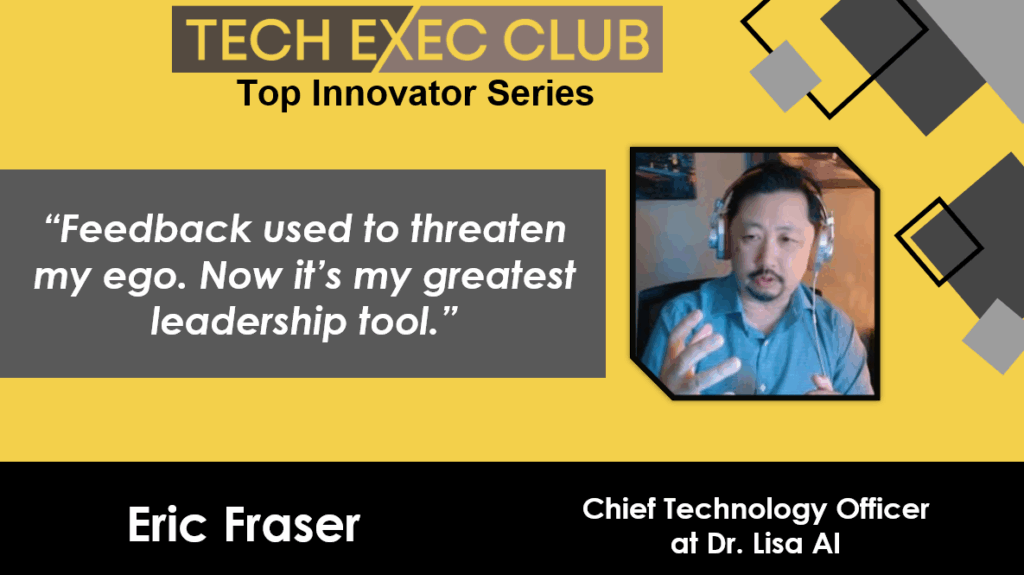
Leadership is uncomfortable. It demands vulnerability, humility, and the courage to admit you’re wrong. Eric Fraser learned this the hard way. Early in his career, his ego made it difficult to accept feedback, let alone ask for it. But when he finally did, he discovered a superpower: growth through honesty.
Fraser began asking tough questions: How do people experience me as a leader? Where am I harming without realizing it? He created space for his team to speak the truth—and ensured it was safe to do so. It wasn’t easy. But it changed everything.
Instead of being defensive, he became curious. Instead of being fragile, he became grounded. And as his self-awareness increased, so did his team’s performance, morale, and trust. He discovered that the ability to grow wasn’t about knowing more—it was about listening better.
He also shares how asking for feedback became a muscle he had to train. The first few reps were painful. But over time, it became second nature. Now, Fraser actively seeks out feedback loops. He even models vulnerability for others by acknowledging his blind spots in public forums—not as a tactic, but as a principle.
Fraser’s journey isn’t about a quick fix or a productivity hack. It’s about the long game—the slow, deliberate practice of becoming the kind of leader people want to follow, not because they have to, but because they believe in the person leading them. He teaches that leadership isn’t static; it’s iterative. The most transformative leaders are those who continually evolve.
Whether you’re an aspiring team leader or a seasoned executive, Eric Fraser’s story serves as a roadmap for growth. Here are the most powerful takeaways—paired with specific actions you can implement today to lead with more impact, empathy, and intention:
1. Audit Your Leadership Motives: He entered leadership for the wrong reasons—status and money—and it backfired. Ask yourself: Why do I want to lead? Write down your top three motivations and reflect—are they about service, impact, or ego? Shift your intent from self-gain to team empowerment.
2. Invite Feedback Like It’s a Superpower: Feedback reshaped his leadership, but he had to create a safe environment for others to be honest. Hold a dedicated feedback session with your team. Ask, “What’s one thing I do that helps you—and one thing I could do better?” Then listen. Resist the urge to justify. Just thank them.
3. Mentor—and Be Mentored: His most significant breakthroughs came from mentors who weren’t afraid to challenge him. Seek out a mentor who will give you unfiltered truth, not flattery. And find someone junior you can coach—not to teach, but to learn how to lead through listening.
4. Recognize the Moral Impact of Your Decisions: Leadership isn’t just operational—it’s ethical. Sending someone home miserable has consequences. Before making a decision that affects your team, pause and ask: What emotional ripple could this cause? Make empathy part of your due diligence.
5. Rethink Your Leadership Model for Today’s Workforce: Leading contractors and freelancers requires shifting from a command-and-control approach to one of trust and alignment. If you’re managing gig-based or hybrid teams, focus on outcome-based agreements. Replace micromanagement with structured check-ins and open conversations about shared goals.
6. Do the Hard Work on Yourself: Leadership growth is slow, internal work—and ego is usually in the way. Set a recurring monthly reflection: Where did I lead from ego this month? Where did I lead from empathy? Track your progress like an objective metric. Growth starts with awareness.
Eric Fraser didn’t step into leadership knowing all the answers—and that’s precisely what makes his story powerful. His humility, his willingness to confront his blind spots, and his relentless commitment to becoming a better human before becoming a better leader are what set him apart in today’s tech landscape.
As the CTO of Dr. Lisa AI and a foundational figure in Seattle’s AI community, Fraser isn’t just building technology—he’s building trust, empathy, and awareness into the very architecture of leadership. He doesn’t posture. He doesn’t pretend. He shows up, listens hard, and does the work.
In an era where too many leaders hide behind jargon and performance optics, Eric Fraser leads with something far more rare: realness. And perhaps that’s the future of leadership—not perfection, but presence. Not control, but connection.
For those navigating the complex, human side of business and seeking a model of growth over ego, Fraser’s journey offers a powerful reminder: it’s never too late to become the kind of leader you once needed to be.
Want to hear Eric Fraser’s insights firsthand? Watch the full, live podcast interview [click here]